US Ambassador Nicholas Burns offered a rebuke on Friday, saying Beijing's stance was unjustified given it blocks many Western web platforms from operating in the country.
"I find it supremely ironic that government officials here in China ... have been criticising the US for the debate we're currently having on TikTok," Burns said during an online seminar held by the East-West Center, a US-based research organisation.
"They won't even let TikTok be available to 1.4 billion Chinese," he said in response to a question about the avenues for American public diplomacy in China.
China's government tightly controls the spread of information online and scrubs out social media content it deems politically sensitive.
Many Western platforms, including Google, Facebook and Instagram, are blocked from operating in the country.
TikTok's Chinese parent company ByteDance also runs a separate version of the app inside China called Douyin.
Some Western governments have voiced concern about TikTok's soaring popularity, alleging that the app's ownership makes it subservient to Beijing – a claim TikTok denies.
TOKYO: The release of wastewater from Japan's stricken Fukushima nuclear plant was suspended on Friday (Mar 15) following an earthquake, its operator said while stressing that the move was precautionary.
A 5.8-magnitude jolt struck off the coast of the northeastern Fukushima region, home to the plant wrecked by a tsunami in 2011, at 12.14am on Friday (3.14pm GMT, Thursday), the Japan Meteorological Agency said.
"We have confirmed remotely that there were no abnormalities on ALPS treated water dilution/discharge facility, etc," Tokyo Electric Power Company (TEPCO) said on X, formerly Twitter, referring to the water release process.
But "to be on the safe side, we have suspended the operations of the facilities in accordance with the pre-defined operational procedures", it said in the early hours of Friday.
Several hours later TEPCO said in a statement that "no abnormalities were detected" and a spokesman told AFP that the water release would resume later on Friday.
No leak of radiation was detected after TEPCO finished necessary checks while "readings from monitoring posts remain normal", he added.
Japan's nuclear regulatory authority also said shortly after the quake that no abnormalities were detected at either the wrecked Fukushima Daiichi plant, or its sister plant Fukushima Daini.
Last August, TEPCO began releasing into the Pacific Ocean around 540 Olympic swimming pools' worth of wastewater that has collected at Fukushima Daiichi since the 2011 accident, one of the world's worst nuclear disasters.
The operation has been endorsed by the United Nations atomic agency, and TEPCO says all radioactive elements have been filtered out except for tritium, levels of which are within safe limits.
But China and Russia have criticised the release into the Pacific Ocean and banned Japanese seafood imports, saying that Japan is polluting the environment.
Japan experiences hundreds of earthquakes every year and the vast majority cause no damage.
There were no immediate reports of injuries from the latest jolt and there was no tsunami warning.
Only 44 per cent of Singaporeans meet the recommended 7-hour sleep guideline by the American Academy of Sleep Medicine and Sleep Research Society. (PHOTO: Getty Images)
SINGAPORE — If you find yourself always looking forward to more sleep, you're definitely not alone in Singapore. As the world observes World Sleep Day on Friday (15 March), a recent study conducted by UK-based YouGov ranked Singapore right at the top of the countries which need more sleep.
According to the study, Singaporeans are the most sleep-deprived among the 17 markets surveyed, with 54 per cent getting less than the recommended seven hours of sleep. This is despite 8 in 10 Singaporeans using sleep hacks, the study found.
The American Academy of Sleep Medicine (AASM) and the Sleep Research Society (SRS) recommend seven hours of sleep per night for optimal health. However, with only 44 per cent of Singaporeans meeting this, more than half of the population regularly functions on less sleep than they need.
According to the study, the only other regions surveyed where similar sleep-deprivation was found were the UAE (at 45 per cent) and Indonesia (at 48 per cent).
In contrast, countries like Denmark and Germany boast higher proportions of residents getting adequate sleep, with 67 per cent and 65 per cent respectively meeting or exceeding the seven-hour mark.
Similarly, France (62 per cent), Spain (61 per cent), and India (60 per cent) also fare better in terms of sleep duration compared to Singapore.
Singaporeans also among the top 10 when it comes to sleep hacks
Despite the statistics on sleep deprivation, Singapore also ranks 7th when it comes to using sleep hacks, with 81 per cent of respondents engaging in efforts to improve their sleep quality.
These included upgrading their mattress, pillow, or bedding (28 per cent), refraining from looking at digital screens before bedtime (30 per cent), and maintaining a consistent nightly bedtime (44 per cent).
Meanwhile, 8 per cent of Singaporeans said they use earplugs or earbuds.
Similar to Singapore, the most common sleep hacks worldwide are managing screen exposure before bed and a consistent bedtime, the study found.
Singaporeans less inclined to consume sleep supplements or medication
While a majority of Singaporeans utilise sleep hacks, they are less likely to resort to sleep supplements or medication, the study also found.
Only 15 per cent of respondents reported using sleep aids such as melatonin or prescribed sleeping pills, which is a lower percentage compared to top-scoring countries like the US (36 per cent), Canada (34 per cent), and Australia (33 per cent).
The same proportion (15 per cent) of Singaporeans also said they consume food or drink with sleep-aiding properties, such as chamomile or gingko biloba tea.
Singaporeans also show more inclination to alter their sleeping environment, with almost a quarter (23 per cent) installing blackout curtains. Additionally, 16 per cent also reported using aromatherapy.
The YouGov study used data drawn from surveys of adults aged 18 and above in these markets, with sample sizes ranging from 510 to 2,044 per market.
Survey reveals that only 15 per cent of respondents in Singapore use sleep aids like melatonin or prescribed pills, contrasting with higher rates in top-scoring countries such as the USA (36 per cent), Canada (34 per cent), and Australia (33 per cent).(PHOTO: Getty Images)
Roughly 60 per cent of TikTok's regular US news consumers are Democrats or Democrat-leaning, according to a 2023 study.
PHOTO: REUTERS
WASHINGTON - If President Joe Biden keeps his promise to sign a ban on TikTok over its ties to the Chinese government, the 81-year-old may rob his reelection campaign of a platform that he and fellow Democrats rely on to reach younger voters.
Mr Biden's campaign got thousands of "likes" on March 12 for a TikTok video skewering Republican rival Donald Trump about cutting Social Security spending. But the comments were focused on another issue altogether: the proposed ban.
"Good thing we saw this on TikTok," said one. "How are you going to use this to campaign if you ban it?" asked another.
House Republicans voted on March 13 to force TikTok's Chinese owner ByteDance to divest its 170 million user US business, or face a ban. If the Senate passes the bill, as the White House urges, Mr Biden has pledged to sign it.
But the 2024 campaign is shaping up to be close, and Democratic-leaning US political discourse online has shifted to TikTok in recent years, political strategists say. They note that X, formerly Twitter, has cut back on harassment curbs under owner Elon Musk while Facebook moved away from political content while the short-form video site is the platform of choice for a new generation of politically engaged Americans.
TikTok's users belong disproportionately to groups that vote reliably for Democrats, which Mr Biden needs to woo. Trump's campaign does not have an official TikTok account.
Roughly 60 per cent of TikTok's regular US news consumers are Democrats or Democrat-leaning, according to a 2023 study from the Pew Research Center. Nineteen per cent of TikTok's news consumers are Black, and 30 per cent are Hispanic, versus about 14 per cent and 19 per cent of the general US population, respectively. About 44 per cent of news consumers on TikTok are between ages 18 and 29.
Banning TikTok risks "displacing a large part of the electorate from the ability to communicate…meaningfully about politics at a time when a highly contentious election is about to occur," said Mr Samuel Woolley, journalism professor and director of the University of Texas at Austin's propaganda research lab.
"We voted Joe Biden in through social media, through the power of TikTok," said self-described Chicana trans woman NaomiHearts, who has 1.1 million followers on TikTok, noting that youth voter participation hit a record in 2020. "Why just TikTok?"
A ban would take away young voters "favorite social media app where they get their news, where they follow their favorite people where they get entertainment, where they're allowed to basically escape," said Dr Anthony Youn, a plastic surgeon with 8.4 million TikTok followers.
The measure is the latest in a series of moves in Washington to respond to national security concerns about China, from connected vehicles to artificial intelligence to cranes at US ports.
"This is a critical national security issue," No. 2 House Republican Steve Scalise said on social media platform X.
TikTok denies sharing any user data with China and says the ban would deprive Americans of their Constitutional right to free expression.
Separate TikTok phones
Mr Biden's reelection campaign joined TikTok in February, using the NFL's Super Bowl to kick off its new account to reach young voters ahead of the presidential election in November.
The campaign's account, @BidenHQ had 237,500 followers as at March 13, while @thedemocrats had over half a million.
The White House briefed over 70 influencers and content creators on TikTok and other social media platforms with a combined audience of over 100 million followers, on topics like student debt and economic issues ahead of the president's State of the Union address to amplify his message.
"We are not concerned about the impact" of a ban on Mr Biden's reelection chances, said a top White House official. "There are lots of twists and turns before anything ends up happening here," because Trump is opposed to the bill, and Senate Majority Leader Chuck Schumer has not committed to bringing it on the floor.
A second White House official said: "National security concerns outweigh how anyone is feeling."
"The president is not thinking of national security based on reviews from users on whether they are happy or not on TikTok or any other platform," the official said.
Federal employees are banned from having TikTok on their phones, so Biden administration staff are not allowed to have the app on their work phones.
Mr Biden's campaign staff workers are not employed by the government and do not deal with national security issues, so they are allowed to have TikTok on their phones, said one source briefed on the issue.
But most campaign staffers in frequent contact with the White House have two phones. Just one engages with TikTok in order to isolate using the app from other workstreams and communications, including emails, the source said.
The White House has previously cited concerns about TikTok's preservation of data and potential misuse of that data and privacy information by foreign actors."We're taking the security precautions necessary to make sure no data is getting into the wrong hands," the source said.
The campaign is trying to reach people "where they are," the source added. "We'll see what happens in the Senate, and we're far away from any decision on this. It's wait-and-see mode for everybody." REUTERS
BEIJING: China on Thursday (Mar 14) slammed the approval of a US Bill that would ban TikTok unless it severs ties with its Chinese parent company, blasting Washington's "bandit" mentality and vowing Beijing would "take all necessary measures" to protect the interests of its companies overseas.
The short-video app has soared in popularity worldwide but its ownership by Chinese technology giant ByteDance - and alleged subservience to Beijing's ruling Communist Party - has fuelled concern in Western capitals.
On Wednesday, the US House of Representatives overwhelmingly approved a Bill that would force TikTok to divest from its parent company or face a nationwide ban.
The Bill is yet to pass the Senate, where it is expected to face a tougher test in order to become law.
"The US should truly respect the principles of a market economy and fair competition (and) stop unjustly suppressing foreign companies," Beijing's commerce ministry spokesperson He Yadong said at a press conference on Thursday afternoon.
Washington should also "provide an open, fair, just, and non-discriminatory environment for foreign companies to invest and operate in the US", He added.
"China will take all necessary measures to resolutely safeguard its legitimate rights and interests," he said.
At a separate press briefing on Thursday, Beijing's foreign ministry spokesperson Wang Wenbin said the vote "runs contrary to the principles of fair competition and international economic and trade rules".
"If so-called reasons of national security can be used to arbitrarily suppress excellent companies from other countries, then there is no fairness and justice at all," Wang said.
"When someone sees a good thing another person has and tries to take it for themselves, this is entirely the logic of a bandit."
BANDUNG: Two foreign tourists including an Australian woman have been killed on the Indonesian resort island of Bali after heavy rain triggered a landslide that swept away their villa, an official said on Thursday (Mar 14).
Large areas of the archipelago of 17,000 islands are prone to flooding and landslides during the wet season which starts around November.
The wooden villa in Jatiluwih village on the popular tourist island was hit by the landslide on Thursday morning after a downpour in the area the previous night, local disaster mitigation agency official I Nyoman Srinadha Giri told AFP.
The intense rain eroded water canals used for irrigation that sit above the villa and triggered the landslide, killing the two, according to the official.
"The victims were evacuated from the debris while in sleeping (positions). There were two victims, a man and a woman in one bed," he said.
The female victim, 47, was born in Australia and had a United States permanent residence permit, while the male victim's nationality and identity remained unknown.
The victims' bodies were transferred to a hospital in the provincial capital Denpasar.
Landslides in Indonesia have been aggravated in some places by deforestation, with prolonged torrential rain causing flooding in some areas.
Landslides and floods triggered by intense rains on Sumatra island last week killed at least 27 people.
Opposition to the TikTok bill has been almost as bipartisan as support for it. Fifteen Republicans and 50 Democrats voted against the bill on Wednesday; there was one abstention.
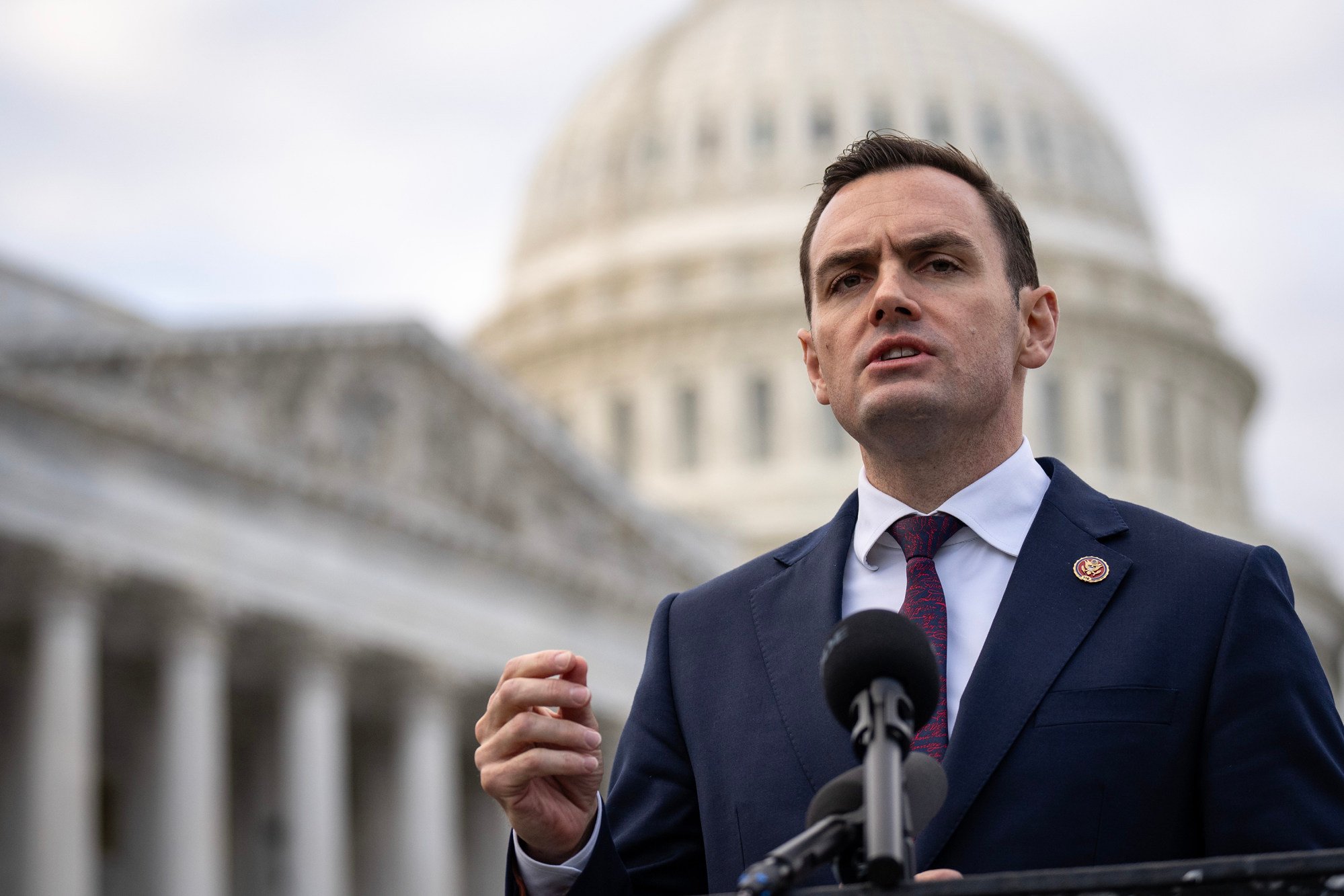
Representative Mike Gallagher, chairman of the House select committee on China, introduced the TikTok bill on March 5. Photo: Getty Images/TNS
US President Joe Biden last week said he would sign the bill into law if it passes both chambers, though the legislation is likely to face litigation even if it becomes law. Previous efforts to restrict TikTok, which date back to 2020, have stalled or been blocked by courts.
The bill was introduced on March 5 by the leaders of the House select committee on China – including Representative Mike Gallagher, a Wisconsin Republican – and unanimously passed through the House energy and commerce committee last Thursday.
The fast-tracked bill also establishes a process for the president to designate other apps controlled by “foreign adversary” countries to face restrictions on operations in the US.
Lawmakers have expressed concern about TikTok’s potential to surveil and manipulate Americans through collection of their personal data and algorithm modifications.
Companies controlled by a foreign adversary would “always choose the path for more control, more surveillance and more manipulation”, said Washington Republican Cathy McMorris Rodgers, chair of the House energy and commerce committee, on Wednesday.
“And in the case of TikTok, we wouldn’t even know it.”
In response, House critics of the bill – ranging from progressives like New York Democrat Alexandria Ocasio-Cortez to MAGA (Make America Great Again) supporters like Georgia Republican Marjorie Taylor Greene – highlighted the dangers of emulating China’s censorship system and singling out TikTok among social media apps to target.
Some noted that they remained unconvinced of TikTok’s threat to US national security even after a closed-door briefing on the matter earlier this week.
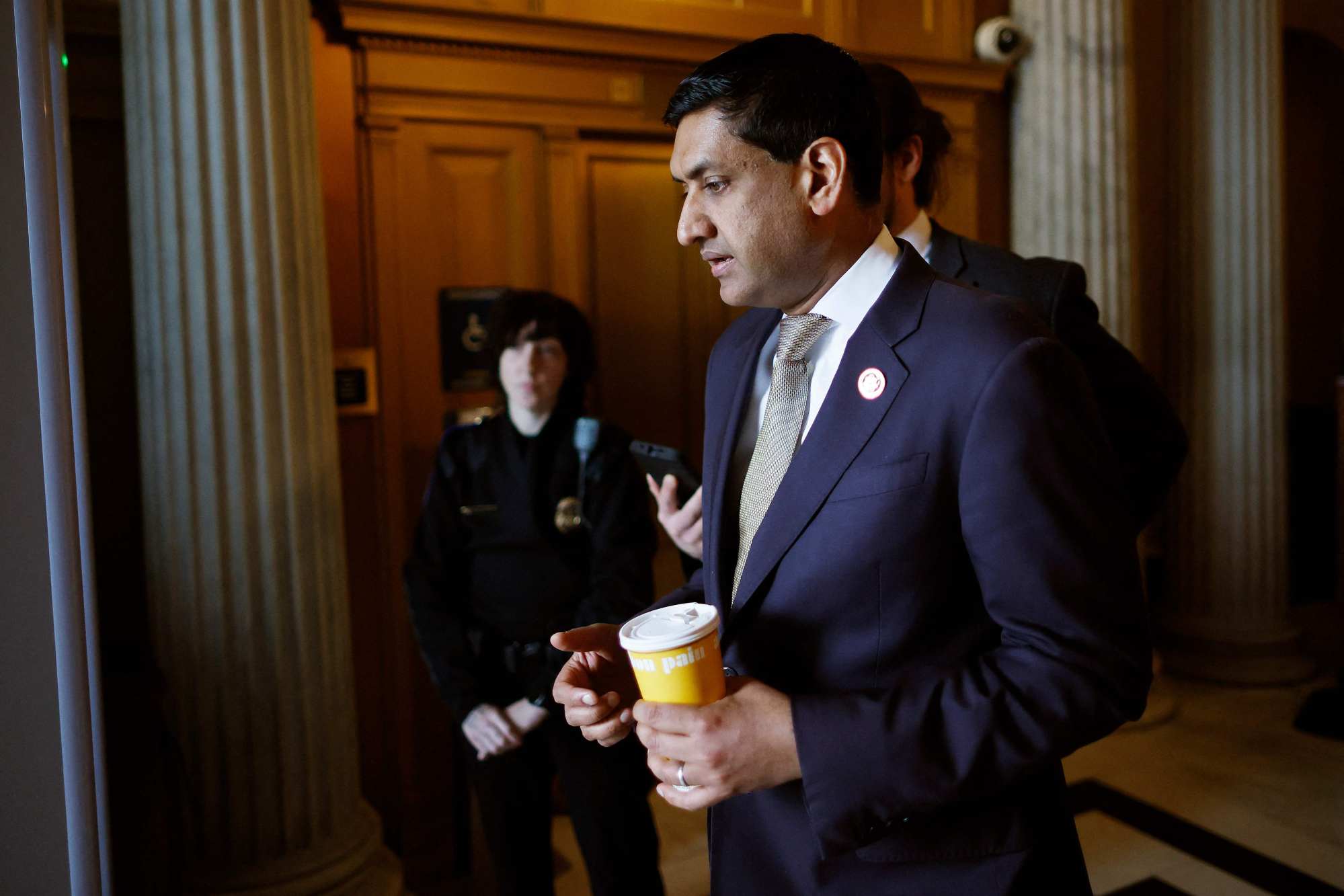
Democratic congressman Ro Khanna of California, who represents Silicon Valley, leaves the US Capitol on Wednesday after voting against the TikTok bill. Photo: Getty Images via AFP
Ahead of Wednesday’s vote, California Democrat Ro Khanna gathered with TikTok users from across the country in front of the US Capitol Building to oppose Gallagher’s bill.
He released a TikTok video on Monday arguing for an “internet bill of rights” instead of what he described as hurting creators and organisers seeking to “challenge the political establishment”.
Khanna was the only member of the House select committee on China to vote against the bill on Wednesday, with New Jersey Democrat Andy Kim not voting.
Other notable “nays” on Wednesday included Connecticut Democrat Jim Himes, lead Democrat on the House Permanent Select Committee on Intelligence, and Massachusetts Democrat Jim McGovern, a frequent commentator on China’s human rights record.
For its part, TikTok has argued that efforts to restrict it would hamper the free speech of 170 million Americans who use the short-video platform.
According to The Washington Post, the company rekindled negotiations in September with the Committee on Foreign Investment in the US – a Treasury-led inter-agency group that reviews foreign transactions – to institute a plan restricting foreign access to American user data.
Called Project Texas, the US$1.5 billion plan would cede authority over TikTok’s American operations to a three-person board selected by CFIUS.
That board would run a subsidiary called US Data Security, which would handle all of the app’s critical functions in the United States, including user data, engineering, security and content moderation.
But lawmakers have remained unconvinced, telling TikTok’s chief executive Chew Shou Zi that only a ban or divestiture would be acceptable. Chew landed in Washington on Tuesday to make an appeal to senators to oppose the bill, per The Washington Post.
Chinese national security laws likely require data from the apps to be handed over on request from government agencies, though TikTok maintains it has neither given American user data to Beijing, nor has Beijing ever asked for it.
Responding to free-speech concerns from critics, Gallagher has repeatedly contended that his bill was not a ban of TikTok, but meant to force a change in the app’s ownership.
However, analysts say that the legislation effectively acts as a ban because Chinese government rules prevent the export of software, including the algorithm that serves as TikTok’s recommendation engine.
Additionally, “if ByteDance was forced to divest TikTok US, the acquisition by a US company would also require antitrust approval from the Chinese government”, said Paul Triolo of Albright Stonebridge Group, noting that this process typically took “much longer” than the divestiture period the bill seeks.
China’s commerce ministry said last year that it would “firmly oppose” a forced sale of the app.
Triolo, who specialises in China and tech policy, added that China’s national security laws are too vague to conclude that China-based companies must turn over data on request from Beijing.
“None of the laws in question have implementing regulation that would provide any detail on what the laws actually mean in practice.”
Free speech advocates, including the American Civil Liberties Union, wrote in a letter to the House energy and commerce committee last week that “it does not improve matters to say that this isn’t a ban”.
“Generally, the government cannot accomplish indirectly what it is barred from doing directly, and a forced sale is the kind of speech punishment that receives exacting scrutiny from the courts,” they wrote, citing a Montana court’s decision in November to block the state from banning TikTok.
In March 2023, a bipartisan group of senators led by Mark Warner, a Virginia Democrat, pushed a White House-supported effort to give the Biden administration new powers to restrict technologies posing national security risks.
Bipartisan criticism has stymied that broadly targeted bill, which did not mention TikTok by name but would have likely affected the app’s ability to operate in the US.
Some senators remained undecided on the most recent effort to restrict TikTok.
South Carolina Republican Lindsey Graham on Sunday said he was “conflicted” about Gallagher’s bill. Others, like Oregon Democrat Ron Wyden and Oklahoma Republican James Lankford, said they still needed to read the bill before deciding. Wyden expressed concern that the bill was moving too fast for a proper assessment of its implications.
Warner and Florida Republican Marco Rubio, leaders of the Senate Select Committee on Intelligence, came out in support of the bill on Wednesday and said they would work in a bipartisan manner to push it through the Senate.
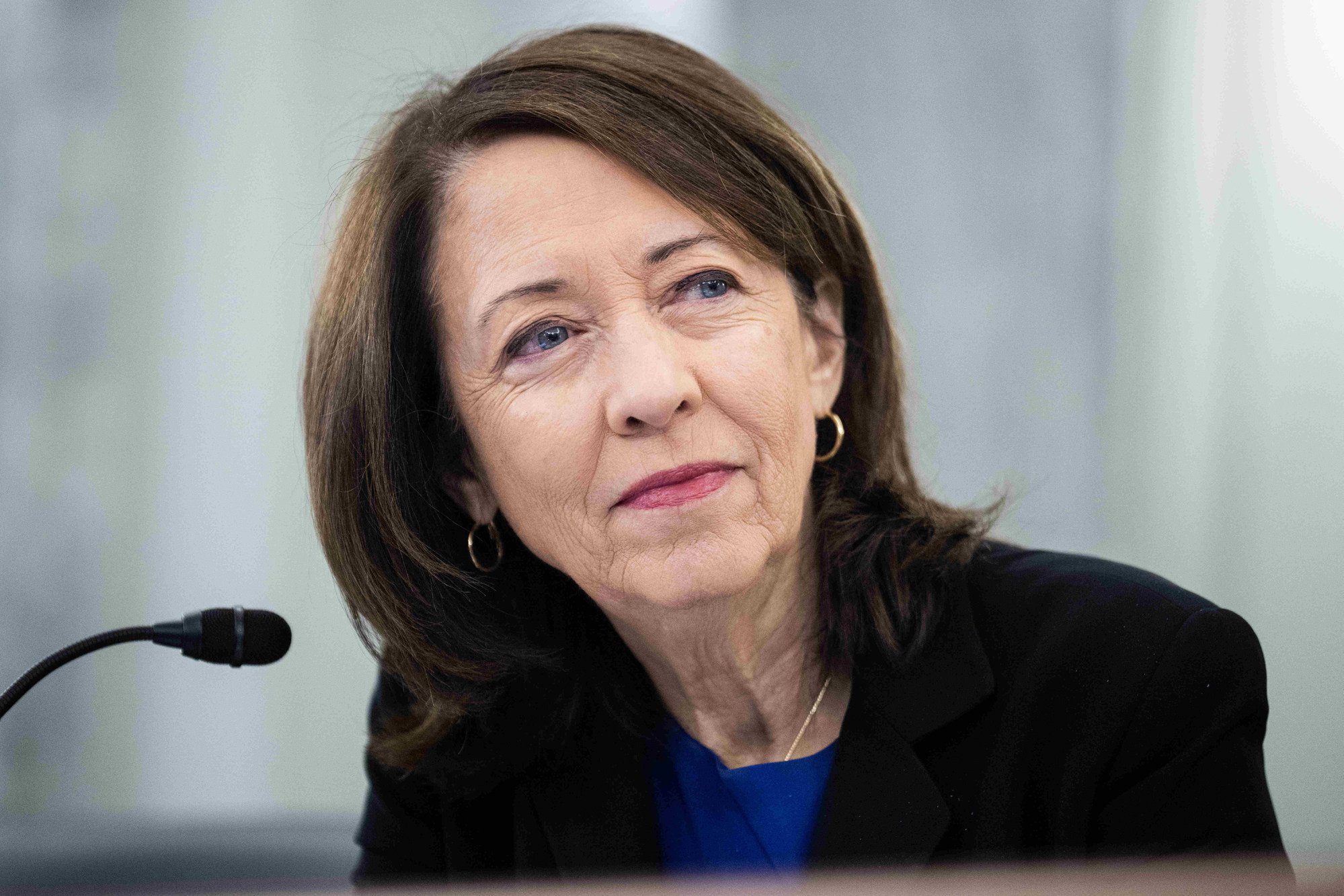
But Maria Cantwell, the Washington Democrat who chairs the Senate commerce committee, said she preferred other legislation to regulate apps.
Democratic senator Maria Cantwell of Washington has said she prefers other legislation to regulate apps. Photo: CQ Roll Call via Zuma Press/TNS
On Monday, presumptive Republican presidential nominee Donald Trump reiterated his new-found opposition to a TikTok ban, which he first made clear last week. He now argues that a ban would only empower TikTok competitor Facebook, reversing his previous efforts to ban the app.
Trump reportedly met last month with Jeff Yass, a major TikTok investor and Republican donor, though the former president on Monday denied they had discussed the app.
The Biden administration itself has sent mixed signals: while it has prohibited the use of TikTok on federal devices and worked with Gallagher on his bill, Biden’s re-election campaign launched its official TikTok account last month.
A 2021 report from University of Toronto-based research group Citizen Lab found no “overt data transmission” by TikTok to the Chinese government, without ruling out the possibility that user data gathered outside China is transferred to the country afterwards.
Its analysis was “inconclusive” about whether TikTok employs political censorship of user posts.
It also found that TikTok collected similar amounts of data as other social media platforms like Facebook.
TikTok users, for their part, have flooded Congressional offices with calls urging to not ban the app.
In videos attesting to TikTok’s positive impact on their lives, some said Congress was showing bias against the popular app in choosing not to target other social media apps, noting China could access their data through those apps even if TikTok were banned.
Others expressed scepticism that the app was manipulating content in favour of China.
“If China controls TikTok, they’re doing an awfully good job of censoring content that is critical of the US government,” said one TikTok creator with 1.4 million followers.
New York Democrat Jamaal Bowman last week posted on his TikTok account that moving towards a ban represented an effort at “silencing young people”.