Sabtu, 29 Mei 2021

Malaysia reports daily record of 9020 new COVID-19 cases - CNA

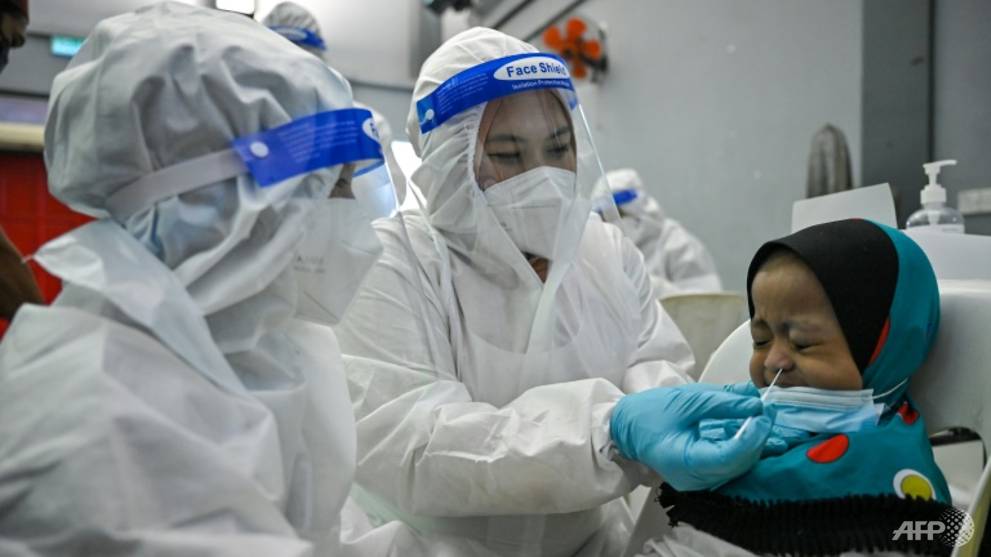
KUALA LUMPUR: Malaysia reported 9,020 new COVID-19 cases on Saturday (May 29), its highest daily toll since the start of the pandemic.

This is the fifth straight day of record new infections, bringing the total number of cases in the country to 558,534, of which 76,218 are currently active or infectious.

There are 844 patients in intensive care, a new record for the fifth consecutive day, with 430 requiring respiratory support. 

Malaysia also reported 98 new deaths, bringing the total fatalities to 2,650.  

Of the new confirmed cases, there are five imported infections while the rest are local cases.

In its update on Saturday, the health ministry reported 5,527 new recovered cases, taking the total recoveries to 479,666. 

The number of individuals who have completed two COVID-19 vaccine doses in Malaysia has surpassed the one million mark, with more than 1.01 million people vaccinated as of Friday, said Health Minister Adham Baba.

Dr Adham, in his tweet on Saturday said more than 1.77 million individuals had received the first dose, bringing the total number of COVID-19 vaccine recipients in the country to nearly 2.8 million. 

He said that the five states with the highest number of people who have completed the two doses of vaccine were Selangor at 138,063 people, followed by Sarawak at 96,450, Kuala Lumpur with 94,397 people and Johor at 88,240.

As of Friday, 48.6 per cent or more than 11.7 million individuals had registered to receive vaccine shots, with Selangor continuing to record the highest registrations at nearly 3.16 million people.

"TOTAL LOCKDOWN" TO START ON JUN 1

Malaysia will close all economic and social sectors by implementing a "total lockdown" throughout the country, Prime Minister Muhyiddin Yassin announced on Friday night.

The first phase of the lockdown will last from Jun 1 to Jun 14. Only essential economic and service sectors listed by the National Security Council will be allowed to operate during this phase.

READ: Malaysia to enter 'total lockdown' from Jun 1 to Jun 14 as daily number of COVID-19 cases hits new record

"This decision was made after taking into account the current situation of COVID-19 transmission in Malaysia with daily case numbers exceeding 8,000 and active cases exceeding 70,000," said a statement issued by the Prime Minister's Office on Friday.

The emergence of more virulent COVID-19 variants also influenced the National Security Council's decision to implement the lockdown.

With the sharp rise in the daily number of COVID-19 cases, hospitals' capacity to treat patients throughout the country are "becoming more limited", the statement added.

If phase 1 of the lockdown is successful in reducing daily COVID-19 cases, the government will implement a four-week phase 2 lockdown, allowing the reopening of a few economic sectors that do not involve large gatherings.

"Once the phase 2 lockdown ends, the next step is phase 3, which is implementing a movement control order (MCO) similar to the current one in effect, where social activities are not allowed and nearly all economic sectors are allowed to operate subject to strict standard operating procedures and limited physical presence at workplaces," said the Prime Minister's Office.

BOOKMARK THIS: Our comprehensive coverage of the COVID-19 pandemic and its developments

Download our app or subscribe to our Telegram channel for the latest updates on the coronavirus outbreak: https://cna.asia/telegram

Adblock test (Why?)


https://news.google.com/__i/rss/rd/articles/CBMiZ2h0dHBzOi8vd3d3LmNoYW5uZWxuZXdzYXNpYS5jb20vbmV3cy9hc2lhL21hbGF5c2lhLWNvdmlkLTE5LW5ldy1jYXNlcy1kYWlseS1yZWNvcmQtOTAyMC1tYXktMjktMTQ5MTAyMTbSAQA?oc=5

2021-05-29 11:37:30Z
52781627769051

Myanmar's shadow government parades new armed force - CNA

YANGON: The underground government set up by opponents of Myanmar's military junta said its first batch of recruits have finished training for a new defence force, releasing video of them parading in uniform.

The National Unity Government had announced it would form a People's Defence Force to challenge the army, which seized power on Feb 1, ousting elected leader Aung San Suu Kyi and plunging the country into chaos.

The video of the graduation ceremony was released on Friday (May 28) in the name of Yee Mon, the shadow government's defence minister.

"This military is established by the official civilian government," an unidentified officer says at the ceremony. "The People's Defence Force must be aligned with the people and protect the people. We will fight to win this battle."

READ: Southeast Asian states want to drop proposed UN call for Myanmar arms embargo

A junta spokesman did not answer calls seeking comment.

The military authorities say the National Unity Government is treasonous and that both it and the People's Defence Force have been designated as terrorist groups.

The video shows around 100 fighters marching on a muddy parade ground in the jungle. They march in new camouflage uniforms behind the flags of the new force, red with a white star. They are not shown carrying weapons.

Nearly four months after the coup, the army is still struggling to impose order.

READ: Millions in Myanmar struggle to buy food as coup price hike bites

Anti-military protests take place daily in many parts of the country, strikes by opponents of the junta have paralysed business and fighting has flared with ethnic armed groups that oppose the junta and new militias formed to oppose it.

Two homemade bombs exploded in the main city of Yangon on Saturday, apparently targeting a police post and an army truck, the Mizzima news service said. It said one person speaking to the soldiers had been wounded in the second incident.

The junta's forces have killed more than 800 people since the coup, according to figures cited by the United Nations. More than 4,000 people have been detained.

Junta leader Min Aung Hlaing says the civilian death toll is nearer to 300 and has said around 50 members of the police have been killed. He gave no figure for soldiers. Groups fighting the armed forces say they have inflicted scores of casualties.

The army justified its coup on the grounds of fraud in an election swept by Aung San Suu Kyi's party in November. The allegations were rejected by the previous electoral commission.

Aung San Suu Kyi, 75, is on trial on a series of charges that her lawyers say are politically motivated.

Adblock test (Why?)


https://news.google.com/__i/rss/rd/articles/CBMiZ2h0dHBzOi8vd3d3LmNoYW5uZWxuZXdzYXNpYS5jb20vbmV3cy9hc2lhL215YW5tYXItc2hhZG93LW5hdGlvbmFsLXVuaXR5LWdvdmVybm1lbnQtYXJtZWQtZm9yY2UtMTQ5MTAwMzLSAQA?oc=5

2021-05-29 08:01:48Z
52781628754950

COVID: 23 community cases among 33 new cases in Singapore - Yahoo Singapore News

EdgeProp

Sevens Group acquires Treasure Island bungalow in mortgagee sale for $12,900,128

The bungalow at 8 Treasure Island has a 27m frontage and a driveway big enough for seven cars (Photo: PropNex)SINGAPORE (EDGEPROP) - When a bungalow at 8 Treasure Island in Sentosa Cove was offered for mortgagee sale at an auction in March this year, Eric Cheng, founder and CEO of Sevens Group, a niche land- ed property developer, was riveted. (See: First mortgagee sale of bungalow on Treasure Island priced from $12.9 mil)Cheng went down to view the property: It was a bungalow sitting on a 99-year leasehold site of 8,379 sq ft, with a built-up area of 9,362 sq ft. The 21⁄2-storey detached house comes with five en suite bedrooms, a basement and a 27m frontage with a driveway for seven cars. The house has a 22m frontage along the waterway and comes with a private jetty.Sevens Group has been shopping for a bungalow at Sentosa Cove since early last year, says Cheng. Prices of bungalows at Sentosa Cove had peaked at $3,214 psf in October 2012, when a sea-facing property sitting on a land area of 10,111 sq ft along Ocean Drive, changed hands for $32.5 million. “We feel that prices at Sentosa Cove are at rock-bottom today and definitely worth a closer look,” he adds.If Sevens Group wants to redevelop or undertake extensive additions and alterations to a bungalow at Sentosa Cove, including changing the façade, Cheng’s options are limited to the bungalows developed by individual owners on individual plots sold by Sentosa Development Corp. These can be found along Ocean Drive, Cove Way and Lakeshore View on the North Cove; as well as those on the South Cove such as Cove Drive, Cove Way and Cove Grove.Among the five islands at Sentosa Cove, four were purchased by property developers: Coral Island with 21 villas and the 29-villa Paradise Island were developed by Ho Bee Land; Sandy Island, with 18 villas, was developed by YTL Land; and Pearl Island, with 19 villas by Chinese developer Ximeng Land. The façade of the bungalows has to be retained in order to conform with the other bungalows on the same island, says Cheng. That means he cannot redevelop the property or undertake façade changes to the properties on these islands.This leaves just one island, namely Treasure Island, which was purchased by a group of tycoons back in 2007, and has been developed into 19 villas. Although the 19 villas have a similar façade as they were designed by CPG Corp and completed in 2009, the individual bungalows can be redeveloped and the façade can be changed, according to Cheng.He had considered several other bungalow plots including one at Cove Drive, with a view of Tanjong Golf Course. The deal fell through, how ever, due to a mismatch in price ex- pectations between buyer and seller.The bungalow on Treasure Island has a 22m frontage with a private berth along the waterway (Photo: PropNex)8 Treasure Island: Designing a ‘trophy home’The bungalow at 8 Treasure Island was attractive in Cheng’s eyes as it was a mortgagee sale, and marked the first mortgagee sale on the island. There have been several other mortgagee sales elsewhere, such as on Coral Island, Paradise Island and Sandy Island.The bank’s guide price for the property on Treasure Island was $12.88 million ($1,537 psf). Seeing that it was a distressed sale, Cheng initially offered $11 million, which was turned down by the bank. As the property was hotly contested, all the agents who were marketing the property had to submit offers from interested parties by mid- April.Cheng approached Bruce Lye, managing partner of SRI, to help him broker the deal. Cheng’s business partner and a director of Sevens Group submitted a bid of $12,900,128 ($1,540 psf) — which was $20,128 above the guide price — and the highest offer received. That led them to secure the property. While the option was recently exercised, the caveat has yet to be lodged.As the new owner, Cheng already has plans to invest another $2.5 million to $2.8 million in extensive addition and alteration works over the next 12 months. He plans to change the façade, reconfigure the interiors and turn the spacious basement into a karaoke lounge and entertainmentspace. He intends to select designer furnishings from luxury brands such as Hermes, Louis Vuitton and Armani. “I want to design a stunning, trophy home,” says Cheng.When the extensive refurbishments are completed, Cheng is targeting to launch it at a price “above $2,500 psf”, which would translate to upwards of $21 million.Sevens Group intends to invest $2.5 million to $2.8 million in extensive additions and alterations to turn the property into a "trophy home" (Photo: PropNex)Returning to peak prices?In the heydays of Sentosa Cove, between 2010 and 2013, apart from the bungalow at Ocean Drive that crossed $3,000 psf in 2012, three other bungalows had changed hands at prices in the high-$2,900 psf range: a sea-front property at Ocean Drive that fetched $28.2 million ($2,989 psf) in October 2010; another at Lake hore View fronting the Serapong Golf Course, the lake and the sea beyond, changed hands for $24.8 million ($2,952 psf) in May 2013; and this was followed by another property along Lakeshore View that went for $26 million ($2,922 psf). In September 2016, another seafront property along Ocean Drive fetched $28 million ($2,923 psf), based on caveats lodged.The two biggest bungalow deals in Sentosa Cove in terms of absolute prices were both transacted this year: “The Copper House”, which sits on one of the biggest plots of 18,053 sq ft (an amalgamation of two adjacent plots), fetched $43,666,000 ($2,419 psf), according to a caveat lodged in February; while another bungalow along Ocean Drive, which is also the result of two adjacent sites combined, with a land area of 19,551 sq ft, went for $39,333,999 ($2,012 psf) in April.More recently, a bungalow with an auspicious address at Coral Island changed hands for $10.3 million ($1,371 psf), according to a caveat lodged on May 5. The property was built in 2007, and sits on a 99-year leasehold site of 7,511 sq ft. The previous owner paid $5.488 million ($731 psf) for the property when Coral Island was first launched in December 2005.Cheng feels it is an opportune time for Sevens Group “to build our presence in Sentosa Cove” and to carve a niche in the prime districts of Singapore. “Some Singaporeans are concerned about the 99- year lease at Sentosa Cove,” says Cheng. “But investing in property is not for those looking for a short- term gain. As a developer, we are looking at the mid- to long term, and we are focusing on the top 1% of the market.”Foreigners can purchase bungalows at Sentosa Cove, unlike elsewhere on the mainland. However, they will still require approval from the Land Dealings Approval Unit of Singapore Land Authority. There are only around 300 such bungalows in Sentosa Cove. “It’s very limited in number,” adds Cheng.Check out the latest listings near Treasure Island, Sentosa Cove, Ocean Drive, Cove Way, Lakeshore View, Cove Drive, Cove GroveSee Also: Singapore Property for Sale & Rent, Latest Property News, Advanced Analytics Tools New Launch Condo & Landed Property in Singapore (COMPLETE list & updates) ‘Copper House’ flipped for $43.67 mil after two years [UPDATE] Ho Bee launches 16 remaining units at Turquoise at prices from $1,290 psf First mortgagee sale of bungalow on Treasure Island priced from $12.9 mil En Bloc Calculator, Find Out If Your Condo Will Be The Next en-bloc HDB Resale Flats Up For Sale, Affordable Units Available

Adblock test (Why?)


https://news.google.com/__i/rss/rd/articles/CBMiWGh0dHBzOi8vc2cubmV3cy55YWhvby5jb20vY292aWQtMjMtY29tbXVuaXR5LWNhc2VzLTMzLW5ldy1jYXNlcy1zaW5nYXBvcmUtMDc0MjQwNzI2Lmh0bWzSAWBodHRwczovL3NnLm5ld3MueWFob28uY29tL2FtcGh0bWwvY292aWQtMjMtY29tbXVuaXR5LWNhc2VzLTMzLW5ldy1jYXNlcy1zaW5nYXBvcmUtMDc0MjQwNzI2Lmh0bWw?oc=5

2021-05-29 07:42:40Z
CBMiWGh0dHBzOi8vc2cubmV3cy55YWhvby5jb20vY292aWQtMjMtY29tbXVuaXR5LWNhc2VzLTMzLW5ldy1jYXNlcy1zaW5nYXBvcmUtMDc0MjQwNzI2Lmh0bWzSAWBodHRwczovL3NnLm5ld3MueWFob28uY29tL2FtcGh0bWwvY292aWQtMjMtY29tbXVuaXR5LWNhc2VzLTMzLW5ldy1jYXNlcy1zaW5nYXBvcmUtMDc0MjQwNzI2Lmh0bWw

Vietnam detects hybrid of COVID-19 variants from India and UK - CNA

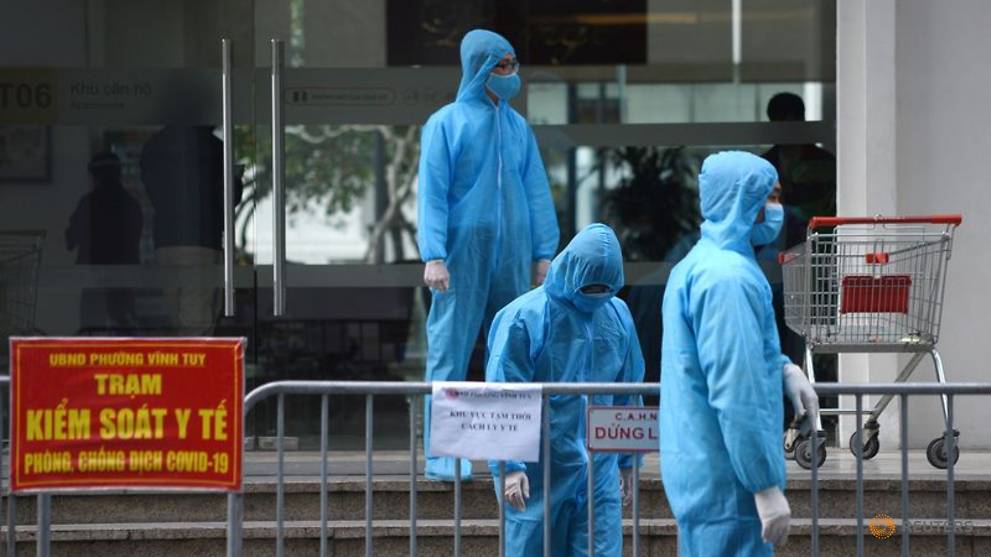
HANOI: Vietnam health minister Nguyen Thanh Long said on Saturday (May 29) the country has detected a new variant of the coronavirus, a mix of the COVID-19 variants from India and the United Kingdom that spreads quickly by air, online newspaper VnExpress reported.

After successfully containing the coronavirus for most of last year, Vietnam is now battling an outbreak that is spreading more quickly.

Nearly 3,600 people have been infected in 31 of its 63 cities and provinces since late April, accounting for more than half of the country's total infections.

READ: Vietnam expands COVID-19 lockdown measures as infections hit record

"After running gene sequencing on newly detected patients, we have discovered a new variant that is a mix of India and UK ones," Nguyen Thanh Long was quoted as saying.

"More specifically, it is an Indian variant with mutations that originally belong to the UK variant," he said. VnExpress quoted Long as saying Vietnam would announce the newly discovered variant to the world soon.

Vietnam had previously reported seven virus variants: B1222, B1619, D614G, B117 (the variant from the UK), B1351, A231 and B16172 (the variant from India).

READ: COVID-19 virus variants from India detected in Singapore – What you need to know

Laboratory cultures of the new variant, which is much more transmissable than the previously known types, revealed that the virus replicated itself very quickly, explaining why so many new cases appeared in different locations in a short period, Nguyen Thanh Long was quoted as saying.

Vietnam has registered 6,396 coronavirus cases so far, with 47 deaths.

BOOKMARK THIS: Our comprehensive coverage of the COVID-19 pandemic and its developments

Download our app or subscribe to our Telegram channel for the latest updates on the coronavirus outbreak: https://cna.asia/telegram

Adblock test (Why?)


https://news.google.com/__i/rss/rd/articles/CBMicWh0dHBzOi8vd3d3LmNoYW5uZWxuZXdzYXNpYS5jb20vbmV3cy9hc2lhL3ZpZXRuYW0taHlicmlkLWNvdmlkLTE5LXZhcmlhbnRzLWZyb20taW5kaWEtdWstc3ByZWFkLW91dGJyZWFrLTE0OTA5ODA40gEA?oc=5

2021-05-29 05:23:57Z
CBMicWh0dHBzOi8vd3d3LmNoYW5uZWxuZXdzYXNpYS5jb20vbmV3cy9hc2lhL3ZpZXRuYW0taHlicmlkLWNvdmlkLTE5LXZhcmlhbnRzLWZyb20taW5kaWEtdWstc3ByZWFkLW91dGJyZWFrLTE0OTA5ODA40gEA

Jumat, 28 Mei 2021

Mystery still unsolved: What we know about the origins of Covid-19 - The Straits Times

WASHINGTON (REUTERS) - Scientists are revisiting a central mystery of Covid-19: Where, when and how did the virus that causes the disease originate?

The two prevailing competing theories are that the virus jumped from animals, possibly originating with bats, to humans, or that it escaped from a virology laboratory in Wuhan, China.

The following is what is known about the virus' origins.

Why is the lab in Wuhan a focus of interest?

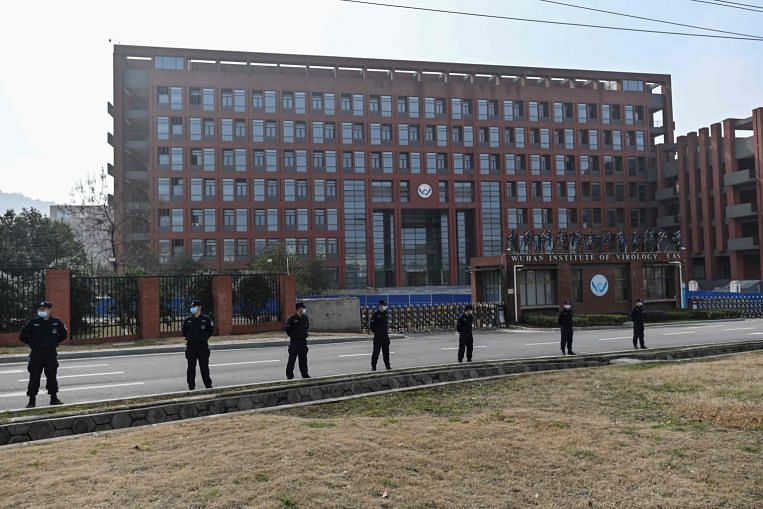
The Wuhan Institute of Virology (WIV) is a high-security research facility that studies pathogens in nature with the potential to infect humans with deadly and exotic new diseases.

The lab has done extensive work on bat-borne viruses since the 2002 Sars-CoV-1 international outbreak, which began in China, killing 774 people worldwide. The search for its origins led years later to discovery of SARS-like viruses in a southwest China bat cave.

The institute collects genetic material from wildlife for experimentation at its Wuhan lab. Researchers experiment with live viruses in animals to gauge human susceptibility. To reduce the risk of pathogens escaping accidentally, the facility is supposed to enforce rigorous safety protocols, such as protective garb and super air filtration. But even the strictest measures cannot eliminate such risks.

Why do some scientists suspect a laboratory accident?

To some scientists, the release of a dangerous pathogen via a careless lab worker is a plausible hypothesis for how the pandemic started and warrants investigation. The Wuhan lab, China's leading Sars research facility, is not far from the Huanan Seafood Market, which early in the health crisis was cited as the most likely place where animal-to-human transmission of the virus may have taken place. The market was also the site of the first known Covid-19 superspreader event.

Their proximity raised immediate suspicions, fuelled by the failure so far to identify any wildlife infected with the same viral lineage and compounded by the Chinese government's refusal to allow the lab-leak scenario to be fully investigated.

Scientists and others have developed hypotheses based on general concerns about the risks involved in live virus lab research, clues in the virus' genome, and information from studies by institute researchers.

Although the Wuhan lab's scientists have said they had no trace of Sars-CoV-2 in their inventory at the time, 24 researchers sent a letter to the World Health Organisation (WHO) urging a rigorous, independent investigation.

The WHO's first such mission to China this year failed to probe deeply enough, they wrote.

A US State Department fact sheet, released before the WHO mission in the waning days of the Trump Administration, alleged, without proof, that several WIV researchers had fallen sick with symptoms consistent with Covid-19 or common seasonal illnesses before the first publicly confirmed case in December 2019.

A May 5, story by Nicholas Wade in the Bulletin of the Atomic Scientists, said lab scientists experimenting on a virus sometimes insert a sequence called a "furin cleavage site" into its genome in a manner that makes the virus more infective.

David Baltimore, a Nobel Prize-winning virologist quoted in the article, said when he spotted the sequence in the Sars-CoV-2 genome, he felt he had found the smoking gun for the origin of the virus.

What are the arguments for animal-to-human transmission?

Many scientists believe a natural origin is more likely and have seen no scientific evidence to support the lab leak theory.

Dr Kristian G. Andersen, a scientist at Scripps Research who has done extensive work on coronaviruses, Ebola and other pathogens transmissible from animals to humans, said similar genomic sequences occur naturally in coronaviruses and are unlikely to be manipulated in the way Baltimore described for experimentation.

Scientists who favour the natural origins hypothesis have relied largely on history. Some of the most lethal new diseases of the past century have been traced to human interactions with wildlife and domestic animals, including the first Sars epidemic (bats), Mers-CoV (camels), Ebola (bats or non-human primates) and Nipah virus (bats).

While an animal source has not been identified so far, swabs of stalls in the wildlife section of the wildlife market in Wuhan after the outbreak tested positive, suggesting an infected animal or human handler.

Has new information emerged to lend credence to one theory over another?

The scientists' March 4 letter to the WHO refocused attention on the lab-leak scenario, but offered no new evidence.

Nor has definitive proof of a natural origin surfaced.

US President Joe Biden on May 26 said his national security staff does not believe there is sufficient information to assess one theory to be more likely than the other. He instructed intelligence officials to collect and analyse information that could close in on definitive conclusion and report back in 90 days.

Related Stories: 

Adblock test (Why?)


https://news.google.com/__i/rss/rd/articles/CBMiTGh0dHBzOi8vd3d3LnN0cmFpdHN0aW1lcy5jb20vYXNpYS93aGF0LXdlLWtub3ctYWJvdXQtdGhlLW9yaWdpbnMtb2YtY292aWQtMTnSAQA?oc=5

2021-05-29 03:12:57Z
52781625689718

COVID-19 sweeps through Thailand's overcrowded prisons - CNA

BANGKOK: A coronavirus surge sweeping through Thailand's prisons has thrown the spotlight on the kingdom's overcrowded penal system, where some inmates have less space to sleep than the inside of a coffin.

More than 22,000 people have tested positive inside jails, where inmates living cheek by jowl have been encouraged to keep wearing their masks even while they sleep.

Authorities have floated plans to give early releases to prisoners with underlying medical conditions and have announced funding for more testing and medical care in recent days.

READ: COVID-19 – Provisional release on the cards for some inmates in Thailand amid overcrowding

But those behind bars say they have been kept in the dark about the seriousness of the outbreak.

"Prisoners don't have the knowledge to protect themselves," said Somyot Prueksakasemsuk, a high-profile activist facing charges under Thailand's harsh royal defamation law.

Somyot was bailed last month and told AFP that he had not been tested for COVID-19 once during his 10-week stint in custody.

He was not worried about contracting the disease while in jail because he had no idea about the level of risk.

"But after this I'm so scared (for everyone still inside) ... if you are inside the prison you are at risk, it's unavoidable," he said.

Thailand's prison outbreak has skyrocketed from just 10 publicly announced cases a month ago and sparked growing public concern after a handful of prominent activists contracted the illness.

Among them was student leader Panusaya "Rung" Sithijirawattanakul, who helped lead a series of rallies last year demanding political reforms in the kingdom, and who tested positive after she was released on bail.

Health workers vaccinate inmates at Minburi Remand Prison in Bangkok. More than 22,000 people have
Health workers vaccinate inmates against COVID-19 at Minburi Remand Prison in Bangkok. (Photo: AFP/Handout)

"LESS ROOM THAN A COFFIN"

The Thai prison population stood at around 311,000 earlier this year, the International Federation for Human Rights said - more than two-and-a-half times the system's official capacity.

Four inmates in every five are serving time for drug charges because of harsh anti-narcotics laws that can see offenders jailed for a decade for possessing just a few methamphetamine pills.

Many cells are so packed with bodies that some inmates only have half a metre of space.

"That is less room for a body than the inside of a coffin," Justice Minister Somsak Thepsutin told local media in February.

READ: Thailand authorises Sinopharm COVID-19 vaccine, royal academy seeks 1 million doses

Officials have tested more than 36,000 inmates in recent weeks and begun delivering COVID-19 vaccines to inmates and prison staff.

Somsak said he was examining ways to give early releases to prisoners with underlying medical conditions, possibly through a royal pardon.

Even if the plan goes ahead, prisoners will still have to complete a quarantine before returning home.

"For us to bail anyone or do anything, it has to be done properly," Somsak told reporters on Monday. "We can't allow them to spread infections."

Rights groups say the plan should go further and urged authorities to also free non-violent offenders in order to reduce overcrowding.

"Authorities should reduce the detainee population... of those held on politically motivated charges or for minor offences," said Brad Adams of Human Rights Watch.

BOOKMARK THIS: Our comprehensive coverage of the COVID-19 pandemic and its developments

Download our app or subscribe to our Telegram channel for the latest updates on the coronavirus outbreak: https://cna.asia/telegram

Adblock test (Why?)


https://news.google.com/__i/rss/rd/articles/CBMiZWh0dHBzOi8vd3d3LmNoYW5uZWxuZXdzYXNpYS5jb20vbmV3cy9hc2lhL2NvdmlkLTE5LXRoYWlsYW5kLXByaXNvbi1qYWlsLW92ZXJjcm93ZGVkLW91dGJyZWFrLTE0OTA5Mzk20gEA?oc=5

2021-05-29 03:04:21Z
52781629675811

COVID-19 storm engulfs Mount Everest - CNA

KATHMANDU: Mount Everest guide Buddhi Bahadur Lama has spent days isolated in a tent after testing positive for coronavirus, as an outbreak that climbers say is putting lives at risk sweeps base camp.

He is one of four in his expedition team thought to have contracted COVID-19 at the foot of the world's highest mountain, along with a growing number of others.

"This is not just our problem, it is happening in most of the teams at the base camp right now," the 35-year-old told AFP.

Dozens of suspected COVID-19 cases have been flown out of the area and at least two companies have cancelled expeditions after team members tested positive.

However, authorities in Nepal have yet to acknowledge a single case at the mountain, with the stakes high for the country's tourism industry after a coronavirus shutdown last year cost millions in lost revenue.

READ: Nepal says Everest climbing continues despite reports of COVID-19

Lama's symptoms are mild but he said some climbers were suffering more severely.

The warmer weather that ushers in safer conditions for scaling Everest and other Himalayan peaks has coincided with a new wave of COVID-19 infections in Nepal.

The country is reporting an average of 8,000 cases a day and the health system has been overwhelmed.

More than 350 people have summited Everest so far this spring
More than 350 people have summited Mount Everest so far this spring. (Photo: AFP/PRAKASH MATHEMA)

Over the last two months since the climbing season began, more than 1,000 mountaineers and their mainly Nepali guides have been camped in the tent city.

More than 350 have reached the summit so far this season, but some are still at base camp waiting for the next weather window.

Breathing is already difficult at high altitudes so the coronavirus becomes a major threat if symptoms appear during a climb.

Officials at a camp clinic say more than 30 people have been flown out for health issues in recent weeks. Some have posted their COVID-19 diagnosis on social media.

READ: At least 100 COVID-19 cases on Mount Everest, says climbing guide

But the government says it is unaware of any cases.

"We have asked companies and officials to report to us if they have any COVID cases but none has submitted anything yet. We need an official report," said Nepal's tourism department chief Rudra Singh Tamang.

"If people have tested positive in Kathmandu, it is hard to say where they got infected."

There is also a lack of transparency among some expedition organisers about positive cases.

Over the last two months since the climbing season began, more than 1,000 mountaineers and their
Over the last two months since the climbing season began, more than 1,000 mountaineers and their mainly Nepali guides have been camped in the tent city at base camp. (Photo: AFP/Prakash MATHEMA)

"LIVES AT RISK"

Austrian expedition organiser Lukas Furtenbach, who was the first to cancel an expedition, said he had submitted a report to the government.

"There is an outbreak and there is evidence for that. But the government is denying this outbreak and putting our lives and the lives of their own people, the Sherpas, at risk," he said.

READ: Everest hopefuls 'camp' at home to avoid COVID-19 in Nepal

Last week Furtenbach was waiting to begin his ascent and his team of 19 climbers had already started acclimatisation treks when the virus struck.

One person in the group tested positive with a rapid test kit and the next day three Sherpas also returned positive results.

Eventually, eight in the expedition were found to have COVID-19, with seven confirmed by a polymerase chain reaction test in Kathmandu.

Furtenbach believes they were infected on the mountain - the only time his expedition was in close contact with other teams.

The company has also helped other climbing teams test for the virus and two people have shown positive results.

"If someone dies up there with COVID the families would sue us - when we knew about the outbreak and were still sending people up. This is a liability," he said.

Nepal suffered a devastating blow to its tourism industry last year when the pandemic forced a complete shutdown of its mountaineering sector.

Without foreign climbers, the Sherpas and other guides - who are often the sole breadwinners for their families - lost their main source of income.

Kunga Sherpa was evacuated from base camp after he tested positive and is now recovering in Kathmandu.

"If we think financially, many need this year's earnings, but lives are important and perhaps, in a way, it would have been good to not climb this season," he said.

BOOKMARK THIS: Our comprehensive coverage of the COVID-19 pandemic and its developments

Download our app or subscribe to our Telegram channel for the latest updates on the coronavirus outbreak: https://cna.asia/telegram

Adblock test (Why?)


https://news.google.com/__i/rss/rd/articles/CBMia2h0dHBzOi8vd3d3LmNoYW5uZWxuZXdzYXNpYS5jb20vbmV3cy9hc2lhL2NvdmlkLTE5LW91dGJyZWFrLW5lcGFsLW1vdW50LWV2ZXJlc3QtYmFzZS1jYW1wLWNsaW1iZXJzLTE0OTA5Mjk20gEA?oc=5

2021-05-29 02:22:02Z
52781627083547