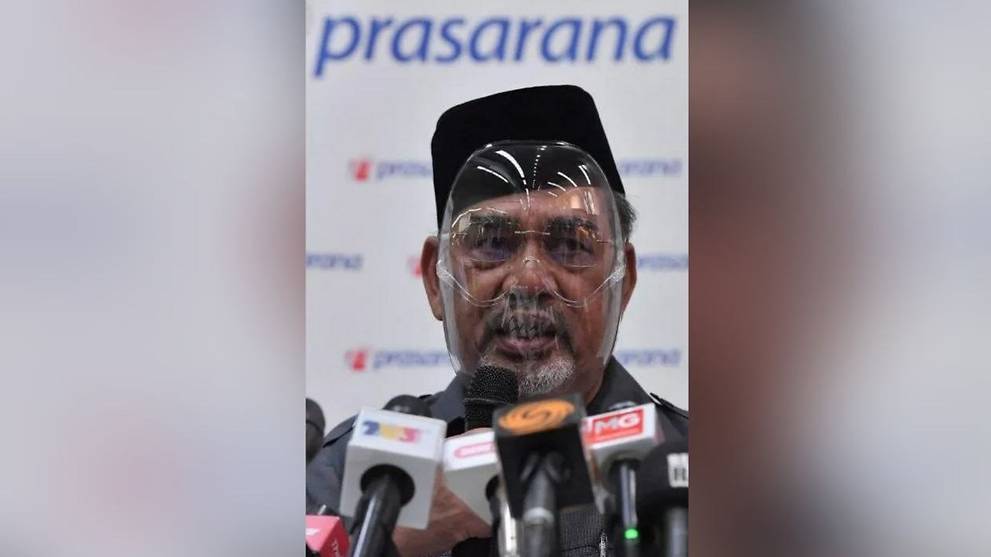
KUALA LUMPUR: Tajuddin Abdul Rahman, the chairman of rail operator Prasanara, had his service terminated "with immediate effect", said Malaysia's Ministry of Finance on Wednesday (May 26).
This comes after his conduct during a press conference on Tuesday about the recent LRT train collision near KLCC station was criticised by members of the public.
The crash, which happened on Monday night, left more than 210 people injured. Two passengers who were injured in the collision have undergone brain surgery, with a third needing cerebral resuscitation treatment.
Speaking at a press conference on Tuesday, Tajuddin appeared to joke about the collision in response to a question from a reporter on the situation in the tunnel.
"Normal ... only the two cars are together. They kissed each other," Tajuddin said laughing during the televised news conference.
The New Straits Times reported on Wednesday that the Malaysian Public Transport Users Association (4PAM) criticised Tajuddin's conduct during the press conference.
Its president Ajit Johl said Tajuddin's press conference after his visit to the collision site was "nothing short of rude and disgusting", reported the New Straits Times.
POLICE INVESTIGATING TAJUDDIN FOR NOT WEARING MASK
Tajuddin is also being investigated by the police for not wearing a face mask during the press conference on Tuesday.
Dang Wangi district police chief ACP Mohamad Zainal Abdullah said all parties involved in the case will be called to the Dang Wangi district police headquarters for questioning.
"We have contacted Tajuddin and he has agreed to give his statement; media personnel and other individuals who were at the scene too,” he told reporters.
The police chief said the authorities opened the investigation after videos of Tajuddin wearing a face shield but not a face mask at the press conference went viral on social media.
SYDNEY: Australia's second most populous state reported on Wednesday (May 26) its biggest single-day rise in COVID-19 cases in more than seven months and warned the next 24 hours would be critical to limit the spread of a cluster without clamping on tough new curbs.
The six new cases were the largest daily rise in the southeastern state of Victoria since October 2020. Authorities warned that more than 300 close contacts of sufferers had been identified, with many having visited crowded locations.
"These cases are linked and that's a good thing, but we are very concerned by the number and by the kind of exposure sites," the state's acting Premier James Merlino told reporters in Melbourne.
"I cannot rule out taking some further action."
A strict lockdown ordered in Victoria last year ran for more than 100 days after an outbreak of more than 20,000 infections and 820 deaths, which accounted for about 70 per cent of cases and 90 per cent of deaths nationwide.
The city of five million re-introduced curbs on Tuesday that include mandatory masks in restaurants, hotels and other indoor locations until Jun 4. Gathering sizes were also limited.
Other Australian states moved on Wednesday moved to limit movement, with South Australia blocking all arrivals from Victoria.
The cluster has been traced back to an overseas traveller carrying a variant first found in India who had completed quarantine in South Australia, although officials have not worked out how it spread.
The unnamed man tested negative in hotel quarantine and flew back to the state capital of Melbourne this month but tested positive six days after he arrived.
Authorities in Victoria believed they had reined in the cluster but an error in tracing the man's movements has stoked concern that scores of infections could have gone undetected for a couple of weeks.
Amid growing anxiety, the federal government said it would send 40,000 doses of AstraZeneca's vaccine to Victoria in a scramble to immunise those in aged care facilities.
Australia's use of swift contact tracing, local shutdowns and tough social distancing has helped keep its figures low versus other developed countries.
But fewer than 10 per cent of the population has been inoculated, amid supply issues and a policy change allowing those younger than 50 to receive the Pfizer-BioNTech vaccine.
KUALA LUMPUR (BLOOMBERG) - Malaysia's surge in coronavirus cases is following an exponential trend since the start of last month and the nation should prepare for the worst, Health director-general Noor Hisham Abdullah said on Twitter on Tuesday (May 25).
The infections could "trigger a vertical surge", he said, asking people to comply with the new measures that require most government officials and 40 per cent of private sector staff to work from home.
"Only together we can break the chain of infection."
New Covid-19 cases have stayed above 6,000 for seven straight days and the health ministry has said the tally may exceed 8,000 by next month if people do not follow the virus protocols.
The worsening outbreak has stressed the healthcare system and prompted the government to further tighten restrictions on the weekend.
Just under 3 per cent of Malaysia's population is fully vaccinated, though the government aims to achieve herd immunity by year end.
Meantime, the surge has left some hospitals running low on beds in intensive care units (ICUs).
The situation is dire in the state of Penang as well as the Klang Valley area, which comprises Selangor, Kuala Lumpur and Putrajaya, where the use of Covid-19 ICU beds is at full capacity, Dr Noor Hisham said on Facebook.
"We have to stay safe and it's safest to stay home and follow the SOPs (standard operating procedures)," Prime Minister Muhyiddin Yassin said in an interview with state-owned RTM television on Sunday, while ruling out a repeat of last year's national lockdown.
Malaysia's Covid-19 reproduction number that shows how quickly the virus multiplies climbed to 1.21 as at Sunday, Dr Noor Hisham said on Monday.
The reading was at 1.14 at the start of the Ramadan fasting month in mid-April.
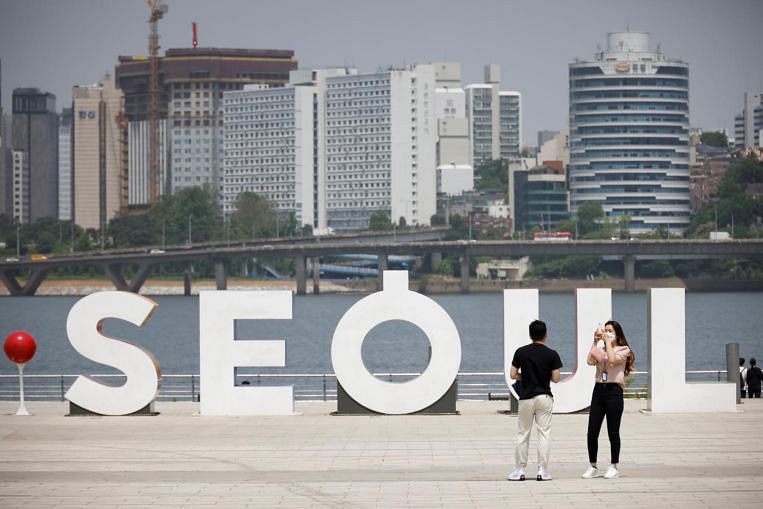
SEOUL (REUTERS) - South Korea on Wednesday (May 26) said masks will no longer be required outdoors from July for those vaccinated with at least one Covid-19 shot.
People given at least one dose also will be allowed to gather in larger numbers starting June, Prime Minister Kim Boo-kyum told a coronavirus response meeting on Wednesday.
He said all quarantine measures would be adjusted once more than 70 per cent of residents had received their first dose.
Over 60 per cent of people aged between 60 and 74 had signed up for vaccination, Health Minister Kwon Deok-cheol said.
South Korea will begin vaccinating the general public aged between 65 and 74 from Thursday in over 12,000 clinics.
South Korea reported 707 new confirmed cases of the coronavirus on Tuesday, bringing the total tally to 137,682 infections, with 1,940 deaths.
WASHINGTON: Long dismissed as a kooky conspiracy theory favoured by the far right, the idea that COVID-19 emerged from a lab leak in Wuhan has been gaining increasing momentum in the United States.
The government's position has shifted to agnosticism in recent weeks, with top pandemic advisor Anthony Fauci and Centers for Disease Control and Prevention director Rochelle Walensky both saying they are open to all possibilities.
"We need to get to the bottom of this and we need a completely transparent process from China, we need the WHO (World Health Organization) to assist in that matter," senior White House COVID-19 advisor Andy Slavitt said Tuesday.
The demand for more investigation is in stark contrast to the start of the pandemic, when scientists quickly came together around the idea that the virus crossed over from bats via an intermediary animal.
The problem is, this link still hasn't been found, Scott Gottlieb, a former head of the Food and Drug Administration, told CNBC on Monday - and not for want of trying.
Previous coronaviruses that crossed over to humans, SARS and MERS, were quickly traced back to civets and camels.
"The question for a lot of people is going to be when are too many coincidences too much?" added Gottlieb.
Citing a US intelligence report, The Wall Street Journal reported Sunday that a trio from the Wuhan Institute of Virology were hospitalised with a seasonal illness in November 2019.
China disclosed the existence of an outbreak of pneumonia cases in Wuhan to the World Health Organization (WHO) on Dec 31, 2019.
Beijing dismissed the Journal report as "totally untrue".
TRANSPARENCY CALLS
On Tuesday, the United States and other countries called for a more in-depth probe into the pandemic's origins, after an international mission to China earlier this year proved inconclusive.
A long-delayed report by a team of experts dispatched by the WHO to Wuhan and their Chinese counterparts drew no firm conclusions on the origins of the pandemic.
It said that a natural origin was the most probable scenario, and that a theory involving the virus leaking from a laboratory was "extremely unlikely."
After the report was released, however, WHO chief Tedros Adhanom Ghebreyesus himself insisted all theories remained on the table.
And calls from scientists for more transparency are growing.
"We must take hypotheses about both natural and laboratory spillovers seriously until we have sufficient data," a group of researchers from top US universities wrote in a letter published by the journal Science in mid-May.
The virus has claimed more than 3.4 million lives worldwide and determining how it passed to humans is considered crucial in preventing the next pandemic.
TRUMP TRIUMPHANT
In the United States, the hypothesis of a leak of the virus from the Chinese laboratory was previously fuelled mainly by Donald Trump and his acolytes, and the matter became mired in the country's divided politics.
"Now everybody is agreeing that I was right when I very early on called Wuhan as the source of COVID-19," the former president said Tuesday.
"To me it was obvious from the beginning but I was badly criticised, as usual. Now they are all saying 'He was right.' Thank you!"
However, many experts remain cautious.
"Many of us feel that it is more likely that this is a natural occurrence, as has happened before," Fauci told reporters Tuesday.
"But we don't know 100 per cent the answer to that."
The truth may never be known, said Gottlieb. Evidence supporting a lab leak won't surface unless there is a whistleblower or regime change in China.
SINGAPORE - Largely spared the brunt of the Covid-19 pandemic for most of 2020, South-east Asia is now in the grip of a new wave of infections that is putting unprecedented pressure on health systems of countries in the region and threatening to bring their economies to the ground.
In Thailand, hospital beds are quickly filling up after infections, first seeded in some exclusive entertainment outlets in Bangkok, resulted in the country's highest-ever number of daily cases in early April. The number spiked again after Songkran, the Thai new year.
Since then, the caseload has crept upwards and has more than quadrupled to nearly 135,000 as authorities struggled to contain outbreaks in overcrowded prisons, markets and camps housing construction workers.
The youngest victim so far is a two-month old baby with a heart condition. While the government reassured the public that it has enough beds to treat Covid-19 patients, more than half of those beds are located in field or hotel hospitals, according to data from the Department of Medical Services. Up until Jan 1, Thailand had only 7,379 cases.
In neighbouring Malaysia, daily cases have hovered at over 6,000 for the past week. On Tuesday (May 25), 7,289 cases were reported, a day after a record 61 deaths were registered along with 711 admissions to intensive care units.
While Malaysia's caseload of over 525,000 infections is nowhere near India's 26 million, its per capita daily confirmed cases on a seven-day rolling average at 194 for every million people have already surpassed India, which stands at 178 per million.
The Ro/Rt - the reproduction rate of the virus - has inched up to 1.21, which means 8,000 daily cases could be seen at the start of June. The Health Ministry has revealed that more than a third of new Covid-19 patients in April required supplemental oxygen, pointing to more virulent coronavirus strains in Malaysia.
In the Philippines, a variants-fuelled surge that began in December has seen hospitals overwhelmed. Cases leapt to more than 15,000 a day, three times last year's peak number. As hospitals ran out of beds, harrowing tales of Covid-19 patients dying at home and in hospital parking lots and walkways dogged the headlines, forcing the government to fall back to what has proven to be its most potent weapon: a hard lockdown.
Sweeping quarantine restrictions in Metro Manila and four nearby provinces - home to a quarter of the nation's population and where cases were highest - from March 29 to April 10 brought infections down by half. Still, there are concerns that another surge is not far off. In one region just south of Metro Manila - with a population of some 3 million - 55 per cent of tests are coming back positive.
"We have variants of concern also circulating in this region which are two times more transmissible than the original strain. Also the severity caused by this strain is higher than the one caused by the original Sars-Cov-2," said Dr Abhishek Rimal, Asia Pacific Emergency Health Coordinator of the International Federation of Red Cross and Red Crescent Societies (IFRC).
"In the Philippines, we are seeing the cases coming down, but not to the extent that we like because all four variants of concern are circulating there."
The four variants include the B117 which originated in Britain, the B1351 variant first detected in South Africa, and the P1 strain first found in Brazil. The Philippines has also detected another highly transmissible variant, dubbed the "double mutant" B1617 that was first identified in India and which has also been detected in Malaysia, Cambodia, Indonesia, Thailand, Singapore and Vietnam.
While the explosion of cases in Thailand and Malaysia are worrying, experts are more concerned about other countries where the healthcare system is not as well equipped and hence more vulnerable to rising cases, such as Cambodia, Laos and Myanmar.
Cambodia and Laos, which were largely spared last year - thanks to swift and stringent measures and protection from neighbouring countries which have done relatively well in keeping the virus at bay - are seeing an exponential rise in cases.
Both countries have blamed the outbreak on foreigners and returning migrant workers. In Cambodia, the B117 variant which spawned the new wave in the country in February was suspected to have spread to Thailand.
The hospitals are so overwhelmed in Cambodia that Prime Minister Hun Sen on April 7 ordered health officials to prepare to treat Covid-19 patients at home.
"We can't accept all patients in case that cases increase further," he told reporters. Three days later, he announced that the number of infections had reached a level beyond hospital capacity. The country's caseload has jumped 50 times since February to 25,205 as of May 23. As of Feb 1, it had only 466 cases, according to Johns Hopkins University's Covid-19 tracker.
Bogged down by its own political crisis after the Feb 1 coup, Myanmar has given up on updating its daily Covid-19 figures as rigorously as before.
"If we talk about the absolute number of cases, Thailand and Malaysia come on top. But, at the same time, we have to remember these two countries have a high number of people being tested and these two countries have good and robust health systems," said Dr Abhishek. "However, if we look at Cambodia, Laos and Myanmar, they don't have an equally developed health system. So, an increasing number of cases in these countries will be a matter of concern."
Hidden death toll
The virus has inflicted a human toll never before seen. All across South-east Asia, millions are suffering in silence with as many as 78,000 people dead so far. But the real death toll is more than likely to be higher for various reasons.
Research has shown that more than 70 per cent of cases are asymptomatic, which means many more would have escaped detection.
During the previous surge in the Philippines, for instance, most of those who died at home or while waiting for hospital beds were not included in the Health Ministry's daily tally because they were never tested or their results came out after they had already been buried.
Some of the poorer nations are ill-equipped to carry out rigorous testing and tracing of contacts, and isolation of confirmed patients. Many people have also avoided going to the hospital even if they suffered from Covid-19 symptoms because of social stigmas, said Dr Abhisek.
Universiti Malaya's public health professor Ng Chiu Wan found that Malaysia had 1,412 more deaths in the last quarter of 2019 among those 60 years and older, compared to the 2016-2018 historical mean for that period. This is despite other age groups reporting fewer deaths for that quarter against past averages.
The World Health Organisation said in a report released on Friday (May 21) that up to three times more people may have died due to the pandemic than the officially reported figures.
The Economist predicted the global excess death toll to be up to four times higher at between 7-13 million, most of them found in low- and middle-income countries. The magazine modelled the level of excess mortality using a method which takes the number of people who die from any cause in a given region and period, and then compares it with a historical baseline from recent years. The central estimate of the real death toll is very likely to be 10.2 million, according to the Economist.
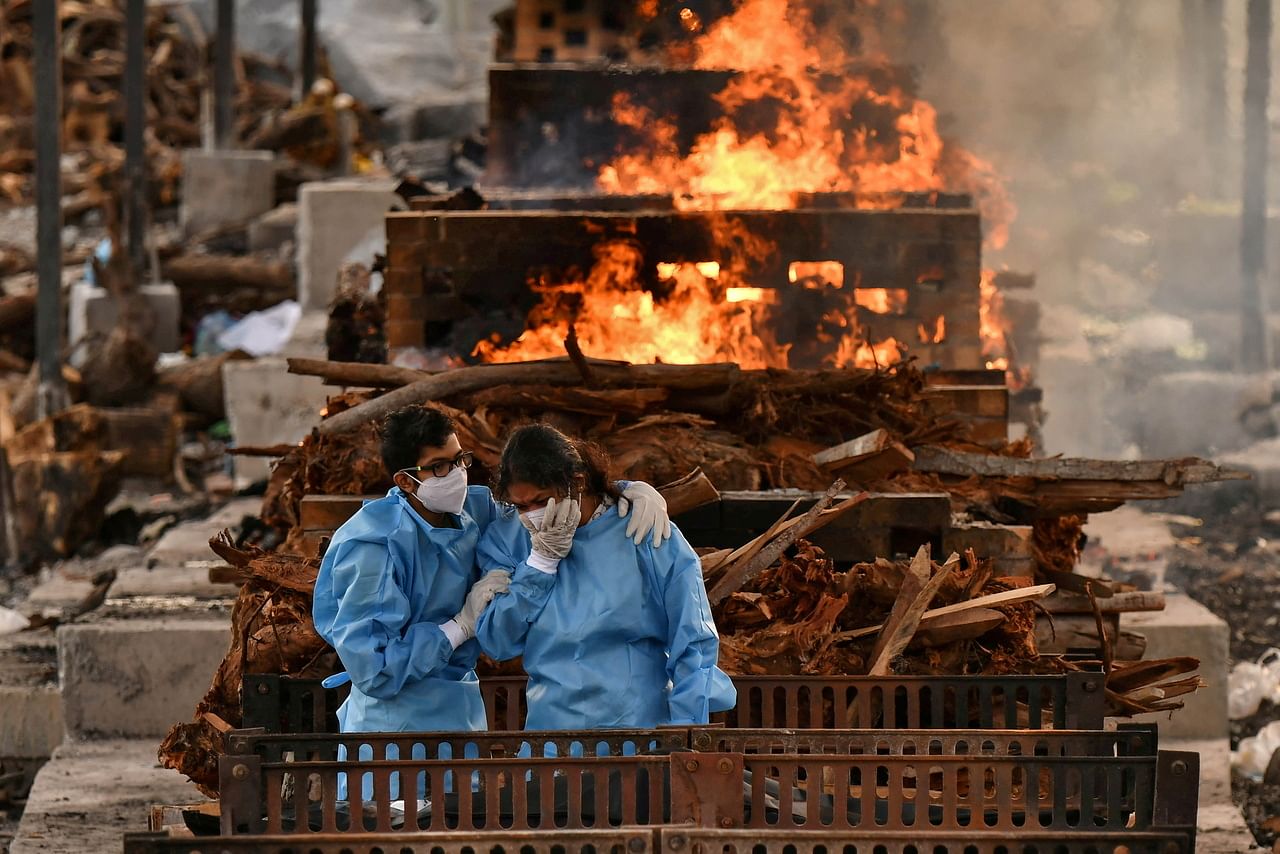
The scenarios that are playing out in South-east Asia are bleakly similar to what we have been seen in India and Nepal. PHOTO: RETUERS
"It is natural that in times like this you also struggle in reporting and that's not intentional. Several countries including China in February 2020 announced catch up reporting. We know excess deaths in many countries is greater than that explained by reported Covid-19 deaths," Dr Dale Fisher, Senior Consultant at the Division of Infectious Diseases, National University Hospital of Singapore told The Straits Times.
The scenarios that are playing out in South-east Asia are bleakly similar to what we have been seen in India and Nepal. There is a sense of pandemic fatigue in the increasing numbers of people flouting the rules that are meant to keep them safe. In Malaysia, thousands tried to cross state borders during Hari Raya Aidilfitri in May despite the rules banning such travel.
Indonesia, where daily cases have stabilised at under 6,000, is bracing for a sharp jump to up to 8,000 in daily new cases in the middle of June, which could possibly turn out to be the possible peak as 2.6 million people return to major cities after the Hari Raya holidays, Vice-Health Minister Dr Dante Saksono told an online media briefing with foreign journalists on Tuesday (May 25).
"We are boosting our tracing efforts … evaluate people with no symptoms but have had close contacts with confirmed cases," Dr Dante said, adding that micro-lockdowns - a type of localised lockdown in neighbourhoods where positive cases are detected in five or more households - have been in effect since early February and would continue.
Economic toll
But those who lead a hand-to-mouth existence have hardly any choice. They need to leave their homes for their livelihoods.
In the Philippines, with each RT-PCR test costing over 4,000 pesos (S$110), or eight times the daily minimum wage, many are reluctant to be tested. A positive test result will also lead to a two-week quarantine which, for those earning on a daily basis, will be financially ruinous.
This may account for the uneven, skewed test data in cities like Paranaque, just an hour south of Manila, where more well-off districts are reporting more infections than in poorer, but more densely populated, neighbourhoods.
Stringent lockdowns in Cambodia have sparked an outcry among the economically vulnerable population who were going hungry locked inside their homes with government promised food and aid slow to come.
The Cambodian government has dismissed these concerns as fabricated news and banned journalists from broadcasting live in the capital, Phnom Penh, altogether.
These difficulties highlighted the dilemma of governments everywhere, who are stuck between a rock and a hard place. In countries such as the Philippines and Malaysia, governments are avoiding a full lockdown to prevent their economies from free falling.
"Government always have to swallow this bitter pill when they make a decision between full lockdown and semi-lockdown as they try to make sure people also don't die of hunger," says Dr Abhishek.
Among the biggest economies in South-east Asia, only Singapore and Vietnam have expanded. GDP growth in Malaysia and the Philippines contracted by 0.5 per cent and 4.2 per cent in the first quarter. Indonesia and Thailand have also reported negative growth.
Herd immunity aim
Many experts say one way to bring down Covid-19 deaths is through herd immunity. Governments have therefore ramped up vaccination campaigns after a slow start but they are still falling short.
Thailand, which inoculated about 3 million people or slightly more than 4 per cent of its population, was heavily criticised for its original vaccination strategy, which relied largely on locally produced AstraZeneca vaccines which were not due to come on stream until June.
In the interim, it relied on smaller batches of Sinovac and imported AstraZeneca shots. On May 13, the Thai Food and Drug Administration (FDA) granted emergency authorisation for use of the Moderna vaccine, which would pave the way for private hospitals to offer the shots and speed up the pace of inoculation. It is also spacing out the second dose of the AstraZeneca vaccine to give more people the first dose . In an effort to speed up vaccinations, Thailand is allowing on-site registrations from June.
Malaysia has tripled the number of doses administered on a seven-day average compared to just a fortnight ago. Prime Minister Muhyiddin Yassin said on Sunday that 80 per cent of the population could be vaccinated before the end of the year.
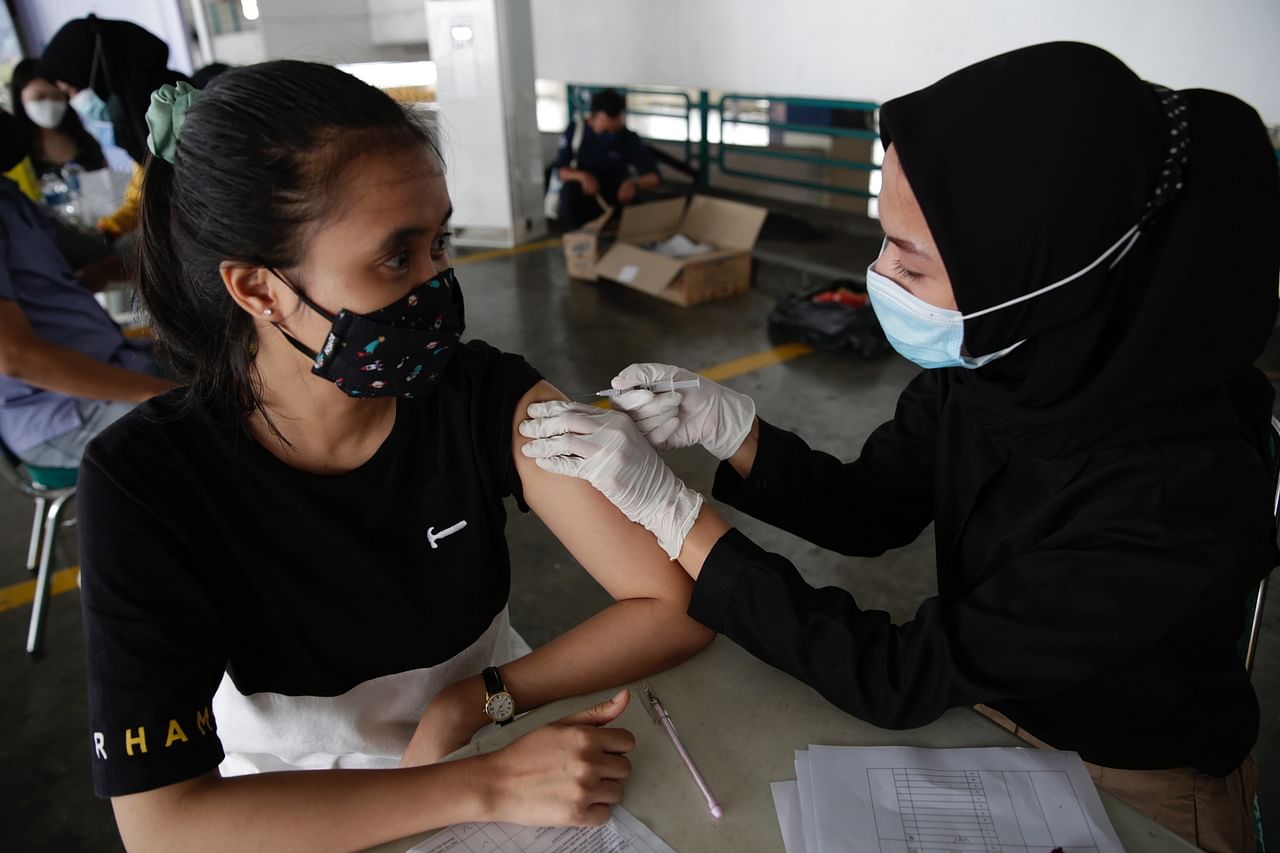
Indonesia and the Philippines, which make up more than half of South-east Asia's 655 million-strong population, have inoculated only about 5 per cent and 2 per cent of their population respectively, according to ourworldindata.org and SDG-Tracker, a joint effort between the University of Oxford and non-profit organisation Global Change Data Lab.
The best bet, for now, is still for wealthy nations to delay vaccinating their young and healthy and donate their unused doses to developing countries.
The European Union has pledged to donate 100 million doses, either bilaterally or through the Covax facility - a UN-backed programme for distributing Covid-19 vaccines to low and middle income countries.
President Joe Biden said last week the United States would donate 20 million Pfizer/BioNTech, Moderna and Johnson & Johnson vaccine doses on top of the 60 million AstraZeneca doses it has already planned to give away.
Indonesia has inoculated only about five per cent of its population. PHOTO: EPA-EFE
As inoculation proceeds in earnest, some companies and universities in Vietnam and Thailand have started conducting clinical trials on homegrown vaccines. But they have largely hit a brickwall trying to get a manufacturer who could take their orders against the backdrop of tight production schedules currently.
It will take some time before South-east Asia can achieve herd immunity. An Economist Intelligence Unit forecast released in April showed that countries in the region will not do so until at least the end of 2022.
If anything has been learned from past pandemics, it is that a virus evolves and the second wave tends to be deadlier than the first. South Asia is unfortunately bearing the brunt of the second wave at the moment. Given its porous borders and the high movement of people, South-east Asia may have to brace itself for the same scenario if countries do not get their acts together.
"The first wave was controlled very well across Asia... But what we see now is a huge surge of patients in South Asia - many more patients need hospitalisation and the hospitals are getting full. That should be a stark reminder to South-east Asian countries that we must double our efforts in containing the pandemic right now," says Dr Abhishek of the IFRC, who has been involved in the distribution of aid and Covid-19 testing across South-east Asia, as well as engagement works in communities to battle the pandemic.
"If we wait too long, we might see a situation like in Nepal or India."