Kamis, 20 Mei 2021

Ceasefire between Israel, Hamas comes into force - CNA

JERUSALEM: A highly anticipated ceasefire between Israel and the Hamas militants who run the Palestinian Gaza Strip officially came into force early on Friday (May 21) at 2am (7am, Singapore time).

Only celebratory gunfire was heard on Gaza streets, AFP journalists said, while no Hamas rockets were fired on Israel in the minutes after the truce began, which seeks to end 11 days of deadly clashes.

The truce brokered by Egypt, which also included Gaza's second-most powerful armed group, Islamic Jihad, was announced on Thursday following mounting international pressure to stem the bloodshed.

US President Joe Biden welcomed the deal.

"I believe we have a genuine opportunity to make progress and I'm committed to working toward it," Biden said at the White House, hailing Egypt's role in brokering the agreement.

A statement from Israeli Prime Minister Benjamin Netanyahu's office said the security Cabinet had "unanimously accepted the recommendation of all of the security officials ... to accept the Egyptian initiative for a mutual ceasefire without pre-conditions".

Hamas and Islamic Jihad then confirmed the ceasefire, saying it would come into force at 2am on Friday.

READ: At UN, US defends its efforts to broker Israel-Palestinian ceasefire

The Israeli statement said its aerial campaign had made "unprecedented" achievements in Gaza, a territory it has blockaded since 2007, the year of Hamas' takeover.

"The political leadership emphasises that it is the reality on the ground that will determine the future of the operation," it added.

US Secretary of State Antony Blinken said on Thursday he would be "prepared at any time to go to Israel, to the Middle East, if that would serve the purpose of moving beyond the violence and helping to work on improving lives for Israelis and Palestinians alike".

EGYPT TO MONITOR

Fighting erupted on May 10 after weeks of tensions in Jerusalem, notably over planned evictions of Palestinians from their homes in east Jerusalem to make way for Jewish settlers, and clashes at the sensitive Al-Aqsa mosque compound.

The Israeli army said Hamas and other Islamist armed groups in Gaza have since fired more than 4,300 rockets towards Israel, but the overwhelming majority of those headed for populated areas were intercepted by its Iron Dome air defences.

Streaks of light are seen as Israel's Iron Dome anti-missile system intercepts rockets launche
Streaks of light are seen as Israel's Iron Dome anti-missile system intercepts rockets launched from the Gaza Strip towards Israel, as seen from Ashkelon, May 20, 2021. (Photo: REUTERS/ Amir Cohen)

The rockets have claimed 12 lives in Israel, including two children and an Israeli soldier, with one Indian and two Thai nationals among those killed, the police say.

Israeli strikes on Gaza have killed 232 Palestinians, including 65 children, fighters and another 1,900 wounded, according to the Gaza health ministry, leaving vast areas in rubble and displacing some 120,000 people, according to Hamas authorities.

Diplomatic sources told AFP in Cairo that "two Egyptian delegations will be dispatched to Tel Aviv and the Palestinian territories to monitor its (the ceasefire) implementation and procedures to maintain stable conditions permanently."

'STAY HOME'

As Israeli officials were meeting to approve the ceasefire proposal, rocket fire continued towards communities near the Gaza border.

And reflecting the fact that further rockets could still fall, Israel's army ordered the area's residents to stay in their homes "until further notice".

"All movement and activity in open space is prohibited," the army said, as air raid sirens continued to wail in the area.

Shortly after the truce was announced, Islamic Jihad boasted that it had "managed to humiliate" Israel.

The group also vowed to remain the defender of Palestinians in Jerusalem, the divided city where weeks of simmering tensions exploded earlier this month, triggering the Gaza conflict.

Palestinians Israel
People inspect destroyed cars and the rubble of residential building which was hit by Israeli airstrikes, in Gaza City, May 20, 2021. (Photo: AP/Adel Hana)

TENSIONS IN JERUSALEM

Israel's bombardment of what it describes as military targets in Gaza began after clashes between Israeli police and Palestinian protesters at the Al-Aqsa mosque compound.

Hamas had given Israeli forces a 6pm deadline to leave the compound, one of Islam's holiest places and possibly the world's most sensitive religious site.

When the deadline expired, Hamas launched rockets, prompting Israel's military to launch an operation aimed at heavily degrading the militant group, which has controlled Gaza since 2007.

The Israeli army said it has hit hundreds of military targets in Gaza and killed dozens of militant commanders.

COMMENTARY: Gaza conflict puts Israel's Arab partners in awkward position

Netanyahu said the campaign set Hamas and Islamic Jihad back "many years".

Palestinian and international groups accused Israel of recklessly hitting non-military sites during the campaign.

Israel says it takes all steps to avoid civilian casualties, including by phoning residents to warn them of imminent strikes, and blames Hamas for placing weapons and military sites in densely populated areas.

The bombing campaign forced many desperate Gaza residents to seek shelter in schools and mosques.

It also sharply heightened tensions and sparked violence between Jews and Arab-Israelis, while Palestinian protesters in the West Bank and east Jerusalem have repeatedly clashed with security forces.

In the West Bank, the army has killed 25 Palestinians since the outbreak of hostilities. The worst death toll in years in the occupied Palestinian territory includes several Palestinians who the Israeli army said had attempted to ram or stab Israeli forces at checkpoints.

Adblock test (Why?)


https://news.google.com/__i/rss/rd/articles/CBMiW2h0dHBzOi8vd3d3LmNoYW5uZWxuZXdzYXNpYS5jb20vbmV3cy93b3JsZC9pc3JhZWwtcGFsZXN0aW5pYW4taGFtYXMtZ2F6YS1jZWFzZWZpcmUtMTQ4NTI5ODLSAQA?oc=5

2021-05-20 22:34:11Z
52781577069323

Local charity to set up collection for Palestinians in Gaza from May 22 - The Straits Times

SINGAPORE - A local charity - Rahmatan Lil Alamin Foundation (RLAF) - will start an online fund-raiser on Saturday (May 22) to help Palestinians in Gaza.

The funds will go to health, relief and social services for communities affected by the ongoing conflict in that region, the charity said in a release on Thursday.

RLAF - the first three words of the charity mean "blessings to all" in Arabic - is collaborating with the United Nations Relief and Works Agency for Palestine Refugees in the Near East (UNRWA) for this collection.

"Gaza has seen tragic injuries, loss of human lives and extensive destruction of physical infrastructure. Already-high levels of psycho-social stress, especially among children, have been further exacerbated," said RLAF.

"To date, 1.9 million Palestinian people living in Gaza - of which more than 70 per cent are registered Palestinian refugees - are in urgent need of UNRWA emergency humanitarian assistance," it added.

RLAF also said the spread of the Covid-19 virus has aggravated existing vulnerabilities in communities there.

The current outbreak of violence in the Gaza strip involving ethnic and religious fault lines between Israel and the Palestinian people began on May 10.

Palestinian health officials say 228 people have been killed by air strikes.

The Israeli death toll stands at 12.

All donations will be channelled through the UNRWA, which is actively operating on the ground to provide humanitarian aid to the victims and families, RLAF added.

The foundation was established by the Islamic Religious Council of Singapore (Muis) in July 2009 to provide grants for humanitarian and community development projects. It has so far sent aid to 49 humanitarian relief projects overseas, including aid last year to flood survivors in Jakarta and for the wildfires in Australia.

Members of the public can make their online donations on the following platforms from Saturday:

a. PayNow - key in RLAF's UEN: 200910530ZCHQ and indicate "Gaza" under remarks

b. Giving.SG website

c. Muslim.SG - RLAF - Humanitarian Aid for Gaza

d. Interbank transfer via RLAF (Rahmatan Lil Alamin Foundation) - transfer to OCBC current account number: 601313315001

e. Issue cheque payable to "RLAF". State on back of cheque: donor's name, contact number and indicate "Gaza". Mail your cheque to RLAF (Masjid Yusof Ishak, 10 Woodlands Drive 17, Singapore 737740) or to Muis (273 Braddell Road, Singapore 579702)

The collection will end on May 30.

Adblock test (Why?)


https://news.google.com/__i/rss/rd/articles/CBMibmh0dHBzOi8vd3d3LnN0cmFpdHN0aW1lcy5jb20vc2luZ2Fwb3JlL2xvY2FsLWNoYXJpdHktdG8tc2V0LXVwLWNvbGxlY3Rpb24tZm9yLXBhbGVzdGluaWFucy1pbi1nYXphLWZyb20tbWF5LTIy0gEA?oc=5

2021-05-20 07:39:12Z
52781609940059

Vaccines effective against COVID-19 variants but overseas travel still not safe: WHO - CNA

COPENHAGEN: Progress against the coronavirus pandemic remains "fragile" and international travel should be avoided, the World Health Organization's Europe director warned on Thursday (May 20), but stressed that authorised vaccines do work against variants of concern.

"Right now, in the face of a continued threat and new uncertainty, we need to continue to exercise caution, and rethink or avoid international travel," Hans Kluge said, adding that "pockets of increasing transmission" on the continent could quickly spread.

READ: UK increasingly confident that COVID-19 vaccines work against variant from India

The variant which was first detected in India, and may be more transmissible, has now been identified in at least 26 of the 53 countries in the WHO Europe region, Kluge said during his weekly press conference.

But he said that authorised vaccines are effective against the new strain.

"All COVID-19 virus variants that have emerged so far do respond to the available, approved vaccines," Kluge said, adding that all COVID-19 variants can be controlled with the same public health and social measures used until now.

So far only 23 per cent of people in the region have received a vaccine dose, with just 11 per cent having had both doses, Kluge said, as he warned citizens to continue to exercise caution.

"Vaccines may be a light at the end of the tunnel, but we cannot be blinded by that light," he said.

Adblock test (Why?)


https://news.google.com/__i/rss/rd/articles/CBMidGh0dHBzOi8vd3d3LmNoYW5uZWxuZXdzYXNpYS5jb20vbmV3cy93b3JsZC9jb3ZpZC0xOS12YWNjaW5lLWVmZmVjdGl2ZS12YXJpYW50cy1vdmVyc2Vhcy10cmF2ZWwtbm90LXNhZmUtd2hvLTE0ODQ5NTIw0gEA?oc=5

2021-05-20 10:30:31Z
52781609568691

Hamas official predicts ceasefire soon but Israel-Gaza fight goes on - CNA

GAZA: A senior Hamas official predicted a ceasefire within days even as Israel and Gaza militants pursued their cross-border attacks into an 11th day on Thursday (May 20), with Israeli warplanes carrying out new air strikes and Palestinians firing more rockets.

United States President Joe Biden urged Israeli Prime Minister Benjamin Netanyahu to seek a "de-escalation" on Wednesday on the path to a ceasefire. An Egyptian security source said the sides had agreed in principle to a ceasefire after help from mediators but that details were still being negotiated in secret.

"I think that the ongoing efforts regarding the ceasefire will succeed," the Hamas political official, Moussa Abu Marzouk, told Lebanon's al-Mayadeen TV. "I expect a ceasefire to be reached within a day or two, and the ceasefire will be on the basis of mutual agreement."

COMMENTARY: No end to tit-for-tat violence between Israel and Hamas

Qatar-based Al Jazeera television reported United Nations Middle East peace envoy Tor Wennesland was meeting Hamas chief Ismail Haniyeh in Qatar.

But the fighting continued with both Israel and the Islamist militants voicing defiance.

Israel carried out over a dozen air strikes on Gaza after midnight, including two that destroyed two houses in the enclave's south. Medics said four people were wounded in an air strike on the town of Khan Younis in southern Gaza.

Israel's military said late on Wednesday that it had targeted what it said were "multi-barrel rocket launching sites and aerial defence compounds" belonging to Hamas.

APTOPIX Israel Palestinians
Palestinian children look at a destroyed car after it was hit in an Israeli airstrike, in Gaza City, May 19, 2021. (Photo: AP/Hatem Moussa)

Early on Thursday, rocket sirens blared in the southern Israeli town of Beersheba and in areas bordering Gaza. There were no immediate reports of casualties or damage.

Since the fighting began on May 10, Palestinian health officials say 228 people have been killed in aerial bombardments that have worsened Gaza's already dire humanitarian situation.

Israeli authorities put the death toll to date at 12 in Israel, where repeated rocket attacks have caused panic and sent people rushing into shelters.

BIDEN SEEKS "SIGNIFICANT DE-ESCALATION"

Netanyahu has repeatedly hailed what he has described as support from the US, Israel's main ally, for a right to self-defence in battling attacks from Gaza, home to 2 million Palestinians.

But Biden put the Israeli leader on notice in a telephone call that it was time to lower the intensity of the conflict.

"The president conveyed to the prime minister that he expected a significant de-escalation today on the path to a ceasefire," White House spokeswoman Karine Jean-Pierre told reporters.

READ: Gaza's health system buckling under repeated wars, blockade

Washington and several Middle East capitals have sought an end to the violence through diplomacy. The 193-member UN General Assembly was due to meet on the conflict on Thursday with the participation of several foreign ministers but was not expected to take action.

Streaks of lights are seen from Ashkelon as rockets are launched from the Gaza Strip towards Israel
Streaks of light are seen from Ashkelon as rockets are launched from the Gaza Strip towards Israel, May 19, 2021. (Photo: REUTERS/ Amir Cohen)

The US mission said it would not support a French push for a resolution in the 15-member UN Security Council, saying it believed such actions would "undermine efforts to de-escalate" violence.

Hamas began firing rockets on May 10 in retaliation for what it called Israeli rights abuses against Palestinians in Jerusalem during the Muslim holy month of Ramadan.

COMMENTARY: Israel's master plan for Palestine has failed

The rocket attacks followed Israeli police clashes with worshippers at al-Aqsa Mosque in Jerusalem and a court case by Israeli settlers to evict Palestinians from a neighbourhood in Israeli-annexed East Jerusalem.

The hostilities are the most serious between Hamas and Israel in years, and, in a departure from previous Gaza conflicts, have helped fuel street violence in Israeli cities between Jews and Arabs.

The conflict has also spilled over to the Israel-Lebanon frontier and stoked violence in the occupied West Bank.

Four rockets were launched towards Israel from Lebanon on Wednesday, the third such incident since the Gaza conflict began, the military said. There was no claim of responsibility.

In the West Bank, Israeli troops shot dead a Palestinian woman who the military said had fired a rifle at troops and civilians. At least 21 Palestinians have been killed in clashes with Israeli troops or other incidents in the West Bank since May 10, Palestinian officials said.

Adblock test (Why?)


https://news.google.com/__i/rss/rd/articles/CBMiZ2h0dHBzOi8vd3d3LmNoYW5uZWxuZXdzYXNpYS5jb20vbmV3cy93b3JsZC9pc3JhZWwtcGFsZXN0aW5pYW4tZmlnaHRpbmctaGFtYXMtcHJlZGljdC1jZWFzZWZpcmUtMTQ4NDU4NTjSAQA?oc=5

2021-05-20 01:26:03Z
52781577069323

Rabu, 19 Mei 2021

Covid-19: What went wrong in Singapore and Taiwan? - BBC News

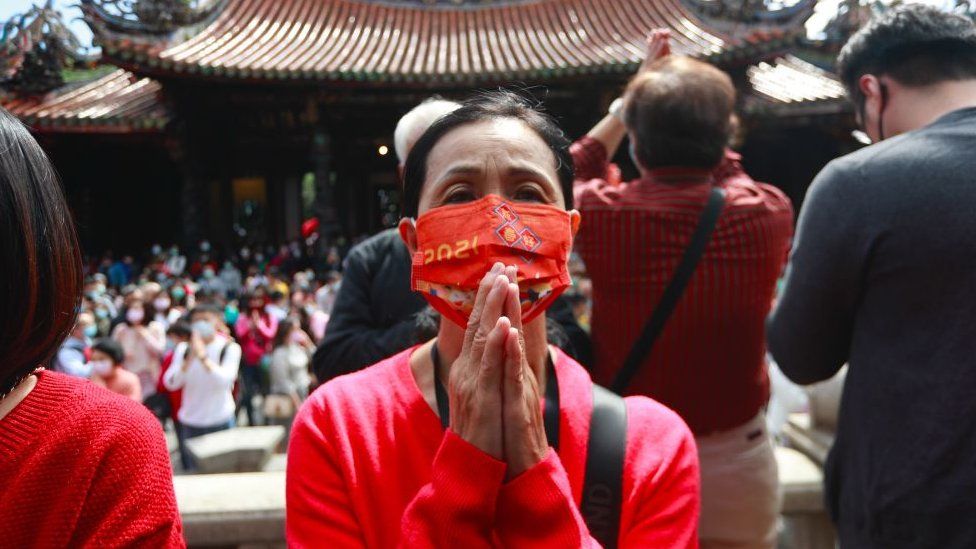
Taiwanese people wearing a face mask pay worships at Lungshan Temple
Getty Images

They've been hailed as virus success stories - places that have seen virtually zero or single-digit Covid cases since the start of the year.

But this month, Singapore and Taiwan have both seen a sudden and aggressive rise in cases - with Singapore logging 248 new cases just last week, and Taiwan 1,200 local infections.

Both places have gone into a heightened state of restrictions, limiting the size of social gatherings and closing schools.

By global standards, these numbers may seem small - but for these places, these figure would have been unthinkable just a month ago. So what exactly went wrong?

A tale of complacency: Taiwan

Taiwan was among the first places to ban foreign visitors almost as soon as China reported the emergence of the virus - and these tough border restrictions still remain in place.

Locally however, the population started to become complacent - as did its government.

Hospitals stopped aggressively testing people for Covid, even those with a fever - a common symptom of the virus, according to Associate Professor Lin Hsien-ho of the National Taiwan University.

According to online publication Our World in Data, Taiwan was administering just 0.57 virus tests per 1,000 people in mid-Feb. This compared to Singapore's rate of 6.21 and the UK's rate of 8.68 at around the same period.

"There was a general assumption even with people showing symptoms that the probability of having Covid-19 was essentially zero," Dr Lin told the BBC, adding that it stemmed from a belief that the virus could not break through Taiwan's strong borders.

"Doctors were not taking it seriously, hospitals were not alert, they were not doing a lot of contact tracing. There was definitely a certain sense of complacency."

This was especially highlighted when Taiwan relaxed its quarantine requirements for non-vaccinated airline pilots from an initial 14 day period, to five days - and then, just three days.

Shortly afterwards, a cluster broke out connected to a handful of China Airlines pilots who had been staying at a Novotel near Taoyuan Airport. Many of those linked to the this cluster were later found to have contracted the UK variant, known as B117.

The virus then spread through the community, eventually making its way to Taiwan's "tea houses" - adult entertainment venues.

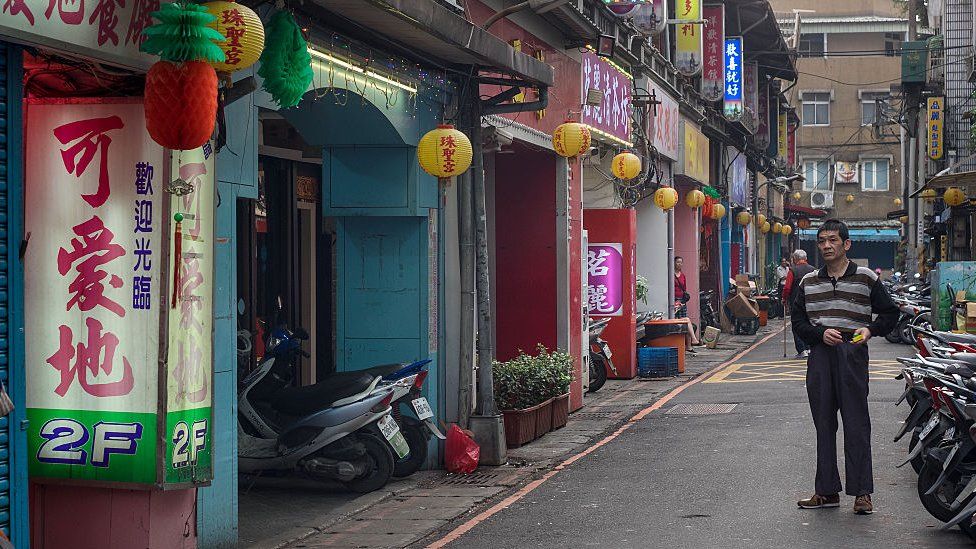
Old red light district in Wuan Hua area
Getty Images

"You had people singing, drinking, coming into frequent contact in an indoor ventilated setting. It was not just one teahouse but many on the same street - it was a very large super spreader event," said Dr Lin.

Professor Chen Chien-jen, an epidemiologist and former vice-president of Taiwan, says the fact that many who tested positive were unwilling to declare they had visited such adult entertainment venues made contact tracing even more difficult.

"It just reminds us that even when a very small proportion of the population breaks the rules, it will lead to leakages," said Dr Chen.

He also adds that Taiwan failed to look at Japan's adult entertainment industry - which at one point was also a hotbed of infections - before it was ordered shut.

"We didn't learn the lesson from Japan and reflect that Taiwan might have these same issues," he said.

According to Associate Professor Alex Cook of the National University of Singapore (NUS), Taiwan's situation is a "a reflection of the constant risk of a strategy that puts too much emphasis on border control and not enough on measures to prevent within country spread".

Cracks in the wall: Singapore

In Singapore however, it was a different story.

Measures here have always been stringent despite low cases - public gatherings were kept to a maximum of eight, clubs have not been allowed open and there is still a cap on mass gatherings like weddings.

But there were still gaps in its vaccine playbook, and by late May, Singapore's Changi Airport - which also boasts a popular shopping centre - had turned into the country's biggest Covid cluster this year.

Authorities later found out that a number of infected airport staff had been working in a zone that received travellers from high risk countries, including those in South Asia.

Some of these workers then went on to have their meals in the airport's food courts - which are open to members of the public - further spreading the virus.

Singapore has now closed its passenger terminals to members of the public temporarily as a result.

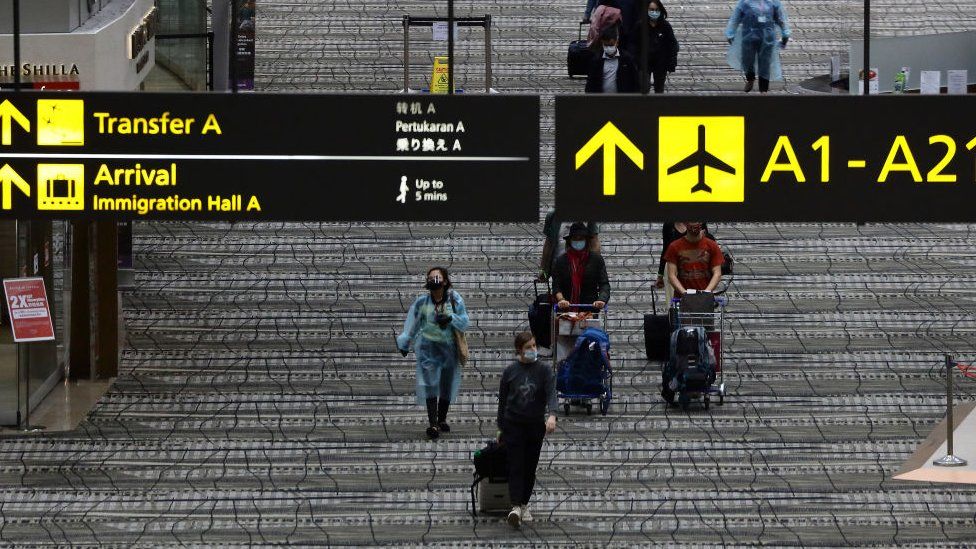
Travellers wearing protective mask walk along the transit area of Changi International Airport terminal on December 15, 2020 in Singapore.
Getty Images

Many of the infected were later found to have a highly contagious variant that first surfaced in India - known as B1617.

Singapore has now also announced that it would segregate flights and passengers from high-risk countries and regions from those arriving from lower-risk places. Staff will also be ring-fenced and segregated by zones.

Some online are asking why such measures were not taken earlier, noting potential loopholes were pointed out up to a month ago.

But one expert at the NUS School of Medicine said he thinks it was "inevitable" that the new variant would have found its way into Singapore.

"I understand why people are feeling frustrated because the majority of Singaporeans have been extremely compliant," said Prof Teo Yik Ying, dean of the NUS School of Public Health.

"But we are not like China which can keep its borders completely shut. Our reputation as a country, our economy, is linked to our position as a trade hub.

"[Also] if we look at the US last year, its worst virus cases came in not from China, but from travellers that went to Europe. So how many countries can Singapore close its borders to? We have to understand its never just closing off one country."

But Prof Cook says the country is still in a "very good position" to rein in its outbreak.

"I'm hesitant to say that 'things went wrong', since Singapore is still, despite the stepping up of measures, in a very good position," he said.

"If we compare it to the UK, the typical daily cases is around 10% of the UK's level after adjusting for population size. In other words, Singapore is tightening measures to pre-empt getting to a point where the virus can run amok."

A slow vaccination drive

There is one problem that's plaguing both Singapore and Taiwan: vaccines.

Many in Taiwan didn't want to take the vaccine when things were going well, with fears around the AstraZeneca vaccine - the main one Taiwan currently stocks - further adding to this hesitancy.

The current rise in cases however, means that people in Taiwan are now flocking to get the vaccine. The only problem is - there isn't enough to go around.

Taiwan has to date received just 300,000 vaccines - for a population of 24 million.

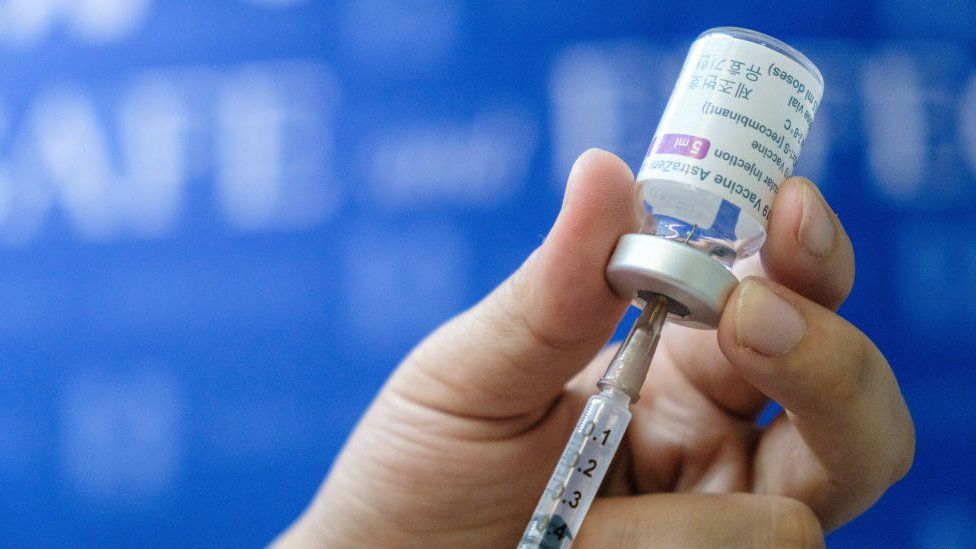
AstraZeneca vaccine
Getty Images

"We have tried our best to purchase vaccines from international companies but we didn't get much. The only way to sustain our supply is to manufacture ourselves, this is very important for Taiwan," said Dr Chen.

Taiwan is currently working on producing two local vaccines, which could be available as quickly as the end of July.

It's a similar tale in Singapore, which has a limited supply of vaccines- though the government expects to vaccinate its entire population by the end of the year.

"Ultimately we are limited by the supply. In countries like the UK, US, China, they have the capabilities to produce their own vaccines," said Prof Teo.

"We anticipate that the need for vaccines is going to be long term, so that's why we are moving towards having our own manufacturing capabilities. Then we will no longer be reliant."

Prof Teo adds that the spike in both places is a lesson for countries that may now be seeing a dip in cases.

"When we see countries in Europe, or the US starting to relax measures, I think they should be very cautious and look around the world to see what is happening," he said.

"What's happened in Taiwan, Singapore - it's a sign that we should not let our guard down."

Adblock test (Why?)


https://news.google.com/__i/rss/rd/articles/CBMiLGh0dHBzOi8vd3d3LmJiYy5jb20vbmV3cy93b3JsZC1hc2lhLTU3MTUzMTk10gEwaHR0cHM6Ly93d3cuYmJjLmNvbS9uZXdzL3dvcmxkLWFzaWEtNTcxNTMxOTUuYW1w?oc=5

2021-05-19 23:22:06Z
52781604322585

Breakthrough in chips materials could push back the ‘end’ of Moore’s Law - South China Morning Post

[unable to retrieve full-text content]

Breakthrough in chips materials could push back the ‘end’ of Moore’s Law  South China Morning Post
https://news.google.com/__i/rss/rd/articles/CBMib2h0dHBzOi8vd3d3LnNjbXAuY29tL3RlY2gvdGVjaC13YXIvYXJ0aWNsZS8zMTM0MDc4L3VzLWNoaW5hLXRlY2gtd2FyLXRzbWMtaGVscHMtbWFrZS1icmVha3Rocm91Z2gtc2VtaWNvbmR1Y3RvctIBb2h0dHBzOi8vYW1wLnNjbXAuY29tL3RlY2gvdGVjaC13YXIvYXJ0aWNsZS8zMTM0MDc4L3VzLWNoaW5hLXRlY2gtd2FyLXRzbWMtaGVscHMtbWFrZS1icmVha3Rocm91Z2gtc2VtaWNvbmR1Y3Rvcg?oc=5

2021-05-19 13:00:22Z
CAIiEPgZTPvIp5iV6sDokh_bp5oqGQgEKhAIACoHCAowief2CjCJ2dUCMJuWxwU

Malaysia reports record 6075 new cases amid COVID-19 third wave - CNA

KUALA LUMPUR: Malaysia reported a record high of 6,075 new COVID-19 cases on Wednesday (May 19), as the country continues to battle a third wave of infections.

This is the first time Malaysia’s new daily COVID-19 caseload has breached the 6,000 mark. The country’s previous record was 5,728 new COVID-19 cases on Jan 30, according to the health ministry. 

A majority of the new cases were in the Klang Valley area: 2,251 in Selangor and 660 in Kuala Lumpur.

There were 699 new cases in Johor, 445 in Kedah and 441 in Kelantan. Sarawak and Penang reported 323 and 183 cases respectively.

Only three cases reported on Wednesday were imported infections. The rest are in the community. 

READ: Malaysia’s daily COVID-19 cases may breach 8,000 in June if regulations are not followed: Health ministry

READ: 'Increasingly challenging' situation at Selangor quarantine centre due to growing admissions: Health department

Medical worker in Malaysia
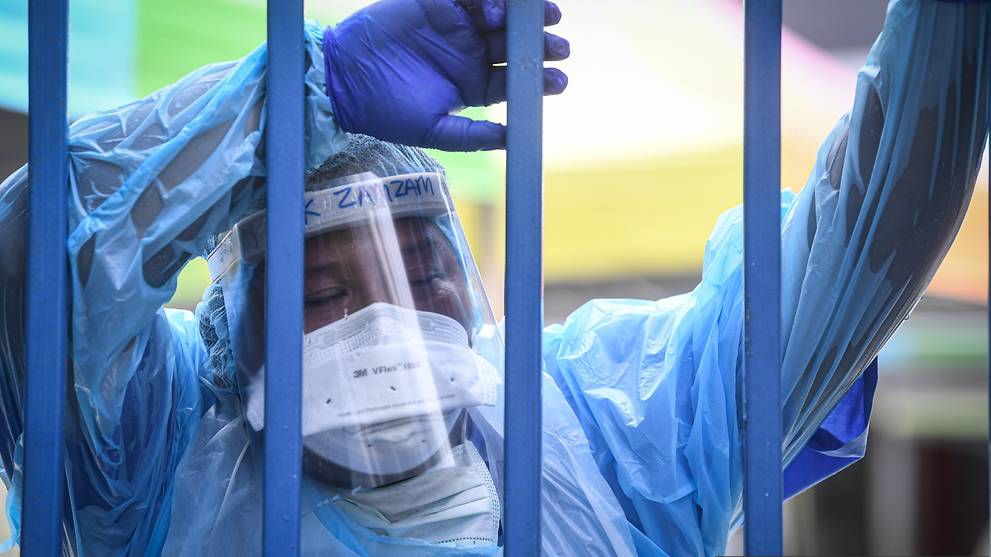
A medical worker in Malaysia wearing personal protective equipment is seen resting against a metal gate. (File photo: Bernama)

RECORD NUMBER OF ICU PATIENTS

There were also 46 new COVID-19 fatalities, bringing the total death toll since the start of the pandemic to 2,040. This comes just one day after Malaysia logged a record 47 deaths

The victims were 45 citizens and a foreigner, aged 25 to 91. Many of them had a medical history of high blood pressure and diabetes. 

There are currently 559 patients in the intensive care unit. This is the highest number of critical cases to date, health director-general Noor Hisham Abdullah said in his daily report. Of these, 303 require respiratory support.

Twenty-two new clusters were identified, also a new daily record. Eight of them are from workplaces while seven are in the community. Six clusters are related to religious gatherings and one is linked to an education institution. 

Malaysia now has a total of 516 active clusters. 

As of Wednesday, Malaysia has reported a total of 485,496 COVID-19 cases, with 47,340 of these currently classified as active. 

READ: Selangor state government places booking for 2.5 million COVID-19 vaccine doses to boost inoculation rate

READ: Malaysian celebrity Neelofa in the spotlight again for alleged violation of Hari Raya visiting ban

Medical workers in Malaysia
Medical workers in Malaysia wearing personal protective equipment are seen resting on some steps in Malaysia. (File photo: Bernama)

Health authorities in recent days have implored members of the public to stay at home and minimise non-essential activities. 

“Our clinicians voiced their helplessness and frustration, (and are) struggling to secure ICU beds for their patients in these unprecedented times,” Dr Noor Hisham tweeted on Sunday.

Intensive care units are overwhelmed by the demand for more beds every day, not just for COVID-19 patients but also for many critical non-coronavirus cases, he added.

BOOKMARK THIS: Our comprehensive coverage of the COVID-19 pandemic and its developments

Download our app or subscribe to our Telegram channel for the latest updates on the coronavirus outbreak: https://cna.asia/telegram

Adblock test (Why?)


https://news.google.com/__i/rss/rd/articles/CBMibmh0dHBzOi8vd3d3LmNoYW5uZWxuZXdzYXNpYS5jb20vbmV3cy9hc2lhL2NvdmlkLTE5LW1hbGF5c2lhLXJlY29yZC1oaWdoLTYwNzUtbmV3LWNhc2VzLXRoaXJkLXdhdmUtbWNvLTE0ODQwMjA00gEA?oc=5

2021-05-19 09:59:49Z
52781598657703