KUALA LUMPUR - Malaysia on Wednesday (May 19) logged a record high of 6,075 Covid-19 cases in the last 24 hours, its Health Ministry said.
The previous record high of 5,728 was logged on Jan 30.
In a Twitter post, Health Director-General Noor Hisham Abdullah said Selangor notched the highest among the Malaysia states with 2,251 new cases.
This was followed by Johor with 699 cases, Kuala Lumpur federal territory with 660 cases, Kedah with 445 cases and Kelantan with 441 cases.
The infection figures released on Wednesday pushed Malaysia’s total cases, since it started tracking the disease in January last year, close to 480,000 - the third highest number in South-east Asia after Indonesia and the Philippines.
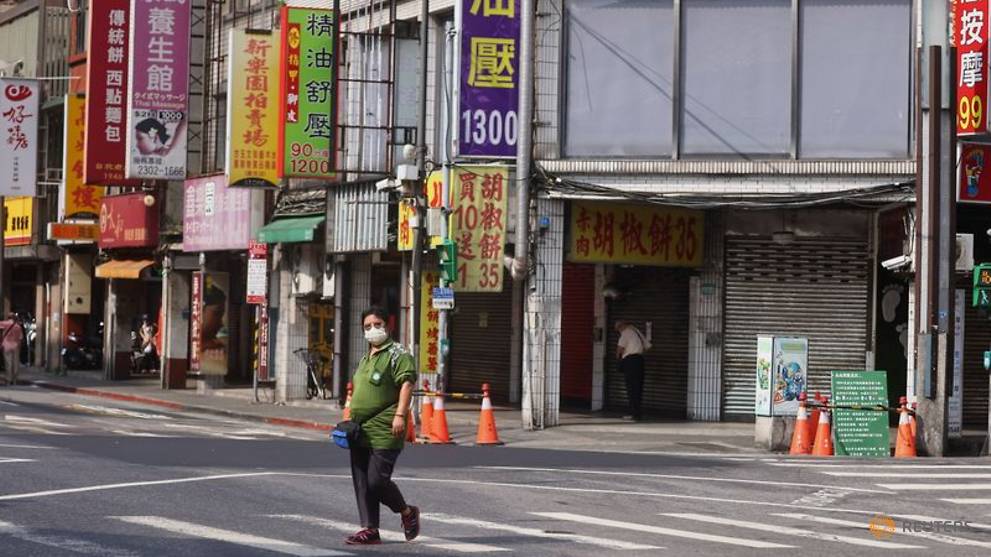
TAIPEI: Taiwan raised its COVID-19 alert level for the whole island on Wednesday (May 19) as domestic cases continued to rise, with another 267 new cases.
The capital Taipei is already under a higher alert level, meaning restrictions on gatherings and the closure of some non-essential shops and entertainment venues.
The government also said Taiwan will get 400,000 more AstraZeneca COVID-19 doses from the COVAX global sharing programme, as it faces a dwindling supply of shots.
Taiwan has reported almost 1,000 new infections during the past week or so, leading to new curbs in the capital, Taipei, and shocking a population that had become accustomed to life carrying on almost normally.
But its stock of vaccines is rapidly falling. It has only received a little more than 300,000 to date, all from AstraZeneca. At least two-thirds of those have been distributed.
In a statement on Wednesday, Taiwan's Centers for Disease Control said after a virtual workshop on vaccines on Tuesday with the top US, British, Japanese and Australian diplomats in Taipei that vaccines must be fairly distributed.
"Fair access to effective vaccines is the ultimate means to curb the global COVID-19 pandemic. We look forward to more effective and sufficient vaccine development and marketing, and call on all countries to work together to end the COVID-19 pandemic," it said.
Taiwan is mobilising its diplomats to try to speed up access to more vaccines, and is in talks with the United States for a share of the COVID-19 shots President Joe Biden plans to send abroad.
Brent Christensen, the de facto US ambassador to Taiwan, said at the same event that "talking about COVID-19 vaccines can be a sensitive subject", according to a copy of his remarks published by his office.
"We recognise that each country and region is at different stages in their COVID-19 vaccination programmes," the remarks said. "Unfortunately, many still face difficulties gaining access to vaccines."
GAZA CITY, Gaza: Suzy Ishkontana hardly speaks or eats. It’s been two days since the 7-year-old girl was pulled from the rubble of what was once her family's home, destroyed amid a barrage of Israeli airstrikes. She spent hours buried in the wreckage as her siblings and mother died around her.
Children are being subjected to extensive trauma in Israel’s bombardment of the Gaza Strip. For some, it’s trauma they’ve seen repeatedly throughout their short lives.
This is the fourth time in 12 years Israel and Gaza’s Hamas rulers have gone to war. Each time, Israel has unleashed heavy airstrikes at the densely populated Gaza Strip as it vows to stop Hamas rocket barrages launched toward Israel.
According to Gaza health officials, at least 63 children are among the 217 Palestinians who have been killed in Gaza since the latest conflict between Israel and Hamas began on May 10. On the Israeli side, 12 people have been killed by Hamas rockets, all but one of them civilians, including a 5-year-old boy.
Israel says it does everything it can to prevent civilian casualties, including issuing warnings for people to evacuate buildings about to be struck. As Hamas has fired hundreds of rockets into Israel, most of them intercepted by anti-missile defences, Israel’s military has pounded hundreds of sites in Gaza, where some 2 million people live squeezed into a tight urban fabric.
Videos on social media from Gaza have shown the grief of survivors from families wiped out in an instant.
“They were four! Where are they? Four!” wailed one father outside a hospital after learning all four of his children had been killed. Another showed a young boy screaming “Baba,” as he ran to the front of the funeral procession where men were carrying his father’s body to burial.
The Ishkontana family was buried under the rubble of their home early Sunday, after massive bombing raids of downtown Gaza City that Israel said were targeting a Hamas tunnel network. The strikes came without warning.
Riad Ishkontana recounted to The Associated Press how he was buried for five hours under the wreckage, pinned under a chunk of concrete, unable to reach his wife and five children.
“I was listening to their voices beneath the rubble. I heard Dana and Zain calling, ‘Dad! Dad!’ before their voices faded and then I realised they had died,” he said, referring to two of his children.
After he was rescued and taken to the hospital, he said, family and staff hid the truth from him as long as they could. “I learned about their deaths one after another,” he said. Finally, Suzy was brought in alive, the second-oldest of his three daughters and two sons, and the only survivor.
In this May 16, 2021 photo, a Palestinian man carries Suzy Ishkontana, 7, who was rescued from under the rubble of a destroyed house following deadly Israeli airstrikes in Gaza City. (Photo: AP/Khalil Hamra)
Though she had only limited physical bruising from her seven hours under the rubble, the young girl was in “severe trauma and shock,” said paediatrician Dr Zuhair Al-Jaro. The hospital was unable to get her the psychological treatment she needs because of the ongoing fighting, he said.
“She has entered into a deep depression,” he said. Only today, he said Tuesday, did she eat something after she was allowed briefly outside the hospital and saw her cousins.
As her father spoke to the AP, Suzy sat on the bed next to him, silent and studying the faces of the people in the room but rarely making eye contact. When asked what she wanted to be when she grew up, she turned away. When her father started to answer for her, saying she wanted to become a doctor, the girl began sobbing loudly.
Ishkontana, 42, who recently stopped working as a waiter because of coronavirus lockdowns, said Suzy is smart and tech-savvy and loves smartphones and tablets. “She explores them, she has more experience dealing with them than I do,” he said. She also loves studying and would gather all her siblings into a play “class,” taking the role of their teacher, he said.
The Ishkontanas were just one family destroyed that day.
The strikes Sunday targeted Hamas tunnels running under Gaza City, the Israeli military said. The warplanes pounded al-Wahda Street, one of the city's busiest commercial avenues, lined with apartment buildings with stores, bakeries, cafes and electronics shops on the ground floors.
Three buildings collapsed, and multiple people from at least three families were killed. In all 42 people died, including 10 children and 16 women.
Lieutenant Colonel Jonathan Conricus, an Israeli military spokesman, called the situation that led to the deaths “abnormal". He said in one location the airstrikes caused a tunnel to collapse, bringing houses down with it, “and that caused a large amount of civilian casualties, which were not the aim".
He said the military was analysing what happened and “attempting to recalibrate” its ordnance to prevent a reoccurrence.
He said the bombing campaign targeting tunnel networks would be expanded to more areas of Gaza and that the military tries when possible to hit tunnels under roads rather than under houses.
Israel and Hamas have fought similar conflicts in 2009, 2012 and 2014, each time wreaking heavy destruction
The Norwegian Refugee Council said that 11 of the children killed so far in this war had been going through its psycho-social programs helping children deal with trauma - a sign of how children repeatedly are victimised by the violence. Among them was 8-year-old Dana, Suzy's sister.
“It’s the fourth time for many of them to experience” bombardment around their homes, said Hozayfa Yazji, the refugee council area field manager.
Parents in Gaza desperately try to calm their terrified children, as bombs rain down, telling the youngest ones it’s just fireworks or trying to put up a cheerful front.
The violence “will of course affect the psychology of these kids,” he said. “We are expecting that ... the situation will be much worse and more children will need more support.”
The refugee council works with 118 schools in Gaza, reaching more than 75,000 students through its Better Learning Program. The program trains teachers to deal with traumatised children and organises fun exercises to relieve stress. It also does home-checks on children to provide help.
The refugee council works with 118 schools in Gaza, reaching more than 75,000 students through its Better Learning Program. The program trains teachers to deal with traumatised children and organises fun exercises to relieve stress. It also does home-checks on children to provide help.
The council’s secretary-general, Jan Egeland, called for an immediate cease-fire, saying, “Spare these children and their families. Stop bombing them now.”
But he said, longer term, an end to the blockade on Gaza and occupation of Palestinian territory is necessary “if we are to avoid more trauma and death among children".
GAZA CITY: Heavy air strikes and rocket fire in the Israel-Gaza conflict claimed more lives on both sides on Tuesday (May 18) as tensions flared in Palestinian "day of anger" protests in Jerusalem and the West Bank.
Calls for a ceasefire intensified, but Prime Minister Benjamin Netanyahu vowed Israel would continue its onslaught on the coastal enclave "as long as necessary," before a UN Security Council meeting broke up after less than an hour without issuing a statement.
Israeli forces and protesters meanwhile clashed at multiple flashpoints across the occupied West Bank and in east Jerusalem, hospitalising scores, as Palestinians rallied in solidarity with their besieged Gazan counterparts. Dozens were treated for wounds caused by live bullets, medics said.
Israel's near-relentless bombing campaign has killed 217 Palestinians, including 63 children, and wounded more than 1,400 people in just over a week in the Hamas-run enclave, according to Gaza's health ministry.
The death toll on the Israeli side rose to 12 when a volley of rockets Hamas fired at the southern Eshkol region killed two Thai nationals working in a factory and wounded several others, police said.
Israeli Kassadra Bodari, left, and Lilian Feciouru take shelter in Ashdod, Israel during sirens warning of incoming rockets fired from Gaza Strip, May 18, 2021. (Photo: AP/Heidi Levine)
Israeli strikes that again sent fireballs, debris and black smoke into the sky have left two million Palestinians in Gaza desperate for reprieve.
"They destroyed our house but I don't know why they targeted us," said Nazmi al-Dahdouh, 70, of Gaza City who remained shocked by what he called "a terrifying, violent night".
The humanitarian crisis deepened in the impoverished strip, from where Hamas has launched nearly 3,500 rockets at Israel since May 10, often forcing people living near Gaza into bomb shelters around the clock.
But a convoy of international aid trucks that started rolling into Gaza through a border crossing from Israel, Kerem Shalom, was halted when Israel quickly shuttered it again, citing a mortar attack on the area.
CRISIS DIPLOMACY
Tuesday's UN Security Council session, the fourth since the conflict escalated, was called after the United States, a key Israel ally, the previous day once again blocked adoption of a joint statement calling for a halt to the violence.
But the latest session again closed without consensus. "We do not judge that a public pronouncement right now will help de-escalate," US envoy Linda Thomas-Greenfield said during Tuesday's closed-door meeting, according to a diplomat.
France and Egypt are pushing for a ceasefire deal, while Qatar and Egypt are working another channel, via the UN.
EU foreign policy chief Josep Borrell on Tuesday strongly backed the manifold calls for a ceasefire, while urging Israel's military to act in a "proportionate" manner.
The conflict risks precipitating a humanitarian disaster, with the UN saying 58,000 Palestinians have been displaced and 2,500 have lost their homes.
Fighter jets have hit Hamas's underground tunnels, which Israel has previously acknowledged run in part through civilian areas.
A strike on Monday g, the health ministry said, and the Qatari Red Crescent said a strike damaged one of its offices.
Hospitals in the territory, which has been under Israeli blockade for almost 15 years, have been overwhelmed by patients and there are frequent power blackouts.
Speaking at an air force base in Israel's south, Netanyahu said Hamas and Islamic Jihad had "received blows they didn't expect."
"We've taken them many years back," the premier said. "We'll continue as long as necessary to bring ... quiet back to the citizens of Israel."
'DAY OF ANGER'
Palestinians across the West Bank and in Israeli-annexed east Jerusalem mobilised Tuesday for protests and a general strike that shuttered non-essential businesses, in support of those under bombardment in Gaza.
Palestinian president Mahmud Abbas's Fatah movement had called for a "day of anger", a call echoed in Arab and ethnically mixed towns inside Israel.
"We are here to raise our voice and stand with the people in Gaza who are being bombed," Ramallah protester Aya Dabour told AFP.
In Jerusalem, Ala Judeh, 24, said he was on strike from his job as a gas station attendant in a Jewish neighbourhood in west Jerusalem.
Thanks to this strike, "we are starting to feel we are not just their slaves," said the Palestinian resident of the occupied east of the city.
Israel's army said troops came under fire north of Ramallah. It said two soldiers suffered leg injuries and were taken to hospital.
The Palestinian health ministry said four Palestinians were shot dead in the West Bank, bringing to 24 the total number of Palestinians killed there since May 10.
The Israeli army said one had attempted to attack soldiers in Hebron.
The Palestinian Red Crescent said its teams had treated more than 150 people in Jerusalem and the occupied West Bank, including 35 with live bullet wounds and more than 80 suffering from tear gas inhalation.
A Palestinian man looks at his damaged bedroom following early morning Israeli airstrikes on Gaza City, on May 18, 2021. (Photo: AP/Khalil Hamra)
Earlier in the day, an assailant who attempted to attack soldiers in the West Bank city of Hebron was shot dead.
Tensions again flared in east Jerusalem's flashpoint Sheikh Jarrah neighbourhood, where Palestinian protesters faced off against police, who used stun grenades and "skunk water" cannon to disperse protesters.
The Israel-Gaza conflict was sparked after clashes broke out at east Jerusalem's flashpoint Al-Aqsa mosque compound - one of Islam's holiest sites.
This followed a crackdown against protests over planned evictions of Palestinians in Sheikh Jarrah.
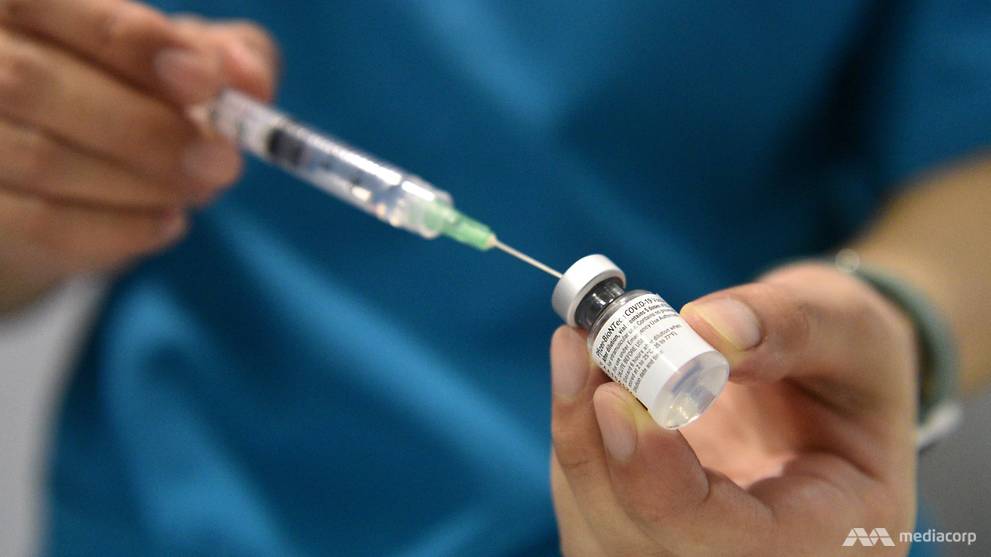
SINGAPORE: The Pfizer-BioNTech COVID-19 vaccine has been authorised by the Health Sciences Authority (HSA) to be used for children between 12 and 15 years old, said Health Minister Ong Ye Kung on Tuesday (May 18).
From Wednesday, those aged 40 to 44 years will also be invited to register for their vaccinations, Mr Ong added.
VACCINATION FOR THOSE AGED 12 TO 15 YEARS
The Pfizer-BioNTech COVID-19 vaccine was previously given only to those aged 16 years and above. It was granted interim authorisation by the HSA under the Pandemic Special Access Route in December last year. At that time, the data for children aged below 16 years was not yet available.
Speaking at a multi-ministry task force press conference, Mr Ong said on Tuesday that the expert committee on COVID-19 vaccination has also "weighed in with their endorsement" to use the vaccine for children aged 12 to 15 years.
"Both teams have assessed that the Pfizer-BioNTech COVID-19 vaccine demonstrated high efficacy and safety for this age group of 12 to 15 years old, which is consistent with what we have observed for the adult population," he added.
The Ministry of Health (MOH) will work with the Ministry of Education (MOE) on the vaccination programme for this school-going age group and provide further updates in due course, said the Health Ministry in a separate press release.
This is the first COVID-19 vaccine authorised for use in Singapore for this age group.
In its assessment, the expert committee on COVID-19 vaccination considered the safety, efficacy and tolerability of the vaccine, and the study design of clinical trials for this age group, MOH added.
“The data showed that the Pfizer-BioNTech COVID-19 vaccine demonstrated high efficacy consistent with that observed in the adult population,” MOH added.
“Its safety profile is also consistent with the known safety profile in the adult population and the standards set for other registered vaccines used in the immunisation against other diseases."
This follows MOE’s announcement on Sunday that all schools will move to home-based learning from Wednesday to the end of the term on May 28, after several primary school students tested positive for COVID-19. Many of the cases are linked to tuition centres.
In a separate press release on Tuesday, HSA said that Pfizer and BioNTech submitted an application to extend the use of the vaccine to those aged 12 to 15 years old.
HSA's review of the clinical data for this "subgroup" found that the Pfizer-BioNTech vaccine “induced a robust immune response” and demonstrated "high vaccine efficacy of 100 per cent".
"This vaccine efficacy was based on the ongoing Phase 3 clinical trial, which enrolled (more than) 2,000 participants aged 12 to 15 years,” HSA said.
"Based on the safety data available from a median follow-up duration of two months after vaccination, the overall safety profile of the vaccine in adolescents was comparable to that observed in adults."
The side effects noted in the trial included pain at the injection site, fatigue, headache, chills and fever, said HSA, adding that the side effects resolved on their own within a few days.
Pfizer and BioNTech will follow up on the safety and efficacy of the vaccine in the clinical study for up to two years to determine its full safety profile for this age group, said HSA. The authority will also continue to closely monitor the safety of the vaccine.
Responding to a question about how the B1617 variant appears to affect children more, MOH’s director of medical services Kenneth Mak noted that Singapore is seeing more infections in children this year compared to last year.
“It could very well be associated with viral variants of concern being more transmissible with higher viral loads. As a result of just that physical property - of these viral variants having a higher viral load - kids are also getting more infected,” he said.
“At this point in time, it isn’t clear whether infections in children lead to a more severe cause of disease associated with these viral variants of concern,” added Associate Professor Mak.
He said the children who have been infected so far are "relatively well" and are either "mildly symptomatic or asymptomatic".
"At this time we have not made any decisions yet concerning including children within our list of prioritised groups of people for vaccinations, but we will continue to watch this space, look at the evolving evidence, look at the community situation and then make decisions later on as to whether or not we need to change our plans concerning prioritisation," said Assoc Prof Mak.
VACCINATIONS FOR THOSE AGED 40 TO 44 YEARS
From Wednesday, individuals aged 40 to 44 years will also be invited to register for their vaccinations, Mr Ong announced.
“Our supply of vaccines has been steadily coming in, but remains limited given high global demand. We will continue to roll out our vaccination programme, but now in five-year age bands, starting with those aged 40 to 44 years, and progressively moving to younger age bands,” said MOH.
Individuals can register online via vaccine.gov.sg, and they will receive an acknowledgement message via SMS after registration.
A separate SMS with a personalised booking link to book a vaccination appointment will then be progressively sent to invite eligible individuals on a first-come-first-served basis, depending on when they registered.
They can expect to receive this booking message within one to two weeks from registration, with slots available until mid-June, the Health Ministry said.
Those who have previously registered their interest will not need to register again, and more vaccination slots will be made available as more supplies arrive, said MOH.
“We remain on track with our COVID-19 vaccination programme. If our supplies arrive as scheduled, we expect to be able to complete the vaccination programme by the end of the year," added the ministry.
"We strongly encourage everyone who is medically eligible to register their interest and get vaccinated when they are offered."