According to official results, Tan Sri Muhyiddin’s Gabungan Rakyat Sabah (GRS) alliance yesterday won a total of 38 state assembly seats – just one seat above the minimum 37 required to form the next state government.
Rival Parti Warisan Sabah and its allies, which was the incumbent government, won 32 seats.
Independent candidates won the remaining three seats.
Malaysia’s general election is due only in 2023, but has been widely speculated to be called within the next few months.
The Sabah victory would help strengthen Mr Muhyiddin’s bid in defending his premiership against Datuk Seri Anwar, who said last week that he has the numbers to form the next federal government.
A loss in Sabah could have led to political turmoil at the federal level as PM Muhyiddin’s critics could question his political strength.
Perikatan Nasional secretary-general Hamzah Zainuddin said that based on the unofficial results in Sabah, GRS “will take over the state”. PHOTO: THE STAR/ASIA NEWS NETWORK
Mr Muhyiddin, in a statement on Facebook, said the victory showed that voters trusted GRS, and asked his alliance to fulfil its promises.
Datuk Seri Hamzah Zainudin, secretary-general of Perikatan Nasional (PN), Mr Muhyiddin’s ruling coalition, said hours before the official results were announced that based on unofficial figures, GRS “will take over the state”.
Sabah Barisan Nasional (BN) chief Bung Moktar Radin too declared GRS victors of the election late yesterday.
The victory means that GRS – consisting of PN, BN, Parti Bersatu Sabah (PBS) and several other Sabah-based parties – has snatched away the state government from rival Warisan and its allies, which took over after the 2018 General Election.
The victory was more remarkable as members of GRS contested against one another in 17 of the 73 wards.
Still, it remained unclear who will become the chief minister.
Both PN and BN had touted their own candidates for the post during the 14-day campaigning. PN has named its Sabah chairman, Datuk Hajiji Noor, as potential chief minister, while BN has put forward the name of Bung Moktar, who is facing corruption charges.
BN chief and Umno president Ahmad Zahid Hamidi has said that traditionally, the faction with the biggest number of seats gets to choose who would become the chief minister.
PN won 17 of the 38 alliance seats, and BN won 14. PBS won in seven wards.
Voter turnout was just over 60 per cent of the nearly 1.1 million voters in Malaysia’s second-biggest state after Sarawak.
Concerns of a surge in Covid-19 cases in Sabah in recent weeks have contributed to the lower turnout. The state now has 730 active Covid-19 cases.
KOTA KINABALU - Malaysian Prime Minister Muhyiddin Yassin's alliance has won the Sabah state elections on Saturday (Sept 26), according to unofficial results.
In a boost to his leadership, his Gabungan Rakyat Sabah (GRS) alliance has won the minimum 37 state assembly seats required to form the next state government.
Tan Sri Muhyiddin has said that national snap polls could be called soon if GRS were to win in Sabah.
Malaysia’s general election is due only in 2023, but has been widely speculated to be called within the next few months.
The Sabah victory is a boost for the premier, after Datuk Seri Anwar Ibrahim on Wednesday (Sept 23) dropped a bombshell by saying that he has majority support from federal MPs to form the next government.
Mr Anwar had also claimed in the news conference in Kuala Lumpur that the Muhyiddin government, which came to power seven months ago, has “collapsed”.
Datuk Seri Hamzah Zainuddin, secretary-general of Perikatan Nasional (PN), Mr Muhyiddin’s ruling coalition, said on Saturday that based on the unofficial results in Sabah, GRS “will take over the state”.
Perikatan Nasional secretary-general Hamzah Zainuddin said that based on the unofficial results in Sabah, GRS “will take over the state”. PHOTO: THE STAR/ASIA NEWS NETWORK
The victory meant that GRS - consisting of PN, Barisan Nasional (BN), Parti Bersatu Sabah and several other Sabah-based parties - has snatched away the state government from a rival alliance led by Parti Warisan Sabah.
Unofficial results showed the Warisan alliance has won 20 seats, and three other wards were won by other factions.
GRS managed to come out victorious despite its various members contesting against one another in 17 of the 73 wards.
But it remained unclear over who will become the GRS chief minister, as both PN and BN had touted their own candidates for the post during the 14-day campaigning.
Voter turnout was just over 60 per cent of the nearly 1.1 million voters in Malaysia’s second biggest state after Sarawak.
The lower turnout was contributed by concerns of a surge in Covid-19 cases in Sabah in recent weeks. The state now has 730 active Covid-19 cases.
BANGKOK: An American has been sued by an island resort in Thailand over a negative Tripadvisor review, authorities said on Saturday (Sep 26), and could face up to two years in prison if found guilty.
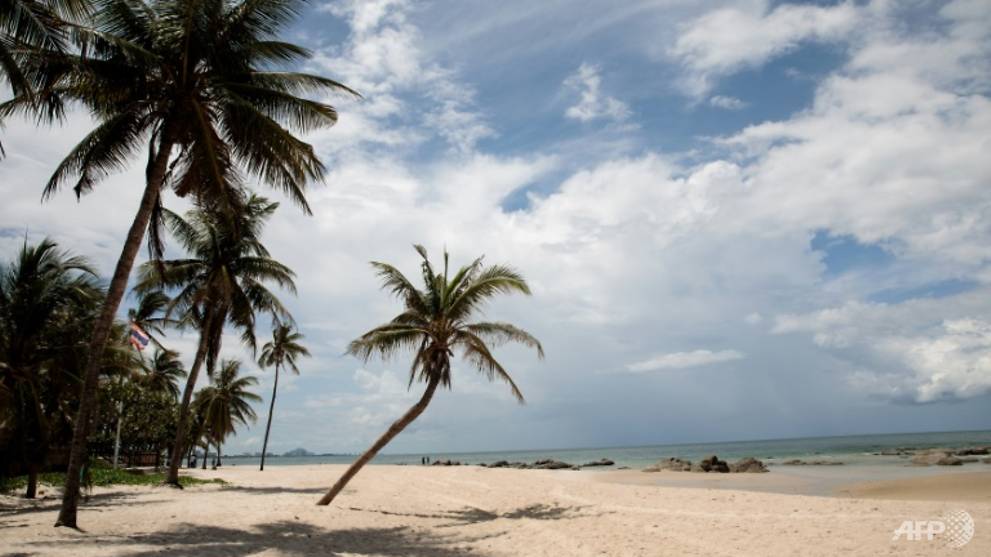
Domestic tourism is still happening in Thailand, where COVID-19 case numbers are relatively low, with locals and expats heading to near-empty resorts – including Koh Chang island, famed for its sandy beaches and turquoise waters.
But a recent visit to the Sea View Resort on the island landed Wesley Barnes in trouble after he wrote unflattering online reviews about his holiday.
"The Sea View Resort owner filed a complaint that the defendant had posted unfair reviews on his hotel on the Tripadvisor website," Colonel Thanapon Taemsara of Koh Chang police told AFP.
He said Barnes was accused of causing "damage to the reputation of the hotel", and of quarrelling with staff over not paying a corkage fee for alcohol brought to the hotel.
Barnes, who works in Thailand, was arrested by immigration police and returned to Koh Chang where he was briefly detained and then freed on bail.
According to the Tripadvisor review Barnes posted in July, he encountered "unfriendly staff" who "act like they don't want anyone here".
The Sea View Resort said legal action was only taken because Barnes had penned multiple reviews on different sites over the past few weeks.
At least one was posted in June on Tripadvisor accusing the hotel of "modern day slavery" - which the site removed after a week for violating its guidelines.
"We chose to file a complaint to serve as a deterrent, as we understood he may continue to write negative reviews week after week for the foreseeable future," the hotel said, adding that staff had attempted to contact Barnes before filing the complaint.
Barnes did not immediately respond to requests for comment.
Thailand's notorious anti-defamation laws have long drawn scrutiny from human rights and press freedom groups, who say powerful players use it as a weapon to stifle free expression.
The maximum sentence is two years in prison, along with a 200,000 baht (US$6,300) fine.
Earlier this year, a Thai journalist was sentenced to two years in prison for posting a tweet referencing a dispute over working conditions at a chicken farm owned by the Thammakaset company.
BANGKOK (AFP) - An American has been sued by an island resort in Thailand over a negative TripAdvisor review, the authorities said on Saturday (Sept 26), and could face up to two years in prison if found guilty.
Domestic tourism is still happening in Thailand, where coronavirus numbers are relatively low, with locals and expats heading to near-empty resorts - including Koh Chang island, famed for its sandy beaches and turquoise waters.
But a recent visit to the Sea View Resort on the island landed Mr Wesley Barnes in trouble after he wrote unflattering online reviews about his holiday.
"The Sea View Resort owner filed a complaint that the defendant had posted unfair reviews on his hotel on the TripAdvisor website," Colonel Thanapon Taemsara of Koh Chang police told AFP.
He said Mr Barnes was accused of causing "damage to the reputation of the hotel", and of quarrelling with staff over not paying a corkage fee for alcohol brought to the hotel.
Mr Barnes, who works in Thailand, was arrested by immigration police and returned to Koh Chang where he was briefly detained and then freed on bail.
According to the TripAdvisor review Mr Barnes posted in July, he encountered "unfriendly staff" who "act like they don't want anyone here".
Mr Barnes and the Sea View Resort did not immediately respond to requests for comment.
Thailand's notorious anti-defamation laws have long drawn scrutiny from human rights and press freedom groups, who say powerful players use it as a weapon to stifle free expression.
The maximum sentence is two years in prison, along with a 200,000 baht (S$8,700) fine.
KOTA KINABALU - People in Malaysia’s second biggest state are patiently queueing up on Saturday (Sept 26) to vote in the Sabah state polls - a major test for Prime Minister Muhyiddin Yassin.
Tan Sri Muhyiddin, in power for seven months, needs his Gabungan Rakyat Sabah (GRS) alliance to grab power from a faction which is allied to the federal opposition parties.
The state election is being held just days after opposition leader Anwar Ibrahim on Wednesday launched a bid to topple him as prime minister.
Mr Muhyiddin’s GRS alliance comprises his Perikatan Nasional (PN) faction, the Barisan Nasional (BN) coalition and several other Sabah-based parties. These groups clash with one another in 17 of the 73 seats in the state assembly that are up for grabs.
There are over 400 candidates vying for the 73 seats, with some wards seeing an 11-cornered fight.
A victory in Sabah could help Mr Muhyiddin protect his wafer-thin majority in the federal Parliament, which appears uncertain at this point.
People started queueing up as early as 7am on Saturday, adhering to new Covid-19 safe measures.
Turnout was at 54 per cent at 2pm, the Election Commission (EC) said, and polling stations will close at 5pm.
Almost 1.1 million Sabahans are eligible to vote, and some 28,000 staff members have been deployed to conduct the elections, which involves 741 voting stations.
Parti Warisan Sabah, led by chief minister Shafie Apdal, ruled the state after the 2018 general election. Warisan is aligned to Datuk Seri Anwar's Pakatan Harapan (PH) opposition coalition in the federal Parliament.
On Saturday, election workers were dressed in personal protective equipment (PPE) and scanned the temperature of every voter at the entrance of polling stations. Voters in queue stood at safe distances apart.
Voters described the process as smooth.
One of them, Ms Julia Chan, 37, said the entire process took 20 minutes despite the safety protocols, which was much faster compared to the 90 minutes it took her in the 2018 elections.
Another voter, Mr Phang Yuk Yin, said that many voters had turned up in the morning despite Covid-19 concerns.
"It is a very efficient process by the EC. End of the day, as Sabahans, this is our state and this is our responsibility," Mr Phang, 51, told The Straits Times.
Voter Phang Yuk Yin shows his inked finger after voting. He described the voting process as efficient. ST PHOTO: RAM ANAND
Datuk Seri Shafie, who voted at his state constituency Senallang on Saturday morning, also said that the voter turnout could be lower due to concerns over the virus.
There 730 active cases in the east coast of Sabah alone, all of them discovered this month. The state alone recorded three-digit daily infections twice this week.
The EC said it aims to have the full results by 10pm, but said that it is largely dependent on the returning officers at polling stations, some of which are in remote areas.
The vast interiors of Sabah, with no immediate road access, mean some ballot papers are being transported via helicopter.
In the last Sabah state elections, conducted concurrently with the 2018 national elections, the results were announced only at 5am, after a 77 per cent turnout.
Sabah incumbent chief minister Shafie Apdal, who voted at his state constituency Senallang, said that the voter turnout could be lower due to concerns over the virus. PHOTO: AFP
The Straits Times previously reported that thousands of Sabah voters who are working or studying in Peninsular Malaysia are expected to miss the state elections, unable to afford the flight tickets, coupled with concerns of the virus' spread.
BANGKOK: Bang Prathun is like a miniature water world. A spiderweb of canals splays out through a rare green landscape of coconut and fruit trees, alongside paths that connect an enduring community.
This place dates back to the late Ayutthaya period, or more than 200 years. Its people have lived around the water for generations and their fortunes have ebbed on the tides of the meandering Chao Phraya.
Wisdom has been inherited from the generations past; how water moves, how it drains and how it sustains.
Now, as modernity creeps closer all around this patch of green, an outlier amid the grey of Bangkok’s sprawl, its residents wonder if their old knowledge can still keep them safe.
It is a challenge being posed to many of the Thai capital’s poorest communities, those living on the fringes - and often, around water. They are the most vulnerable. Bangkok has long faced the threat of flooding, but climate change is threatening to amplify the risks.
Nawin Meebunjong grew up here, exploring the intricate canals. “I’ve been here since I was little. I grew up with the water, swimming in the canal. I went to school by boat. I go to the market by boat. Everything involves water,” he said.
It was a moment of turmoil in his life that turned him from someone who took his home for granted, to one of its most passionate protectors.
The great floods of 2011 brought disruption and damage right across Bangkok, and Bang Prathun, with its close proximity to the major river artery of the city, was hard hit. At the same time, his mother was fighting a losing battle with cancer and had to be evacuated from her home due to the confusion and fear at the time.
The Bang Prathun area is a rare slice of green among Bangkok's sprawl. (Photo: Jack Board)
For Nawin, it was a painful collision of momentous events. “The 2011 flood reversed the lives of many people, including me. It made me become interested in the canals and the things surrounding us,” the 44-year-old said.
“After that, I changed my thinking from being a city office man to a community-concerned person. Why did I never take care of the things I had? If these things were gone one day, what would I do?
“Like my mother. I did not have time to take care of her. I only made money and worked. Finally, when she passed away, it was too late to look after her. Like the canal. This is why I became interested in the canal. It’s also a mother, the mother of the water. The mother that we should look after,” he said.
Nawin became the founder of the Rak Bang Prathun group, which works within the community to educate local people and help preserve the environment.
Residents have focused their efforts on maintaining traditional houses designed to withstand flooding, shaping drainage ditches to control the movement of water and retaining it through greenery and gardens.
Travelling by boat is essential around Bang Prathun. (Photo: Jack Board)
Simple ingenuity is built into the fabric of the community. It is a deliberate relationship synchronised with the water, rather than in conflict with a powerful element.
“We don’t create brand-new wisdom. We only advance the ancient one to survive the flood. Living with it and bending to it,” Nawin said.
“To live with it is to be harmonised. So we can live with nature. This is the approach to living with water. Nothing can conquer nature. Regardless of the approach we have, it’s merely an act of deferring, delay or control. But eventually, you can’t win.”
Whether Bang Prathun can withstand future challenges is a question Nawin and his neighbours cannot answer. In many ways, their fate will be in the hands of others.
"IT HAS LIFE"
Canals are critical infrastructure for Bangkok. There are 1,161 in the city, including nine major ones. They act to drain extraordinary masses of water flowing from the north of the country into the Gulf of Thailand.
They form part of Bangkok’s polder flood defence system, which also includes tunnels, pump stations and retention ponds, known as “monkey cheeks”. Dykes around the city help redirect water away from the city, which is itself a natural floodplain, towards the sea.
Bangkok is located on low ground, land where floodwaters should naturally flow but in modern times has been built up to hold more than ten million inhabitants and major industries.
Canals intersect Bangkok's expanding urban footprint. (Photo: Jack Board)
“I used to see how the city grew over 50 years and you can see this big patch of concrete creeping out over the wetlands that used to be a channel for the river and how we drain our water from the north to the ocean,” said landscape architect Kotchakorn Voraakhom.
“From the beginning, we built the city in the wrong place but we cannot return. So now it’s about finding the right solution and changing the attitudes of the people and changing natural disasters to be part of their living,” she said.
The city’s drainage system is ageing and underdeveloped. And climate change is already adding more stress to its capacity, at the same time as citywide subsidence raises the prospects of seawater intrusion.
“Variations in the weather patterns lead to changes in rain. Rain becomes more severe and sometimes it rains outside its season. As a result, the existing drainage system is unable to bear the situation,” said Vishnu Charoen, the director of the Technical and Planning Division, at the Department of Drainage and Sewerage, part of the Bangkok Metropolitan Administration (BMA).
In innercity areas, localised flooding causes regular disruptions to people’s daily lives. It is a symptom of growing density in the urban environment. More people are living in the city, turning empty spaces into crowded ones.
Rapid development has pushed the city’s poor towards congested and increasingly undesirable retreats. Over time, those informal settlements came to be along the canals.
Ramshackle homes along Lat Phrao canal are a common sight. (Photo: Jack Board)
With a rise of pollution and neglect, many of the waterways meant to facilitate the flow of water have actually done the opposite.
“People built houses encroaching on the canals, narrowing the canals and consequently reducing the effectiveness of the canals to drain water. When there is a flood, this group of people will be the first who face the flooding problem,” Vishnu told CNA.
The Lat Phrao canal is one of the main strategic channels in central Bangkok. It has been an area riddled with issues of land encroachment and rubbish accumulation and characterised by the thick black and fetid water lapping at the stilts of wooden houses creeping over the canal.
“There are 7,000 houses along the Lat Phrao canal and 3,800 of them encroach on the canal. These houses, instead of helping water drainage, are obstacles,” said Thanat Narupornpong, assistant director of the Community Organizations Development Institute (CODI), a government agency.
To defend the city from future flooding, the government has a variety of policies aimed to make the canals more effective. Key to that is widening them by an average of 10 metres and building flood defences, forcing many houses to be removed and their occupants relocated.
Newly built modern homes have replaced those that encroach on the water. (Photo: Jack Board)
That has caused a natural and inevitable conflict with many of those who call the canals home.
“All houses along and in the canals are all illegal because they are on land possessed by the Treasury Department. They did not get permission for construction,” Thanat said.
CODI is making headway in a major resettlement and rehousing project at Lat Paro, which aims to consolidate all houses into safer, more modern dwellings further from the water, but generally in close proximity to the canal.
“The challenge for the project is that some of them said they didn’t want to change their lifestyle. Not everyone agrees to move out,” Thanat said.
Titapol Noijad was born in Wang Hin, one of dozens of communities that exist along Lat Phrao canal. He reminisces about the closeness of ties between neighbours, when growing rice and fishing in the flowing waters were still a daily reality in the area.
“In the past, the canal was the centre of people’s lives,” he said. “The community used to be nice for people to stay. It had a sense of community and a hidden loveliness.
“When I was child, I had a beautiful view here. But today I have to leave the community and go to a rural area to enjoy such beauty.”
Life is not like it once was in the canal communities of Bangkok. (Photo: Jack Board)
Life has changed forever here, as social connections fade and the worries about flooding - from the perspective of authorities and residents alike - become more prescient year on year.
Government agencies are working quickly to unclog the waterway, and many residents are happy with being relocated to new houses. Work is ongoing to install flood defences but the results remain piecemeal.
Titapol still holds onto hope that life on the canal will one day be as vibrant as it once was.
People care about each other, he said, and they are ready to adapt in order to stay. As a community leader, he has invested in empowering locals to manage waste, share education campaigns and perform Buddhist rituals as a spiritual reminder of the water’s influence.
“If there was only the canal, but no life, I think I would feel dejected. What we are trying to do is to make the canal alive,” he said.
“It has life. The canal does not speak, but the people living there do.”
Authorities want to expand canals and ensure nearby residents are safe from flooding. (Photo: Jack Board)
COMMUNITY AWARENESS
Involving canal communities in developing greater strategies for controlling the flood is crucial, according to urban architecture and planning expert, Asst Prof Wijitbusaba Marome from the Urban Futures and Policy Lab at Thammasat University,
There are complex forces at play, she says, from housing affordability and access, to communal understanding about what lies ahead. Their old knowledge and ability to adapt is important too - it should not be ignored, she says.
“In the end, down at the local level, it’s about social acceptance and whether the community has awareness. Social acceptance requires time to communicate and portray how climate change will link to their everyday lives. So it’s an emergency,” she said.
“We don’t really have holistic knowledge yet about how people can adapt and whether how they adapt can be enough to cope with future changes.
“These low-income communities have faced flooding before so the question would be how future floods will be. We are also dealing with communities that have never faced flooding before. The question for them is, when is the next flood? There are no mechanisms to help them or talk to them about this,” she added.
Locals should be key to flood mitigation plans, an expert says. (Photo: Jack Board)
Wijitbusaba also believes the government needs to produce a better “middle level” masterplan to link broad flood policies with local-level interventions.
“I don’t think Bangkok is resilient yet. We are very good at mitigating floods. We have big policies to drain water from the lower Chao Phraya basin. We have a lot of construction policies. But resiliency is local,” she said.
“The government's plans are not 100 per cent taking seriously the impacts of future climate change.”
The BMA admits there are budget restraints and plans must be prioritised. But Vishnu cites success in managing flood risks over the past half decade.
“The problem we currently focus on is the water awaiting for drainage in Bangkok: how to drain the water to Chao Phraya River at the fastest pace,” he said.
“Our goal is more rapid drainage every year. The evident figure is the number of flood risk areas. We decreased the number of flood risk areas from 22 areas in 2014 to 14 areas in 2020.”
The current Bangkok master plan is being used until 2023, from when a new strategy that better accounts for climate change is expected to be adopted. Mitigation remains the goal for the city, and if that fails, “we have to adapt to live with flood conditions”, Vishnu says.
Residents of Bang Prathun do not know if their home will be safe from climate change. (Photo: Jack Board)
It is a plan that faintly echoes the long-held beliefs of the people of Bang Prathun.
“If we live in the way we used to, I will not be worried because I believe we have wisdom for living with water,” Nawin said.
“If it changes, I will be worried because it’s beyond the wisdom that we have. We might need to invent another wisdom or advance it in order to fight with water.
“If one day the situation goes beyond our capacity, we just escape. If we can't coexist, we have to escape.”