WASHINGTON: US Supreme Court Justice Ruth Bader Ginsburg has died aged 87, the court said in a statement on Friday (Sep 18).
She died of metastatic pancreas cancer at her home in Washington, DC, surrounded by her family, the statement said.
"Our nation has lost a jurist of historic stature," Chief Justice John Roberts said in a statement.
"We at the Supreme Court have lost a cherished colleague. Today we mourn, but with confidence that future generations will remember Ruth Bader Ginsburg as we knew her - a tireless and resolute champion of justice."
Ginsburg was first admitted to hospital in July for a suspected infection when she underwent an endoscopic procedure "to clean out a bile duct stent that was placed last August," the Supreme Court said then.
She was hospitalised again at the end of July to undergo another "minimally invasive" procedure in New York.
Ginsburg, known by supporters as RBG, had also been hospitalised in May. She was also hospitalised several times in 2019 and 2018.
She had experienced a series of health issues including bouts with pancreatic cancer in 2019 and lung cancer in 2018, a previous bout with pancreatic cancer in 2009 and colon cancer in 1999. She disclosed on July 17, 2020, that she had a recurrence of cancer.
SECOND WOMAN NAMED TO THE SUPREME COURT
Ginsburg, who rose from a working class upbringing in New York City's borough of Brooklyn and prevailed over systematic sexism in the legal ranks to become one of America's best-known jurists, was appointed to the Supreme Court by Democratic President Bill Clinton in 1993. She provided key votes in landmark rulings securing equal rights for women, expanding gay rights and safeguarding abortion rights.
Ginsburg was the oldest member of the court and the second-longest serving among its current justices behind Clarence Thomas. She was the second woman ever named to the court, after Justice Sandra Day O'Connor was appointed 12 years earlier.
Ginsburg was a stalwart liberal on the US Supreme Court since 1993, the court said, giving President Donald Trump a chance to expand its conservative majority with a third appointment at a time of deep divisions in America with a presidential election looming.
Supreme Court appointments require Senate confirmation, and Trump's fellow Republicans control the chamber.
Senate Democratic leader Chuck Schumer said the vacancy in the Supreme Court should not be filled until there is a new president.
"The American people should have a voice in the selection of their next Supreme Court Justice. Therefore, this vacancy should not be filled until we have a new president," he said on Twitter.
CHAMPION OF WOMEN'S RIGHTS
Ginsburg was a champion of women's rights who became an icon for American liberals. Her departure could dramatically alter the ideological balance of the court, which currently has a 5-4 conservative majority, by moving it further to the right.
A private interment service will be held at Arlington National Cemetery, the court said, but did not specify a date.
CHANA, Thailand: For Khairiyah Rahmanyah, the sea is life.
She was born and raised by the water, like many children in Chana. The sea outside her home is shallow but abundant. It is a rich source of seafood and home to rare marine species.
Sea turtles have been spotted here, and so have pink dolphins – the endangered Indo-Pacific humpback species.
The sea of Chana has nurtured her family and generations before them. It is the lifeblood of thousands of residents in this coastal district of Songkhla in Thailand’s remote south.
“Everything I have comes from the sea. Every toy I own came from my parents’ income from fishing. For every hijab I wear, they have to go fishing and sell fish at the market before they can give me the money to buy it. The sea is very important,” said Khairiyah, 17.
Behind her, gentle waves lap the sandy shore of Baan Suan Kong, her village. The fishing community made headlines earlier this year when she wrote letters to ‘Grandpa Prayut’ – Prime Minister Gen Prayut Chan-o-cha.
Khairiyah travelled some 1,000 km from her humble home to the Government House in Bangkok. After a long journey, she delivered one of the letters addressed to the prime minister, begging him to annul his cabinet’s resolutions that had approved in principle a large industrial development in her hometown.
The multi-billion-dollar project is part of the government’s push for Chana to become “an advanced industrial city for the future” – a prototype for other developments to come. It is an extension from a state-backed development scheme to boost economic expansion in Thailand’s southern border provinces through private investment.
The push for development worries Khairiyah.
“I live with the sea, eat from the sea and grew up with the sea. There is a tie between us – a strong one,” she said. Her hijab flutters in the breeze.
"I breathe clean air every day and swim in the clear and clean sea. The sand is white and fine. I want the younger generations to enjoy this opportunity too."
A row of fishing boats line the white sandy beach of Chana district. Rare marine species such as Indo-Pacific humpback dolphins have been sighted here. (Photo: Pichayada Promchertchoo)
Months have passed without a response from the government. Khairiyah is now back in her hometown. Although no major construction has yet to take place, since the project is still in its early stage, an official document provides a glimpse of what it could look like if all goes as planned.
A vast area along Chana’s pristine beach could turn into a massive industrial park in the coming years, with factories, power plants, deep sea ports and a smart city.
Once complete, the industrial city will cover 2,680 ha of land in three sub-districts of Na Thap, Sakom and Taling Chan. The area is home to more than 30,000 residents, and many fear the massive development would destroy the environment and threaten the livelihoods of tens of thousands.
"PIECE OF A JIGSAW" IN PLAN FOR DEVELOPMENT
Chana is located on the eastern coast of Songkhla province, with white sandy beaches that stretch 20 kilometres along the Gulf of Thailand.
Today, much of it is rural land with lush green trees and fields. But preparations are being made to officially reclassify its utilisation from rural and agricultural purposes to industries and warehouses.
Maps show the location of the Chana industrial city in Songkhla, Thailand. On the left, Na Thap, Taling Chan and Sakom sub-districts are mostly classified as rural and agricultural zone. On the right, another map shows what the areas could look like in the future when the industrial city is completed. (Illustration: Rafa Estrada)
Local residents are divided over the future of their hometown. Many of them did not know about the mega project until after the national Cabinet approved it in principle on May 7 last year.
It was proposed by the Southern Border Provinces Administrative Center (SBPAC), a governmental agency tasked with promoting development work and mobilising efforts for peace-building in the conflict-ridden south.
According to its acting deputy secretary general Bordin Rassameethes, the move followed a request from the private sector to invest in the area. Their wish, he said, coincides with the government’s work to develop the economy in Thailand’s far south.
“If we look at the big picture, that is Thailand from north to south, the south is the only region without a sizable industrial sector that could influence people’s life and livelihoods,” Bordin told CNA.
“The private sector has land. So they asked for permission to build an industrial zone for the future,” he added. “It’s a piece of jigsaw to interconnect all the parts."
Fishermen work on a fishing boat in Thailand's southern district of Chana, Songkhla. (Photo: Pichayada Promchertchoo)
Chana is located in the border region near Malaysia. Data from the Office of the National Economic and Social Development Council showed the area recorded the lowest gross provincial product per capita in 2018, compared to other parts in southern Thailand.
By turning Chana into an industrial hub, the government hopes to attract private and foreign investments to this part of the country.
The project is driven by a public-private partnership, with funding from two private energy giants. They are TPI Polene Power – Thailand’s leading operator of power plants and petrol and gas stations – and IRPC – a subsidiary of state-owned oil and gas conglomerate PTT.
Decades of marine conservation have transformed Chana into a rich fishing ground. (Photo: Pichayada Promchertchoo)
One of the key investors, TPI Polene Power, has promised more than 100,000 jobs in the industrial city, along with scholarships and funds to develop the southern border.
Its deputy managing director Pakapol Leophairatana said the firm plans to inject US$9.5 billion into the project and will take into consideration all interested parties. The company will also focus on industries with minimal impact on the environment, he added.
For the government, this is a golden opportunity for development. But for many local residents, the prospect of living close to a large industrial hub spells problems.
"IT’S OUR RICE POT"
When news of the mega project reached Chana, some residents received it with trepidation. Their future seems uncertain with a massive industrial project taking shape near their home.
“I’m worried about how to survive in the future since most of us here rely on the sea,” said Zakariya Maklim from Na Thap, where deep sea ports are scheduled to be built
They plan to reclaim land, 3-4 km into the sea. This is where we make a living. It’s essentially our rice pot.
Zakariya is helping his father catch octopus. Their wooden boat rocks gently in the middle of the sea as he hauls on a long string full of traps. With precision, he squeezes water into each trap jar, forcing the octopus to come out. His big plastic bucket is filling up fast with the sea creatures.
Zakariya Maklim, 37, removes an octopus from a trap. Fishing is a main occupation for many residents in Chana. (Photo: Pichayada Promchertchoo)
“The sea is abundant. We can catch octopus and fish during the day and find squids at night. You can catch seafood any time of the day. The income is okay too; it depends on how hard we work," he said.
"This is better than working in the city, than being told when to work and rest. It’s up to us. We rest when we’re tired and fish whenever we want."
On the shore, a row of traditional fishing boats lines the beach of Na Thap. A few metres behind, the village of Baan Suan Kong spreads beneath palm trees. Concern about the industrialisation runs deep in this area. Villagers fear it would pollute the sea, drive away fish, and eventually kill their jobs.
This is not the first time a large development initiative has met with local opposition. In 2015, the Thai government announced plans to convert a forest and wetland area in northern Chiang Rai into a Special Economic Zone. It would involve land reclamation and the building of factories.
A document from SBPAC reveals that 1,600 ha – 60 per cent of the Chana industrial city – will be used for power generation, heavy industry and other industries related to the sea ports. Agricultural and light industries will take up around 680 ha, while the remaining 400 ha will house a logistic centre and a smart city.
Artisanal fisheries are the main source of livelihood for coastal communities in Chana. (Photo: Pichayada Promchertchoo)
Noting the locals’ concern, Bordin of SBPAC said the project will be regulated and its impact will be minimised. He also emphasised that Chana would be developed into an advanced industrial city for the future and that there are still many public hearing forums and Environmental Impact Assessments (EIAs) to be carried out.
“People are often concerned when we talk about industrial development in Chana but we forget an important part here, which is ‘for the future’. So it’s impossible for the project to contain a petro-chemical industry or any other industry that would impact the environment,” he told CNA.
Concern is good but sometimes, we need to look at the big picture too.
For Bordin, the mega project could provide Chana with new opportunities, particularly employment. Right now, he said, a number of southerners have to find work in neighbouring Malaysia and many local graduates are faced with career limitations in their hometown.
“Everything we’re doing is to create opportunities for the area. We could let it continue like this but what about the future? We have people who want to live the traditional way. But there are also people who want a new way of life and new opportunities,” he added.
“It doesn’t mean you have to seize them but you have choices, and that’s the key.”
Despite strong objection from some locals, others welcome the job prospects.
“At least, our youths who will graduate from universities and schools wouldn’t need to travel far for jobs,” said Na Thap resident Sakkariya Ayama.
“I look at this as an opportunity that has never been here. Moreover, economic expansion at this time doesn’t happen so easily. It’s difficult to attract investors anywhere.”
In January, the national cabinet assigned SBPAC to supervise the Chana industrial project. Its responsibilities include holding public hearing forums on the multi-billion-dollar development.
However, the agency has been accused of lacking transparency in its handling of the forums, and for failing to provide comprehensive information about the mega project.
Chana is a coastal district in southern Thailand. Most of it is rural and agricultural land. (Photo: Pichayada Promchertchoo)
The criticism centres on a lack of data about its impact on the environment, health and livelihoods. Based on a feasibility study report distributed by SBPAC in June, there appears to be a significant risk of pollution from what is portrayed as an advanced industrial city for the future.
The list is long. It encompasses various harmful pollutants that could cause respiratory problems, contaminate waterways and result in ecological damage.
The 3,700-megawatt power industry, which would be fuelled by four plants on a 640-ha estate, could release suspended particulate matter, sulphur dioxide and nitrogen dioxide into surrounding air, according to the feasibility report.
The deep sea ports, it added, could discharge noxious liquid substances, sludge oil, sewage and harmful substances in packaged form into the sea. Their construction could also obstruct natural watercourses, affect the marine ecosystem, and create oceanic and coastal geomorphologic impacts, the report said.
Once the industrial city starts operating, the same study showed that waste could become a big problem in Chana as a result of petroleum refining, natural gas purification and treatment of coal in the industrial park.
The sun rises in Na Thap, a coastal sub-district of Chana that could house deep sea ports in the future. (Photo: Pichayada Promchertchoo)
When it comes to impact mitigation, however, there were not many details on what would be done.
“The project will control, monitor and manage pollutants in the air and water as well as industrial waste according to the findings of environmental impact assessments that would be carried out in order to meet the standards required by the law,” the report said.
"CAN YOU RELEASE MORE FISH?": GOVERNMENT
The lack of information about the project’s impacts and mitigation processes has affected locals’ participation in public hearings.
According to environmental lawyer Amarin Saichan from EnLaw, this has prevented them from fully understanding how their lives would change once different industries arrive in Chana.
“The information about the impacts and mitigation measures in the feasibility study is rough and brief. It’s not enough to develop understanding about environmental and health effects that would occur. This could make the public unable to share their opinions effectively, especially when it comes to impacts on the marine ecosystem, which is Chana’s key potential,” Amarin said.
Children look for fish in the sea in Na Thap, a sub-district of Chana that could house deep sea ports if the industrial development project is realised. (Photo: Pichayada Promchertchoo)
Currently, the project area is mostly zoned for rural and agricultural land use. But efforts are being made to officially reclassify it as an industrial zone. The process involves decisions by the local residents, and Amarin believes they need more information before deciding on the future of their hometown.
“Inevitably, the change is likely to cause pollution and impacts on the environment, ecosystem and livelihoods of local people,” he said.
According to SBPAC, however, the state-backed mega project will be regulated and monitored. Bordin told CNA his agency will ensure “all the matters of public concern will not occur” in the Chana industrial city.
“If we’re neglectful, of course, there could be impacts. It’s undeniable. But at the same time, it’s our responsibility to advise the private sector. For instance, ‘Can you plant artificial corals?’, ‘Can you release more fish?’ or anything that would make sure no fishermen would lose opportunities or have to change their livelihoods,” he said.
Official documents show a large coastal area of Chana district could turn into a massive industrial zone. (Photo: Pichayada Promchertchoo)
For Bordin, the industrial city would bring endless opportunities to people in Chana. He believes that by having various industries in one place, the government can easily regulate their operations and control the impacts.
“Everything can be controlled because there are laws to regulate them. Having an industrial zone is not as worrisome as having factories scattered around and neglected, right? If state mechanisms are strong, everything will proceed as it should,” he said.
Public trust in the government is limited in parts of Chana. For months, SBPAC has come under fierce criticism for the way it held discussion forums in the area.
Unless officially invited, participation in these events is exclusive to the residents of Sakom, Taling Chan and Na Thap – the three sub-districts that mark the location of the future industrial zone.
The rules of participation are viewed by environmentalists as an attempt to stifle opposition and speed up the process.
The sea is a key source of livelihoods for many residents in Chana. (Photo: Pichayada Promchertchoo)
According to Amarin from EnLaw, a big development project like this could result in change to the environment, livelihoods and health of people in a vast area. So by restricting public participation, he said SBPAC has deprived the rights of people and communities outside the industrial zone.
“The forums are only staged to meet legal requirements, not to truly heed the people or engage them in shaping a suitable and sustainable development plan,” he told CNA.
The impacts would be multidimensional and not limited to the three sub-districts.
Meanwhile, people who oppose the industrial development claimed they have been barred from taking part in the government-sponsored forums. One of them is Khairiyah’s father, Rungruang Rahmanyah.
Before a big public hearing in July, he claimed he was harassed by security officers. They came to his home several times, he said, to ask if he planned to join the event and what he would do.
“They came so often it seems like harassment,” Rungruang told CNA. “Sometimes they came in a car, showed me their faces and went back, just like they were threatening me.”
The fisherman has been vocal in his opposition. He does not agree with the government that Chana is suitable for an industrial project of this scale, and has been campaigning to protect its natural resources.
Chana is located on the eastern coast of Songkhla province, with white sandy beaches that stretch 20 kilometres along the Gulf of Thailand. (Photo: Pichayada Promchertchoo)
For more than 20 years, local residents have carried out marine conservation work here. Years of commercial fishing had earlier depleted the sea in Chana. Today, the area has once again become a rich fishing ground, surrounded by green fields and orchards, forests and canals.
“Global development is clearly moving towards sustainability and reduced climate change impacts, and locals here have been moving in that direction. But when the idea of an industrial estate emerged, it’s the opposite,” said Supat Hasuwannakit, Chana Hospital director and local activist.
What’s happening in Chana is a clear example of broken democracy and authoritarianism that suppresses locals with state power and capital without caring what locals would say.
The government sees it differently.
By making Chana an industrial hub, it believes southern Thailand could greatly profit from the economic expansion. A variety of industries are expected to accommodate the local labour force and enhance the use of resources in Songkhla and nearby provinces.
“Everything has impact but it must be minimal. The impact must also be positive in order to improve the locals’ well-being and give them freedom to choose their way of life,” said Bordin of SBPAC.
Away in Baan Suan Kong, the sun is moving towards the horizon. Small children laugh as they try to catch fish in the shallow water.
With her bare feet, Khairiyah strolls along the beach outside her home. Her choice is clear.
“The sea is like another mother – a mother who has never left me,” she said. “Our fight is meaningful and we insist we don’t agree with anything that would destroy our way of life or the environment.”
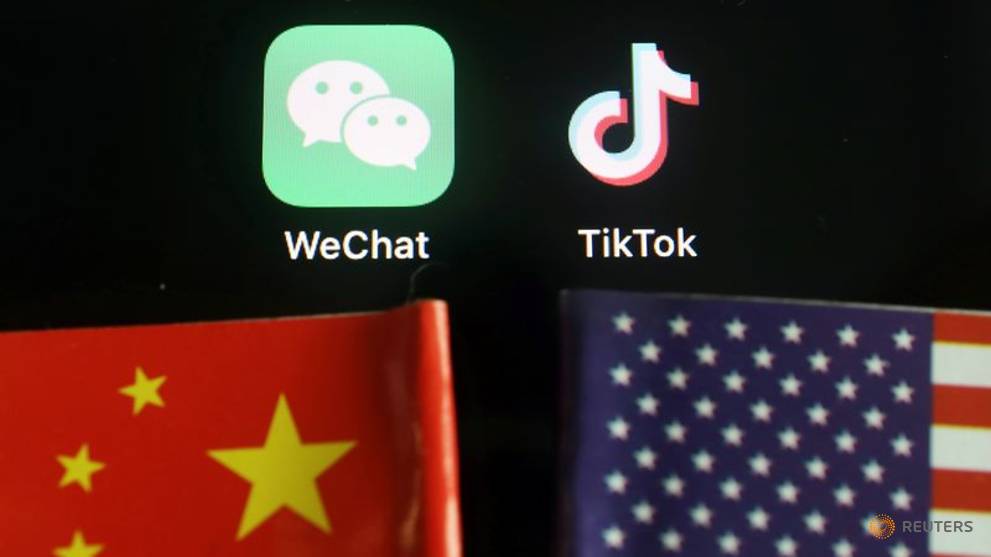
WASHINGTON: The US Commerce Department issued an order on Friday (Sep 18) that will bar people in the United States from downloading Chinese-owned messaging app WeChat and video-sharing app TikTok starting on Sep 20.
Commerce officials said the ban on new US downloads of TikTok could be still rescinded by President Donald Trump before it takes effect late Sunday as TikTok owner ByteDance races to clinch an agreement over the fate of its US operations.
ByteDance has been talks with Oracle Corp and others to create a new company, TikTok Global, that aims to address US concerns about the security of its users' data. ByteDance still needs Trump's approval to stave off a US ban.
Commerce officials said they will not bar additional technical transactions for TikTok until Nov 12, which gives the company additional time to see if ByteDance can reach a deal for its US operations. "The basic TikTok will stay intact until Nov 12," Commerce Secretary Wilbur Ross told Fox Business Network.
The department said the actions will "protect users in the US by eliminating access to these applications and significantly reducing their functionality."
Oracle shares fell 1.6 per cent after the news in pre-market trading.
The Commerce Department order will "deplatform" the two apps in the United States and bar Apple's app store, Google Play and others from offering the apps on any platform "that can be reached from within the United States," a senior Commerce official told Reuters.
The order will not ban US companies from doing businesses on WeChat outside the United States, which will be welcome news to US firms like Walmart and Starbucks that use WeChat's embedded 'mini-app' programmes to facilitate transactions and engage consumers in China, officials said.
The order will not bar transactions with WeChat-owner Tencent Holdings' other businesses, including its online gaming operations, and will not prohibit Apple, Google or others from offering TikTok or WeChat apps anywhere outside the United States.
The bans are in response to a pair of executive orders issued by Trump on Aug 6 that gave the Commerce Department 45 days to determine what transactions to block from the apps he deemed pose a national security threat. That deadline expires on Sunday.
Commerce Department officials said they were taking the extraordinary step because of the risks the apps' data collection poses. China and the companies have denied US user data is collected for spying.
Ross said in a written statement "we have taken significant action to combat China's malicious collection of American citizens' personal data, while promoting our national values, democratic rules-based norms, and aggressive enforcement of US laws and regulations."
POPULAR APPS
The Trump administration has ramped up efforts to purge “untrusted" Chinese apps from US digital networks and has called TikTok and WeChat “significant threats.”
TikTok has 100 million users in the United States and is especially popular among younger Americans.
WeChat has had an average of 19 million daily active users in the United States, analytics firms Apptopia said in early August. It is popular among Chinese students, expats and some Americans who have personal or business relationships in China.
WeChat is an all-in-one mobile app that combines services similar to Facebook, WhatsApp, Instagram and Venmo. The app is an essential part of daily life for many in China and boasts more than 1 billion users.
The Commerce Department will not seek to compel people in the United States to remove the apps or stop using them but will not allow updates or new downloads. "We are aiming at a top corporate level. We're not going to go out after the individual users," one Commerce official said.
Over time, officials said, the lack of updates will degrade the apps usability.
"The expectation is that people will find alternative ways to do these actions," a senior official said. "We expect the market to act and there will be more secure apps that will fill in these gaps that Americans can trust and that the United States government won't have to take similar actions against."
Commerce is also barring additional technical transactions with WeChat starting on Sunday that will significantly reduce the usability and functionality of the app in the United States.
The order bars data hosting within the United States for WeChat, content delivery services and networks that can increase functionality and internet transit or peering services.
"What immediately is going to happen is users are going to experience a lag or lack of functionality," a senior Commerce official said of WeChat users. "It may still be usable but it is not going to be as functional as it was." There may be sporadic outages as well, the official said.
Commerce will bar the same set of technical transactions for TikTok, but that will not take effect until Nov 12 to give the company additional time to see if ByteDance can reach a deal for its US operations. The official said TikTok US users would not see "a major difference" in the app's performance until Nov 12.
Commerce will not penalise people who use TikTok or WeChat in the United States.
The order does not bar data storage within the United States for WeChat or TikTok.
Some Americans may find workarounds. There is nothing that would bar an American from travelling to a foreign country and downloading either app, or potentially using a virtual private network and a desktop client, officials conceded.
BEIJING: China began combat drills near the Taiwan Strait on Friday (Sep 18), the same day a senior US official began high-level meetings in Taipei in a move that has angered Beijing.
Beijing has watched with growing alarm the ever-closer relationship between Taipei and Washington, and has stepped up military exercises near the island, including two days of mass air and sea drills last week.
Chinese Defence Ministry spokesman Ren Guoqiang said Friday's drills, about which he gave no details, were taking place near the Taiwan Strait and involved the People's Liberation Army's eastern theatre command.
"They are a reasonable, necessary action aimed at the current situation in the Taiwan Strait and protecting national sovereignty and territorial integrity," Ren said.
Ren also warned that the Chinese military had "sufficient ability" to counter any external threat or challenge from Taiwan separatists.
Beijing considers Taiwan part of its territory and baulks at any recognition of Taiwan - which has been ruled separately from China since the end of a civil war in 1949.
Ren accused the United States of "frequently causing trouble" over Taiwan, which he said "is purely China's internal affairs, and we won't tolerate any external interference".
Trying to "use Taiwan to control China" or "rely on foreigners to build oneself up" is wishful thinking and doomed to be a dead end, he added.
"Those who play with fire will get burnt," he said.
TAIWAN SCRAMBLES JETS
According to Taipei's defence ministry, 18 Chinese aircraft - including bombers and fighters - entered Taiwan's southwest air defence identification zone (ADIZ) on Friday and also crossed the so-called median line that divides the Taiwan Strait.
The ministry said Taiwan's military "scrambled fighters, and deployed air defence missile system to monitor the activities".
The ministry showed a map of the flight paths of Chinese jets crossing the Taiwan Strait mid-line, which normally combat aircraft from both sides avoid passing through.
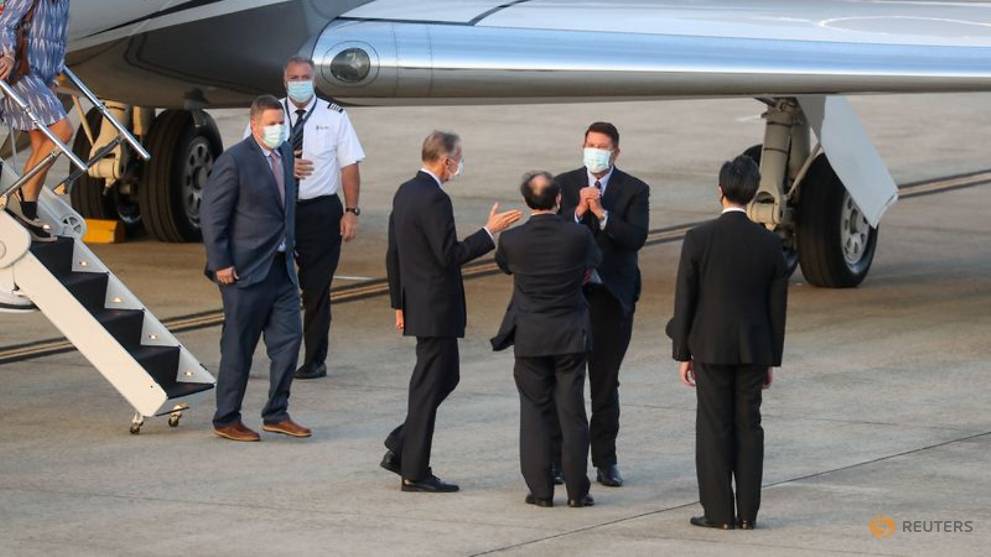
China's announcement came as US Undersecretary for Economic Affairs Keith Krach began the first full day of his visit to Taiwan in a low-key way, with no open media events on his agenda. He is the highest-ranking State Department official to visit in 40 years.
He is due to meet President Tsai Ing-wen later in the day, and on Saturday will attend a memorial service for late President Lee Teng-hui.
China had threatened to make a "necessary response" to the trip, straining already poor ties between Beijing and both Taipei and Washington. Sino-US relations have plummeted ahead of November's US presidential election.
Chinese fighter jets briefly crossed the mid-line of the Taiwan Strait last month as the US Health Secretary Alex Azar was in Taipei, and last week China carried out two days of large-scale drills off Taiwan's southwestern coast.
The US, like most countries, only has official ties with China, not Taiwan, though is the island's main arms supplier and most important international backer.
This week, the US ambassador to the United Nations had lunch with Taiwan's top envoy in New York. China's UN mission said it had lodged "stern representations" over the meeting.
GENEVA: Now almost in its tenth month, the COVID-19 pandemic is still wreaking havoc on economies and lives around the world.
But while the end of the crisis seems as far away as ever, the fact is that we are approaching a potential turning point.
World leaders now have an opportunity to seal the deal on a global framework that puts international cooperation above vaccine nationalism in stopping the pandemic.
The moment of truth will come at midnight on Sep 18. That is the deadline for countries to join the COVID-19 Vaccine Global Access Facility (COVAX), an initiative launched by Gavi, the Vaccine Alliance, the World Health Organization and the Coalition for Epidemic Preparedness Innovations.
COVAX represents the best chance we have to provide people in all countries with rapid, fair and equitable access to COVID-19 vaccines as soon as they become available.
The initiative has already achieved an extraordinary scale, with more than 170 countries (representing 70 per cent of the global population) already signalling their intent to join.
At a time when most countries are undergoing unprecedented crises, governments are eager for solutions that will benefit everyone. Nothing like COVAX has ever been attempted, and the short timeframe in which it has been assembled makes it all the more remarkable.
If successful, this will be the first time that the international community has come together to ensure equitable and simultaneous access to new lifesaving pandemic interventions for rich and poor alike.
As COVID-19 continues to spread, the global death toll is approaching one million, with monthly economic losses estimated at US$500 billion.
Under these conditions, ensuring fair, universal access to vaccines is not only the right thing to do. It is also necessary if we are to bring the crisis to an end. Until everyone is protected, everyone will remain at risk of the disease, its adverse economic effects, or both.
FILE PHOTO: People wear face masks inside the Queen Victoria Market as the city operates under lockdown in response to an outbreak of COVID-19 in Melbourne, Australia. (AAP Image/Erik Anderson via Reuters)
As the only truly global approach available, COVAX’s importance cannot be overstated. Although there are more than 200 COVID-19 vaccines in development, and at least 35 clinical trials underway, the vast majority are likely to fail.
Historically, candidate vaccines at the preclinical stage have less than a 10 per cent chance of succeeding. And of those that do advance to the clinical trials stage, only around 20 per cent will ultimately be approved.
Given these odds, even wealthy governments that are currently negotiating bilateral deals with individual vaccine manufacturers cannot guarantee access to a vaccine on their own.
By contrast, COVAX is specifically designed to maximise the chances of success by investing in the development and manufacture of a large number of vaccine candidates at the same time.
With the world’s largest and most diverse vaccine portfolio – which currently comprises nine candidates already in development and a further nine or more under evaluation – COVAX will act as a global insurance policy.
Under this framework, member countries that have bilateral deals will still have vaccine access options in the event that those gambles fail, and the majority of countries that have no other options will be extended a critical lifeline.
COVAX’s initial aim is to have two billion vaccine doses available by the end of 2021, as that should be enough to protect high-risk/vulnerable populations and frontline health-care workers.
But to hit that target, we first need the legally binding commitments of as many countries as possible.
FILE PHOTO: A June 24, 2020 handout photo received from biotech company IDT Biologika in Dessau-Rosslau, Germany, on July 28, 2020, shows an individual dose of the filled SARS-CoV-2 vaccine candidate. Hartmut Boesener/IDT Biologika/Handout via Reuters
After the sign-up deadline of Sep 18, the priority will be to complete the development and testing process to ensure that all forthcoming vaccines are both effective and safe.
COVAX will need to put in place agreements with drug manufacturers, so that it can begin delivering vaccines at scale as soon as they are approved. And donor funds will be needed to subsidise the purchase of vaccines for low- and lower-middle-income countries.
But even with financial solutions in place, the process of distributing vaccines will pose significant challenges. The delivery of COVID-19 vaccines will be the single largest vaccine deployment the world has ever seen, and it will have to be executed at a time when misinformation (the “infodemic”) is threatening to undermine public confidence in vaccine safety.
Though the pandemic is far from over, we at least have a global solution in sight. COVAX represents the best hope that we have for bringing a prompt end to the crisis.
When people look back and marvel at how quickly the scientific community and development practitioners responded to the COVID-19 threat, they will be able to point to the speed with which governments put aside national interests in the name of international cooperation and solidarity.
Whatever specific moment future historians choose as the pandemic’s turning point, there will be little doubt that the creation and widespread adoption of the COVAX framework played an indispensable role in ending it.
Download our app or subscribe to our Telegram channel for the latest updates on the coronavirus outbreak: https://cna.asia/telegram
Seth Berkley is CEO of Gavi, the Vaccine Alliance. Richard Hatchett is CEO of the Coalition for Epidemic Preparedness Innovations. Soumya Swaminathan is Chief Scientist of the World Health Organization.
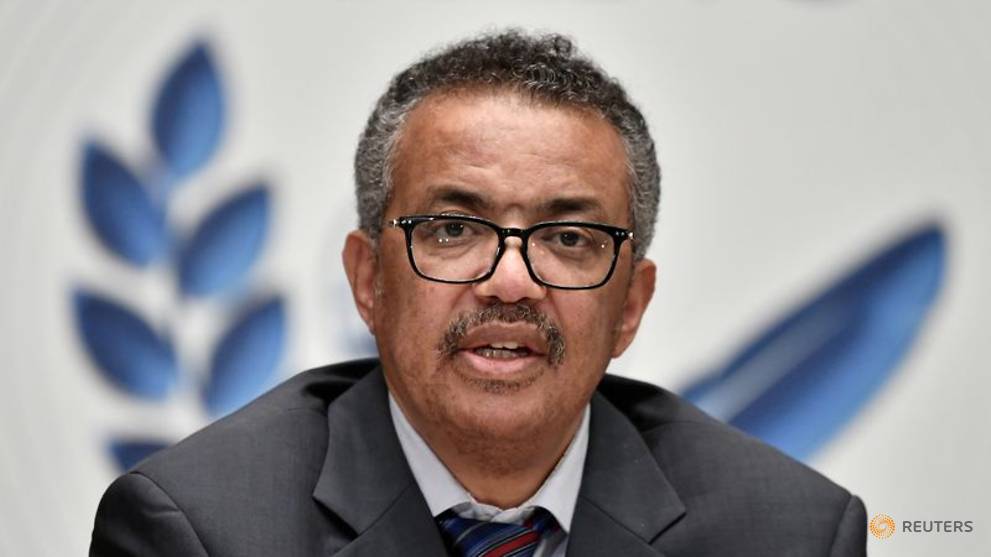
SINGAPORE: Framing the decision to impose COVID-19 lockdowns versus reopening economies as a choice between public health and the economy is a "false" dichotomy, World Health Organization (WHO) director-general Tedros Adhanom Ghebreyesus said on Thursday (Sep 17).
"That is a false choice," said Dr Tedros in a pre-recorded message played at the final instalment of the National Univerity of Singapore's (NUS) COVID-19 Updates from Singapore webinars. "WHO is urging countries to focus on four essential priorities."
The first priority is to prevent amplifying events from large gatherings, such as at stadiums and nightclubs, which have seen "explosive outbreaks"; and the second is to protect the vulnerable, to save lives and to reduce the burden on the health system.
Thirdly, there is a need to educate communities on physical distancing, hand hygiene, respiratory etiquette and the wearing of masks to curb transmission; and lastly, to find, isolate, test and care for cases, as well as trace and quarantine their contacts.
"There are already many examples of countries that have effectively prevented or control their outbreaks by doing these four things, and doing them well," he said, listing New Zealand, Iceland, Senegal, Mongolia and Singapore as examples.
"The common theme in all these countries is a commitment to national unity and global solidarity."
He also said that more than 170 countries have joined a global plan to distribute vaccines fairly around the world, and that the WHO's top priority for a vaccine is safety. The deadline to join the programme, known as COVAX, is Friday.
"The first vaccine to be approved may not be the best. The more shots on goal that we have, the higher the chances of having a very safe, very efficacious vaccine," said Dr Tedros.
"We already face challenges with vaccine acceptance for many proven vaccines. We cannot risk having an effective vaccine for COVID-19 that people refuse because of the perception it is unsafe," he added.
"But the greatest test we face now is not scientific or technical. It's a test of character: Can countries come together in solidarity to share the fruits of research, or will misguided nationalism reinforce the inequalities and injustices that have blighted our world?"
Warning that COVID-19 will not be the last pandemic, Dr Tedros said that the world must be ready when the next outbreak hits.
"It has never been clearer that health is a political and economic choice. In the past 20 years, countries have invested heavily in preparing for terrorist attacks but relatively little in preparing for the attack of a virus, which, as the pandemic has proven, can be far more deadly, disruptive and costly," he said.
Dr Tedros' message opened the webinar where 16 public health experts from Singapore and around the world spoke, either live on Zoom or in recorded videos.
Singapore's Ministry of Health (MOH) director of medical services Kenneth Mak gave an overview of Singapore's COVID-19 situation, elaborating on some of the lessons learned from the country's fight against the coronavirus.
Having government agencies work together to lead a "whole ... nation" effort has been one important factor, while traditional principles of managing infection clusters, contact tracing and isolation have proven to be effective, he said.
He highlighted that while Singapore has reported more than 57,000 COVID-19 cases, and that currently, only 40-odd people remain in hospital. About 490 people with mild symptoms are housed at community care facilities.
"We added on also a recognition of patients who are vulnerable and at high risk of ... adverse outcomes," he said, adding that those at higher risk of severe complications were identified for closer monitoring and treatment.
"By protecting those that are vulnerable, we've managed to keep the morbidity and complication rates low here in Singapore."
Other experts who spoke at the webinar hosted by the NUS Yong Loo Lin School of Medicine included the school's dean, Professor Chong Yap Seng, Professor David Heymann from the London School of Hygiene and Tropical Medicine and Mr Patrick Drury, manager of WHO's Global Outbreak Alert and Response Network.
SINGAPORE - The head of the World Health Organisation (WHO) has debunked arguments that countries have to choose between public health and the economy when they look at whether to ease restrictions following a lockdown.
"That is a false choice," said WHO director-general Tedros Adhanom Ghebreyesus. Instead, the WHO urges countries to focus on four essential priorities:
- Protect the vulnerable to save lives and reduce the burden on the health systems in terms of severely and critically ill patients.
- Educate and empower communities to protect themselves and others. Physical distancing, hand hygiene, respiratory etiquette and masks can help to curb transmission and save lives, not when done in isolation, but by practising all the measures together.
- Persist with the public health basics. Find, isolate, test and care for people who have been infected, and trace and quarantine their contacts.
Dr Tedros said there are many countries that have "effectively prevented or controlled their outbreaks by doing these four things and doing them well", and named Singapore and New Zealand as two such places.
He was speaking at the National University of Singapore Yong Loo Lin School of Medicine's final Covid-19 webinar on Thursday (Sept 17), which looked at global solidarity. The session featured 16 speakers, both local and foreign.
Dr Tedros said the pandemic has changed the world. "Lives and livelihoods have been lost, and economies and societies have been upended.
"The pandemic has exposed and exploited political fault lines and inequalities and the gaps in national health systems."
But on a more positive note, he said that for everything Covid-19 has taken from us, it has also given us something - a reminder of what really matters and the opportunity to forge a common future.
The real question is whether countries can come together in solidarity to share the fruits of research when a viable vaccine is available.
"Or, will misguided nationalism reinforce the inequalities and injustices that have blighted our world for so long?" he asked.
"In our interconnected world, if people in low- and middle-income countries miss out on vaccines, the virus will continue to kill and the economic recovery, globally, will be delayed."
Dr Tedros said: "The virus thrives on division. But united, we can defeat it. The pandemic has reminded us of a simple truth - that for all our differences, we are one human race and we are stronger together."
In April, the WHO together with the European Commission and France set up the Covax initiative to provide equitable access to vaccines against Covid-19. More than 170 countries including Singapore have since joined. They will be guaranteed access to the world's largest portfolio of vaccine candidates.
Dr Tedros said: "The first vaccine to be approved may not be the best. The more shots on goal we have, the higher the chances of having a very safe, very efficacious vaccine."