SINGAPORE - Singapore and Japan have agreed to launch a green lane for essential business and official travel for residents from both countries on Sept 18.
In a joint statement, the foreign affairs ministries of both countries said that the Business Track arrangement will help restore connectivity and support economic recovery for Japan and Singapore.
The Business Track will allow the safe resumption of cross-border travel and business exchanges with the necessary public health safeguards in place, the countries said.
These safeguards include pre-departure and post-arrival testing, as well as the need to adhere to a controlled itinerary for the first 14 days in the receiving country.
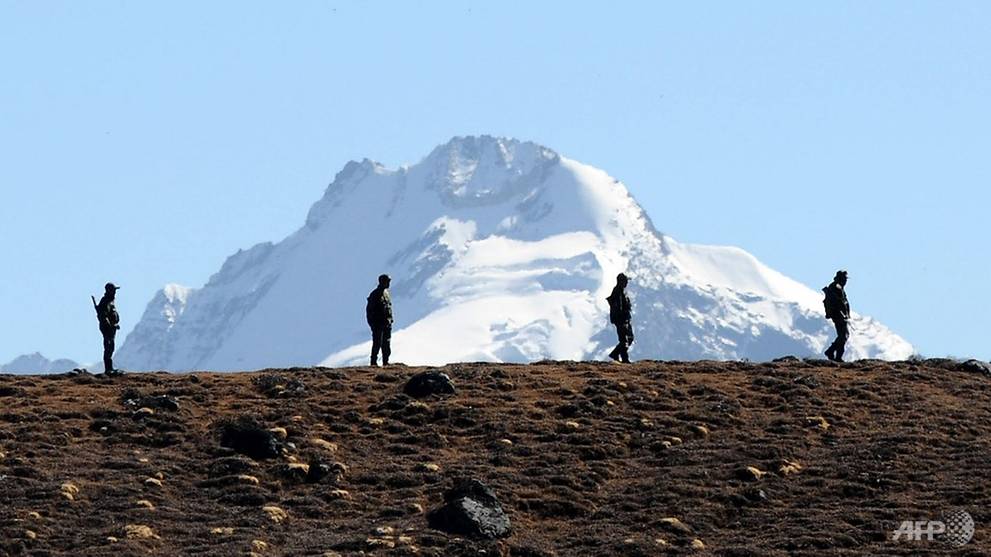
NEW DELHI: The foreign ministers of India and China have agreed that troops of the two countries must quickly disengage from a border standoff, they said in a joint statement issued on Friday (Sep 11).
Foreign Ministers S Jaishankar and Wang Yi met in Moscow on Thursday on the sidelines of a conference to try and end the months-long dispute on the undemarcated border, the most serious in decades.
"The two foreign ministers agreed that the current situation in the border areas is not in the interest of either side. They agreed therefore that the border troops of both sides should continue their dialogue, quickly disengage, maintain proper distance and ease tensions," they said in the statement.
The Chinese foreign ministry said in a statement on Friday that China will maintain communications with India through diplomatic and military channels and commit to "restoring peace and tranquility" in their disputed border area.
Wang told Jaishankar that the "imperative is to immediately stop provocations such as firing and other dangerous actions that violate the commitments made by the two sides".
Wang also said during the meeting that all personnel and equipment that have trespassed at the border must be moved and that frontier troops on both sides "must quickly disengage" in order to de-escalate the situation.
China's Global Times, an influential tabloid published by the official newspaper of China's ruling Communist Party, said in an editorial published late Thursday that any talks with India should be paired with "war readiness".
"The Chinese side must be fully prepared to take military action when diplomatic engagement fails, and its frontline troops must be able to respond to emergencies, and be ready to fight at any time," the newspaper said.
"India has an abnormal confidence in confronting China. It does not have enough strength. If India is kidnapped by extreme nationalist forces and keeps following its radical China policy, it will pay a heavy price."
"VIOLENT FACE-OFF"
In June, at least 20 Indian soldiers were killed in a "violent face-off" with Chinese forces along the Galwan Valley, between China's Tibet and India's Ladakh region, which saw the deadliest clash between the nuclear-armed neighbours for more than four decades.
Earlier this week, both countries accused each other of firing in the air during a confrontation on the border.
Both sides have observed a long-held protocol to avoid using firearms on the sensitive, undemarcated frontier, though this agreement has not prevented casualties.
Troops of the People's Liberation Army (PLA) had attempted to close in on a forward Indian position at the Line of Actual Control (LAC), or the de factor border, in the Ladakh sector, the Indian army said in a statement on Tuesday.
"And when dissuaded by own (Indian troops), PLA troops fired a few rounds in the air in an attempt to intimidate own troops," it said, adding that the Indian side acted with restraint.
"At no stage has the Indian Army transgressed across the LAC or resorted to use of any aggressive means, including firing," it said.
But China said the Indians had breached the informal border through the southern bank of the Pangong Tso lake, where tension has been rising for more than a week.
"The Indian troops brazenly made gunshot threat to the patrolling Chinese border guards who came forward for negotiations, and the Chinese border guards were forced to take countermeasures to stabilise the situation," said Zhang Shuili, a representative of the PLA's western theatre command.
China's foreign ministry said Indian troops had illegally crossed the LAC and were the first to fire shots.
JAKARTA: In July, credit analyst Budi Wardiman went back to work in his office in Jakarta, after having worked from home for almost three months due to a partial lockdown that was imposed in the capital to break the chain of COVID-19 infection.
The first round of restrictions were put in place on Apr 10 and lifted in early June, as Jakarta saw a decrease in cases. Most businesses were allowed to reopen.
But about 10 days after Mr Wardiman, not his real name, and his colleagues went back to work in their office, two of his co-workers were tested positive for COVID-19.
All the staff at the bank where Mr Wardiman worked then had to undergo a Polymerase Chain Reaction (PCR) test. Five others also tested positive.
As of early September, a total of 18 people at the bank’s Jakarta branch have been tested positive, while 23 others who work at the bank’s branch in South Tangerang, on the outskirts of Jakarta, also have COVID-19.
Mr Wardiman said that they actually implemented some health protocols, like having safe distancing for seating and each cubicle getting a partition.
“But a flaw is that the air conditioner is still centralised and the rooms lack air circulation.
“We also suspect the elevator is a transmission medium,” Mr Wardiman told CNA.
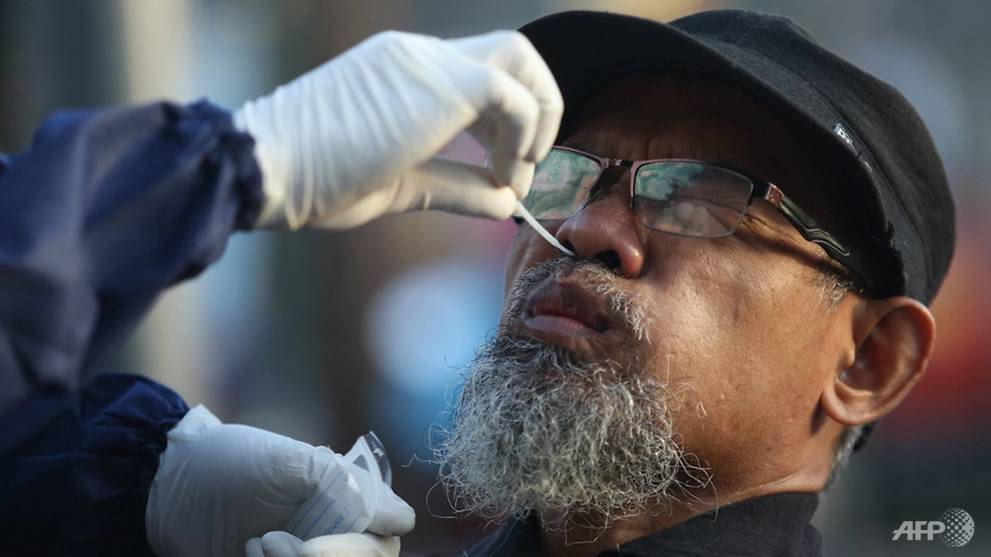
A health agency official takes a mucus swab sample to test for COVID-19 from a commuter at a train station in Bekasi, West Java on May 5, 2020. (Photo: AFP/Khairul Basyar)
Mr Wardiman's account is just one of the many instances in Jakarta and its surrounding satellite cities where workplaces have been the focus of COVID-19 clusters after the first round of restrictions were eased.
In Bekasi regency east of Jakarta, there have been at least five major known clusters of COVID-19 in industrial areas.
Cases have been detected in factories under major multinational corporations, including Unilever Indonesia, LG Electronics, and Hitachi. These clusters in Bekasi alone account for more than 500 COVID-19 cases.
As the total number of COVID-19 cases in Indonesia crossed the 200,000 mark, Jakarta city governor Anies Bawedan announced on Wednesday (Sep 9) that large-scale social restrictions will be reimposed.
Why have workplaces been the focus of new COVID-19 clusters?
Experts say there are several reasons for this, including how businesses could have resumed operating prematurely back in June, as well as gatherings and meetings in workplaces.
EXPERT SAYS BUSINESSES REOPENED PREMATURELY
Mr Pandu Riono, an epidemiologist from the University of Indonesia believes that the businesses had reopened prematurely after the restrictions were eased.
“There was a decrease in COVID-19 cases, but there were still a lot of them,” Mr Riono told CNA.
“In other countries, they wait until there is only a handful of cases, then they open the businesses. Here, it happened when there were still hundreds (of new cases daily).”
He also said that some companies did not comply with health protocols with respect to allowing employees to resume work in the office.
“They did not want to invest in health,” he said, adding that some may not have taken things seriously because there is a lack of monitoring by the government.
Mr Dicky Budiman, an epidemiologist with Griffith University in Brisbane added that resuming work in the office is not simply a matter of implementing health protocols. Things must start with the management screening the employees to know whether they are free of COVID-19.
It is also necessary to know the employees' health condition. Employees with a comorbid condition, for example, must work from home, he pointed out.
Workers wearing protective suits bury a coronavirus disease (COVID-19) victim at Pondok Ranggon cemetery complex in Jakarta, Indonesia, September 8, 2020 in this photo taken by Antara Foto. Antara Foto/Muhammad Adimaja/ via REUTERS
GATHERINGS, MEETINGS ANOTHER RISK FACTOR
Meanwhile, the spokesman of the national COVID-19 taskforce Wiku Adisasmito said that activities that required people to meet in groups could have contributed to the transmission of the disease.
“That’s why when you hold meetings or work from the office, it is advised not to stay in a closed room for too long,” he said during a press conference last month.
Prof Adisasmito also suggested that the clusters could have been formed at the employees’ neighbourhoods or they could have been infected while they were commuting to work.
“Actually employees have homes, so of course there are clusters in the settlements and they can catch it (COVID-19) at their neighbourhood or at home or on the way to the office.”
FILE PHOTO: People wearing protective face masks and face shields walk at the park amid the coronavirus disease (COVID-19) outbreak, in Jakarta, Indonesia, August 22, 2020. REUTERS/Ajeng Dinar Ulfiana
On Tuesday, the government decided to take extra precautions to prevent COVID-19 from spreading in workplaces.
Prof Adisasmito said that civil servants who work in green zones can all work from the office, and only a maximum of 75 per cent of workers in yellow zones can work from the office.
In addition, in government institutions, only half of the employees in orange zones can go to work and only 25 per cent of employees can work from the office in red zones.
Red zones are defined by the government as areas where there are a lot of COVID-19 cases and deemed dangerous. Orange zones and yellow zones are places with not that many COVID-19 cases, while green zones are places believed to be safe as they have reported little COVID-19 cases.
“The clusters which happen at workplaces could have happened during lunchtime or while performing prayers, that is why one must keep a distance from one another and only take off your masks when eating lunch,” Prof Adisasmito stated.
As of Thursday, there were more than 207,000 COVID-19 cases and 8,456 deaths in Indonesia, one of the highest in Southeast Asia.
Citizens will be required to work from home, study from home and conduct activities of worship from home. Only 11 essential business may operate from their premises.
Passengers wearing protective masks and face shields queue for a public bus, following the COVID-19 outbreak, at a central bus spot in Jakarta, Indonesia, Jul 27, 2020. (Photo: REUTERS/Willy Kurniawan)
Mr Riono cautioned that the restrictions must not be violated, unlike the previous round where there were anecdotal accounts of people flouting the rules.
He also asserted that better strategies are needed to contain the spread of COVID-19 in industrial zones.
To make enforcement more effective, there is a need for closer coordination between the central government and municipal authorities, he said.
He also emphasised that public education should be improved, as some believe that they cannot catch COVID-19.
Going a step further, Mr Budiman said just education is not enough.
He said that employers who demand their staff to work from the office should regularly test them for COVID-19.
They should also implement other measures apart from the standard health protocols known in Indonesia – wearing a mask, safe distancing and washing one's hands regularly.
For instance, there should be guards to ensure that there are not too many people in the lavatory at the same time, he said.
Companies that are still allowed to operate should make sure that they have the best ventilation such as using air conditioners with High-Efficiency Particulate Arrestance (HEPA) air filters or replacing systems that are activated by fingerprints.
Within the broader community, what is needed is a more aggressive testing and tracing approach, something Indonesia is lagging far behind compared to other developing countries, Mr Budiman added.
In the meantime, Mr Wardiman, the credit analyst does not have many options rather than to continue to work from his office, as banks are categorised as essential services.
“I am actually afraid, but there is nothing I can do other than trying to implement strict health protocols like always bringing extra clothes to change at the office and carrying a hand sanitiser to disinfect things.
“I hope this COVID-19 pandemic will soon end and everyone is disciplined in complying with health protocols because I see a lot of people in public transport who do not wear their masks properly or stand too near to each other.”
SINGAPORE - The Singapore Consulate-General in Hong Kong said on Thursday (Sept 10) the Republic welcomes talks with Hong Kong on the gradual resumption of cross-border travel between the two sides.
It added that, given the strong business and social ties between the two cities, the resumption of cross-border travel will benefit both.
The Consulate-General said that with a low number of new community cases daily and one of the lowest Covid-19 fatality rates in the world, Singapore has the confidence to reopen its economy, albeit gradually and carefully.
On Tuesday, Hong Kong's Secretary for Commerce and Economic Development Edward Yau said the city had sent letters expressing interest in a "travel bubble" to 11 countries, including Singapore.
The territory is already in talks with Japan and Thailand on the resumption of travel.
Barring any spike in infections, the limit imposed on eateries will be raised for a week to four people a table, up from the current two patrons, from Friday.
Sports premises, amusement game centres and places of public entertainment will also reopen, said its Secretary for Food and Health Sophia Chan on Tuesday.
Singapore currently permits visitors from five countries, with varied number of restrictions in place.
HANOI: Washington's top diplomat urged Southeast Asia on Thursday (Sep 10) to cut ties with Chinese companies helping build islands in the South China Sea, weeks after the US blacklisted two dozen firms working in the disputed waters.
Secretary of State Mike Pompeo's comments came at a regional Asian summit overshadowed by the US-China rivalry over a range of issues, from trade to the coronavirus.
Tensions are also simmering over the South China Sea, with the US last month sanctioning 24 Chinese state-owned companies it said had helped Beijing's military buildup in the resource-rich waterway.
Pompeo said it was time for Southeast Asian governments to reconsider their own relationship with firms working in the sea.
"Don't just speak up, but act," he told the 10 foreign ministers of the Association of Southeast Asian Nations (ASEAN) during an online summit.
"Reconsider business dealings with the very state-owned companies that bully ASEAN coastal states in the South China Sea.
"Don't let the Chinese Communist party walk over us and our people."
Disputed claims in the South China Sea AFP
This year's ASEAN summit comes days after Beijing launched ballistic missiles in the South China Sea as part of live-fire exercises.
Vietnam, which is chairing the summit, expressed "serious concern" about recent militarisation of the sea.
"This has eroded trust and confidence, increased tension and undermined peace, security and rule of law in the region," said Foreign Minister Pham Binh Minh.
But the Philippines already said last week it would not follow the US lead because it needed Chinese investment, even as a fresh dispute between the two nations over Scarborough Shoal - one of the region's richest fishing grounds - hangs over the talks.
And Chinese Foreign Minister Wang Yi laid blame on the United States for tensions, claiming Washington was "becoming the biggest driver" of the waterway's militarisation.
CONTESTED WATERS
China claims the majority of the South China Sea, invoking its so-called nine-dash line to justify what it says are historic rights to the key trade waterway.
Vietnam, the Philippines, Malaysia, Brunei and Taiwan all contest parts of China's declared territory in the sea.
Tensions between the US and China have also been exacerbated by concerns over Hong Kong, where Beijing recently imposed a draconian national security law in response to months of civil unrest last year.
Pompeo "joined several countries in raising concerns over ... the arrests of pro-democracy students, the year-long postponement of elections, and disqualification of pro-democracy electoral candidates," according to spokeswoman Morgan Ortagus.
JAKARTA (THE JAKARTA POST/ASIA NEWS NETWORK) - Indonesia's national Covid-19 task force has revealed that Java and Bali islands currently have the highest number of active cases in the country, with a total of more than 23,200, which includes patients under treatment at hospitals and people in self-isolation.
"Java and Bali have recorded the highest number of active Covid-19 cases. More than 23,000 (of their residents currently have Covid-19)," a member of the task force, Dewi Nur Aisyah, said on Wednesday (Sept 9) as reported by kompas.com. However, she did not reveal the details on the number of active cases recorded in Java - which has six provinces - and Bali.
Dewi added that Sumatra had the second-most cases with at least 7,779 active cases, followed by Sulawesi with 3,771 cases, Kalimantan with 3,694 cases, as well as Maluku and Papua with 1,910 cases combined.
The country saw an additional 3,307 cases on Wednesday alone, bringing the total accumulative number of coronavirus infections to 203,342 so far.
At least 8,336 people have died from the disease, while some 145,200 people have reportedly recovered.
Jakarta detected the highest number of new infections with 1,004 cases, followed by East Java and West Java with 370 and 288 cases, respectively.
President Joko "Jokowi" Widodo recently vowed that the government would remain focused on ensuring health and Covid-19 mitigation to ensure the survival of all aspects of the nation's development, including the country's economy.
Authorities previously relaxed some Covid-19 restrictions in a bid to restart the economy, including in capital Jakarta. However, the policy seemed to backfire as data showed that cases increased significantly following the relaxations.
Trump, in a May 29 proclamation as tensions rose with Beijing on multiple fronts, declared that some Chinese nationals officially in the United States for study have stolen intellectual property and helped modernise China's military.
The State Department, offering its first figures on the effects of Trump's order, said that more than 1,000 visas have been revoked since it began implementing the proclamation on June 1.
"The high-risk graduate students and research scholars made ineligible under this proclamation represent a small subset of the total number of Chinese students and scholars coming to the United States," a State Department spokesman said.
"We continue to welcome legitimate students and scholars from China who do not further the Chinese Communist Party's goals of military dominance," she said.
The State Department declined to give details on whose visas have been revoked, citing privacy laws.
Nearly 370,000 students from China were enrolled at US universities in 2018-19, the most of any country, offering a lucrative source of income to institutions that are now facing growing pressure from the coronavirus pandemic.
Some Asian American activists have warned that Trump's orders are creating a climate of suspicion on campuses, with students of Asian descent facing unfounded questions about their intentions.
But US officials say the number of espionage cases involving China has soared in recent years as part of a concerted effort by Beijing.
US officials accuse China of seeking to steal university research into Covid-19, a reason cited for the Trump administration's closing China's consulate in Houston in June.