Senin, 20 Juli 2020

US adds 11 companies to economic blacklist over China's treatment of Uighurs - CNA

WASHINGTON: The US Commerce Department on Monday (Jul 20) added to its economic blacklist 11 Chinese companies implicated in what it called human rights violations in connection with China's treatment of Uighurs in Xinjiang. 

The department said the companies were involved in using forced labor by Uighurs and other Muslim minority groups. They include numerous textile companies and two firms the government said were conducting genetic analyses used to further the repression of Uighurs and other Muslim minorities.

Blacklisted firms cannot buy components from US companies without US government approval.

It was the third group of companies and institutions in China added to the US blacklist, after two rounds in which the Trump administration cited 37 entities it said were involved in China's repression in Xinjiang.

"Beijing actively promotes the reprehensible practice of forced labor and abusive DNA collection and analysis schemes to repress its citizens," Commerce Secretary Wilbur Ross said in a statement.

READ: China says it will hit back against new US sanctions over Uighur rights

The Chinese Embassy in Washington declined to comment.

In May the Chinese foreign ministry criticised US entity list additions, arguing the United States "overstretched the concept of national security, abused export control measures, violated the basic norms governing international relations, interfered in China's internal affairs".

The companies added to the blacklist include Nanchang O-Film Tech, a supplier for Apple's iPhone, which hosted Apple chief executive Tim Cook in December 2017, according to O-Film's website. It is also a supplier to Amazon.com and Microsoft, according to an April congressional letter. The US companies did not immediately comment.

They also include KTK Group, which produces more than 2,000 products used to build high-speed trains, from electronics to seats; and Tanyuan Technology, which assembles high thermal conductive graphite reinforced aluminum composites.

Another company is Changji Esquel Textile Co, which Esquel Group launched in 2009. Esquel Group produces clothing for Ralph Lauren, Tommy Hilfiger and Hugo Boss. In April, Esquel denied it used forced labor in Xinjiang.

In a letter to Ross on Monday, Esquel CEO John Chen asked its unit be removed from the list. "Esquel does not use forced labour, and we never will use forced labour. We absolutely and categorically oppose forced labour," Chen wrote.

READ: US President Donald Trump has not ruled out sanctions on Chinese officials, says National Security Council

Also on the blacklist is Hetian Haolin Hair Accessories. On May 1, US Customs and Border Protection (CBP) said it was halting imports of the company's hair products, citing evidence of forced labor.

On July 1, CBP seized in Newark a shipment of almost 13 tons of hair products worth more than US$800,000, with human hair that originated in Xinjiang.

The list also includes two subsidiaries of Beijing Genomics Institute, a genomics company with ties to the Chinese government, Senator Marco Rubio said.

He said the additions will "ensure that US technology does not aid the Chinese Communist Party's crimes against humanity and egregious human rights abuses against Uyghurs and other minorities in Xinjiang, including the forced collection of DNA".

Commerce previously added 20 Chinese public security bureaus and companies including video surveillance firm Hikvision , as well as leaders in facial recognition technology SenseTime Group and Megvii Technology in connection with China's treatment of Muslim minorities.

Senator Josh Hawley, a Republican, has said he would introduce legislation that would penalise US companies which use forced labor in their supply chains.

Let's block ads! (Why?)


https://news.google.com/__i/rss/rd/articles/CBMibGh0dHBzOi8vd3d3LmNoYW5uZWxuZXdzYXNpYS5jb20vbmV3cy93b3JsZC91cy1jaGluYS1ibGFja2xpc3QtbW9yZS1maXJtcy1zYW5jdGlvbnMteGluamlhbmctdWlnaHVycy0xMjk0ODQzMNIBAA?oc=5

2020-07-20 23:48:45Z
52780938454300

US adds 11 companies to economic blacklist over China's treatment of Uighurs - CNA

WASHINGTON: The US Commerce Department on Monday (Jul 20) added to its economic blacklist 11 Chinese companies implicated in what it called human rights violations in connection with China's treatment of Uighurs in Xinjiang. 

The department said the companies were involved in using forced labor by Uighurs and other Muslim minority groups. They include numerous textile companies and two firms the government said were conducting genetic analyses used to further the repression of Uighurs and other Muslim minorities.

Blacklisted firms cannot buy components from US companies without US government approval.

It was the third group of companies and institutions in China added to the US blacklist, after two rounds in which the Trump administration cited 37 entities it said were involved in China's repression in Xinjiang.

"Beijing actively promotes the reprehensible practice of forced labor and abusive DNA collection and analysis schemes to repress its citizens," Commerce Secretary Wilbur Ross said in a statement.

READ: China says it will hit back against new US sanctions over Uighur rights

The Chinese Embassy in Washington declined to comment.

In May the Chinese foreign ministry criticised US entity list additions, arguing the United States "overstretched the concept of national security, abused export control measures, violated the basic norms governing international relations, interfered in China's internal affairs".

The companies added to the blacklist include Nanchang O-Film Tech, a supplier for Apple's iPhone, which hosted Apple chief executive Tim Cook in December 2017, according to O-Film's website. It is also a supplier to Amazon.com and Microsoft, according to an April congressional letter. The US companies did not immediately comment.

They also include KTK Group, which produces more than 2,000 products used to build high-speed trains, from electronics to seats; and Tanyuan Technology, which assembles high thermal conductive graphite reinforced aluminum composites.

Another company is Changji Esquel Textile Co, which Esquel Group launched in 2009. Esquel Group produces clothing for Ralph Lauren, Tommy Hilfiger and Hugo Boss. In April, Esquel denied it used forced labor in Xinjiang.

In a letter to Ross on Monday, Esquel CEO John Chen asked its unit be removed from the list. "Esquel does not use forced labour, and we never will use forced labour. We absolutely and categorically oppose forced labour," Chen wrote.

READ: US President Donald Trump has not ruled out sanctions on Chinese officials, says National Security Council

Also on the blacklist is Hetian Haolin Hair Accessories. On May 1, US Customs and Border Protection (CBP) said it was halting imports of the company's hair products, citing evidence of forced labor.

On July 1, CBP seized in Newark a shipment of almost 13 tons of hair products worth more than US$800,000, with human hair that originated in Xinjiang.

The list also includes two subsidiaries of Beijing Genomics Institute, a genomics company with ties to the Chinese government, Senator Marco Rubio said.

He said the additions will "ensure that US technology does not aid the Chinese Communist Party's crimes against humanity and egregious human rights abuses against Uyghurs and other minorities in Xinjiang, including the forced collection of DNA".

Commerce previously added 20 Chinese public security bureaus and companies including video surveillance firm Hikvision , as well as leaders in facial recognition technology SenseTime Group and Megvii Technology in connection with China's treatment of Muslim minorities.

Senator Josh Hawley, a Republican, has said he would introduce legislation that would penalise US companies which use forced labor in their supply chains.

Let's block ads! (Why?)


https://news.google.com/__i/rss/rd/articles/CBMibGh0dHBzOi8vd3d3LmNoYW5uZWxuZXdzYXNpYS5jb20vbmV3cy93b3JsZC91cy1jaGluYS1ibGFja2xpc3QtbW9yZS1maXJtcy1zYW5jdGlvbnMteGluamlhbmctdWlnaHVycy0xMjk0ODQzMNIBAA?oc=5

2020-07-20 23:26:15Z
52780938454300

Wave of promising study results raise hopes for COVID-19 vaccines - CNA

CHICAGO: Early data from trials of three potential COVID-19 vaccines released on Monday (Jul 20), including a closely-watched candidate from Oxford University, increased confidence that a vaccine can train the immune system to recognise and fight the novel coronavirus without serious side effects.

Whether any of these efforts will result in a vaccine capable of protecting billions of people and ending the global pandemic that has claimed more than 600,000 lives is still far from clear. All will require much larger studies to prove they can safely prevent infection or serious disease.

The vaccine being developed by British drugmaker AstraZeneca along with the Oxford University, induced an immune response in all study participants who received two doses without any worrisome side effects.

A coronavirus vaccine under development by CanSinoBiologics and China's military research unit, likewise showed that it appears to be safe and induced an immune response in most of the 508 healthy volunteers who got one dose of the vaccine, researchers reported.

Some 77 per cent of study volunteers experienced side effects like fever or injection site pain, but none considered to be serious.

Both the AstraZeneca and CanSino vaccines use a harmless cold virus known as an adenovirus to carry genetic material from the novel coronavirus into the body. Studies on both vaccines were published in the journal The Lancet.

"Overall, the results of both trials are broadly similar and promising," Naor Bar-Zeev and William Moss, two vaccine experts from Johns Hopkins Bloomberg School of Public Health, wrote in a commentary in The Lancet.

However, the CanSino candidate again showed signs that people who had previously been exposed to the particular adenovirus in its vaccine had a reduced immune response.

The study authors called that "the biggest obstacle" for the vaccine to overcome.

COVID-19: Singapore publishes new research findings that could help with development of vaccines, more accurate testing

German biotech BioNTech and US drugmaker Pfizer released details from a small study in Germany of a different type of vaccine that uses ribonucleic acid (RNA) - a chemical messenger that contains instructions for making proteins.

The vaccine instructs cells to make proteins that mimic the outer surface of the coronavirus. The body recognises these virus-like proteins as foreign invaders and can then mount an immune response against the actual virus.

In the not-yet peer reviewed study of 60 healthy adults, the vaccine induced virus-neutralising antibodies in those given two doses, a result in-line with a previous early-stage US trial.

The burst of announcements followed publication last week of results of Moderna's vaccine trial, showing similarly promising early results. Moderna's vaccine also uses a messenger RNA platform.

"It's encouraging that all these vaccines seem to induce antibodies in people," said former World Health Organization (WHO) assistant director-general Marie-Paule Kieny of the French research institute Inserm. "This proves that the science is moving forward very quickly, which is a good sign."

'LONG WAY TO GO'

None of these leading contenders has shown side effects that could sideline their efforts so far, but all must still prove they are safe and effective in trials involving thousands of subjects, including those at high-risk for severe COVID-19, such as the elderly and people with diabetes.

Historically, just 6 per cent of vaccine candidates end up making it to market, often after a years-long testing process. Vaccine makers hope to dramatically compress that timeline through faster trials and by manufacturing at scale even before the products prove successful.

READ: Britain signs deals with Pfizer, BioNTech, Valneva for COVID-19 vaccines

Several manufacturers have US government backing with a goal of having a coronavirus vaccine by year's end as cases continue to rise at a record pace.

The Oxford-AstraZeneca vaccine is one of 150 in development globally, but is considered the most advanced. Late-stage trials have begun in Brazil and South Africa and are due to start in the United States, where the infection prevalence is highest.

In its Phase I trial, the vaccine induced so-called neutralising antibodies - the kind that stop the virus from infecting cells - in 91 per cent of individuals a month after they got one dose, and in 100 per cent of subjects who got a second dose. These levels were on par with the antibodies produced by people who survived COVID-19 - a key benchmark of potential success.

Commentary: How ‘good’ does a COVID-19 vaccine need to be to stop the pandemic?

Commentary: As world waits for coronavirus vaccine, antibodies treatment a needed plan B

Oxford researcher Sarah Gilbert said the trial could not determine whether one or two doses would be needed to provide immunity.

The vaccine, known as AZD1222, also induced the body to make T cells - activating a second part of the immune system that experts increasingly believe will be important for a lasting immune response.

Recent studies show that some recovered patients who tested negative for coronavirus antibodies developed T cells in response to their infection. Scientists think both are important aspects of an effective coronavirus vaccine.

Dr Mike Ryan, head of WHO's emergencies programme, said the generation of both T-cell and neutralising antibody responses was positive, adding, "there is a long way to go".

BOOKMARK THIS: Our 'comprehensive coverage of the coronavirus outbreak and its developments

Download our app or subscribe to our Telegram channel for the latest updates on the coronavirus outbreak: https://cna.asia/telegram

Let's block ads! (Why?)


https://news.google.com/__i/rss/rd/articles/CBMiZGh0dHBzOi8vd3d3LmNoYW5uZWxuZXdzYXNpYS5jb20vbmV3cy93b3JsZC9jb3ZpZC0xOS1jb3JvbmF2aXJ1cy12YWNjaW5lLWFzdHJhemVuZWNhLWNhbnNpbm8tMTI5NDg2NjbSAQA?oc=5

2020-07-20 23:25:40Z
52780939029758

UK suspends extradition treaty with Hong Kong 'immediately and indefinitely' - CNA

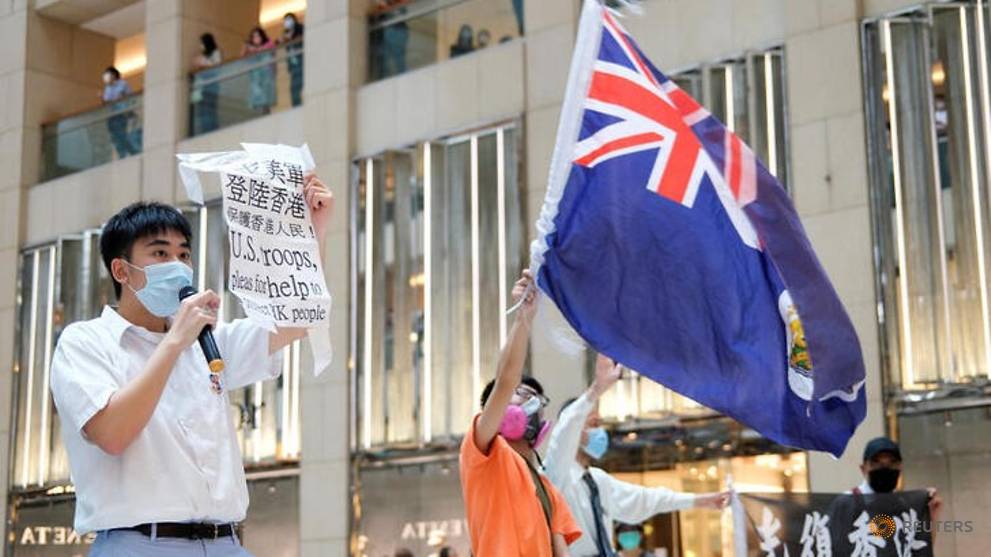
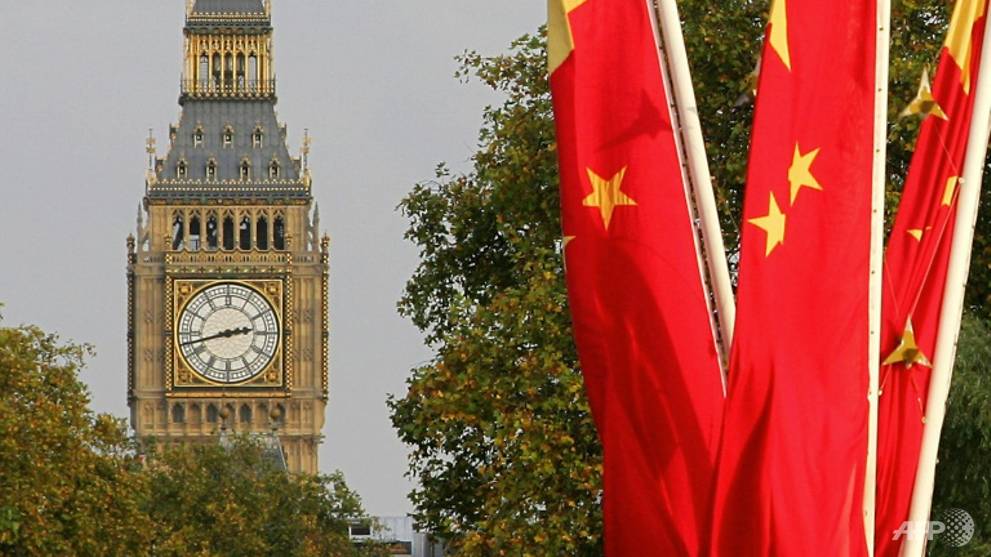
LONDON: Britain on Monday (Jul 20) risked worsening strained ties with China, as it suspended its extradition treaty with Hong Kong in protest at a controversial new security law in the territory.

Foreign Secretary Dominic Raab confirmed the widely expected move in parliament, despite Chinese warnings that Britain was making a grave foreign policy error and risked reprisals.

He also announced an extension to Hong Kong of an arms embargo of "potentially lethal weapons" already in force against mainland China for the last three decades.

Diplomatic ties between London and Beijing have been frayed by the security law, which Western powers see as an erosion on civil liberties and human rights in the financial hub.

China threatened unspecified counter-measures after Britain relaxed immigration rules for Hong Kongers with British overseas passports, and the potential of citizenship.

READ: China says it will respond resolutely if UK sanctions officials

Adding to the tensions have been British criticisms about China's treatment of the Uighur ethnic minority group, and the blocking of telecoms giant Huawei from its 5G networks.

Raab said Britain wanted to engage constructively with China, acknowledging its "extraordinary transformation" and the key role it had to play in world affairs.

But he said a positive relationship with a country that had international obligations as a global player also included the right to disagree.

The security law had "significantly changed key assumptions underpinning our extradition treaty", particularly a provision to try certain cases in mainland China, he said.

The legislation does not provide legal or judicial safeguards, and there was concern about its potential use in the former British territory, he added.

"The government has decided to suspend the extradition treaty immediately and indefinitely," he said.

"We would not consider reacting to it unless and until there are clear and robust safeguards."

ARMS EMBARGO

Raab said there was also cause for concern about the extent to which China was playing a role in law enforcement and internal security in semi-autonomous Hong Kong.

"The UK will extend to Hong Kong the arms embargo that we've applied to mainland China since 1989," he told lawmakers.

"The extension of this embargo will mean that there will be no exports from the UK to Hong Kong of potentially lethal weapons, components or ammunition.

"And it will also mean a ban on the export of any equipment already banned, which might be used for internal repression."

Wang Wenbin, spokesman for China's foreign ministry, earlier warned Britain of reprisals for meddling in its internal affairs, and called criticisms of its Uighur policy "slander".

"We urge the UK not to go further down this wrong path, in order to avoid further damage to China-UK relations," Wang said.

"Recent erroneous remarks and measures concerning Hong Kong have seriously violated international law and basic norms governing international relations...

"China strongly condemns this and firmly opposes it."

Britain's extradition treaty suspension comes after similar tough action against China by the United States, Canada and Australia.

Beijing has accused London of being a puppet to US foreign policy over Huawei, after Washington slapped sanctions on the Chinese firm's access to US chips vital to its 5G networks.

The United States believes the private firm is a front for the Chinese state, and that the use of its technology could imperil intelligence sharing, charges that the company denies.

The issue is likely to loom large during US Secretary of State Mike Pompeo's visit to London on Tuesday.

Let's block ads! (Why?)


https://news.google.com/__i/rss/rd/articles/CBMiYWh0dHBzOi8vd3d3LmNoYW5uZWxuZXdzYXNpYS5jb20vbmV3cy93b3JsZC91ay1ob25nLWtvbmctc3VzcGVuZC1leHRyYWRpdGlvbi10cmVhdHktY2hpbmEtMTI5NDgyMDDSAQA?oc=5

2020-07-20 16:18:45Z
52780937075977

UK suspends extradition treaty with Hong Kong 'immediately and indefinitely' - CNA

LONDON: Britain on Monday (Jul 20) suspended its extradition treaty with Hong Kong "immediately and indefinitely" in response to China's introduction of a controversial new security law in the territory.

Foreign Secretary Dominic Raab confirmed the widely expected move in parliament, and also said London would extend its arms embargo on "potentially lethal weapons" to the financial hub.

READ: China says it will respond resolutely if UK sanctions officials

Earlier, responding to reports about the expected suspension, China warned that Britain was heading down "a wrong path"

Wang Wenbin, spokesperson for China's foreign ministry, told a regular press briefing that Beijing would "firmly counter" any interference in its internal affairs. 

"We urge the UK not to go further down this wrong path, in order to avoid further damage to China-UK relations," Wang said.

"Recent erroneous remarks and measures concerning Hong Kong have seriously violated international law and basic norms governing international relations ... China strongly condemns this and firmly opposes it."

Britain says the new security law breaches the guarantees of freedoms, including an independent judiciary, that have helped keep Hong Kong one of the world's most important trade and financial centres since 1997.

Hong Kong and Beijing officials have said the law is vital to plug holes in national security defences exposed by recent pro-democracy and anti-China protests. China has repeatedly told Western powers to stop meddling in Hong Kong's affairs.​​​​​​​

Let's block ads! (Why?)


https://news.google.com/__i/rss/rd/articles/CBMiYWh0dHBzOi8vd3d3LmNoYW5uZWxuZXdzYXNpYS5jb20vbmV3cy93b3JsZC91ay1ob25nLWtvbmctc3VzcGVuZC1leHRyYWRpdGlvbi10cmVhdHktY2hpbmEtMTI5NDgyMDDSAQA?oc=5

2020-07-20 15:30:51Z
52780937075977

Over 1 million doses of Oxford-AstraZeneca Covid-19 vaccine possible by September - The Straits Times

LONDON (REUTERS) - Early estimates of the production of a million doses of the University of Oxford’s experimental Covid-19 vaccine by September could be an underestimate depending on how quickly late-stage trials can be completed, a researcher said on Monday (July 20).

“There might be a million doses manufactured by September: that now seems like a remarkable underestimate, given the scale of what’s going on,” Adrian Hill of University of Oxford said, referring to the manufacturing capability of partner AstraZeneca.

“Certainly there’ll be a million doses around in September. What’s less predictable than the manufacturing scale-up is the incidence of disease, so when there’ll be an endpoint.”

He added it was possible that there would be vaccines available by the end of the year.

Earlier, AstraZeneca reported that its experimental Covid-19 vaccine was safe and produced an immune response in early-stage clinical trials in healthy volunteers, its data showed on Monday, with the strongest response seen in people who received two doses.

The vaccine, called AZD1222 and being developed by AstraZeneca and scientists at Britain’s University of Oxford, did not prompt any serious side effects and elicited antibody and T-cell immune responses, according to trial results published in The Lancet medical journal.

“There is still much work to be done before we can confirm if our vaccine will help manage the Covid-19 pandemic, but these early results hold promise,” vaccine developer Sarah Gilbert said.

“We still do not know how strong an immune response we need to provoke to effectively protect against SARS-CoV-2 infection.” Gilbert said researchers needed to learn more about Covid-19 and continue late stage trials which have already commenced.

British Prime Minister Boris Johnson described the early stage clinical trial data as very positive on Monday.

“This is very positive news. A huge well done to our brilliant, world-leading scientists & researchers at #UniofOxford,” Johnson said on Twitter, linking to a report on the data.

“There are no guarantees, we’re not there yet & further trials will be necessary – but this is an important step in the right direction.”

AstraZeneca shares spiked higher, but then gave up some gains, to last trade up 0.4% on the day.

AstraZeneca’s is among the leading vaccine candidates against a pandemic that has claimed more than 600,000 lives, alongside others in mid and late-stage trials.

These include shots being developed by China’s Sinovac Biotech, another from state-owned Chinese firm Sinopharm, and one from the US biotech firm Moderna.

AstraZeneca has signed agreements with governments around the world to supply the vaccine should it prove effective and gain regulatory approval. The company has said it will not seek to profit from the vaccine during the pandemic.

Researchers said the vaccine caused minor side effects more frequently than a control group, but some of these could be reduced by taking paracetamol, with no serious adverse events from the vaccine.

AZD1222 was developed by Oxford university and licensed to AstraZeneca, which has put it into large-scale, late-stage trials to test its efficacy. It has also already signed deals to produce and supply over 2 billion doses of the shot.

The new trial included 1,077 healthy adults aged 18-55 years with no history of Covid-19.

“Today’s data increases our confidence that the vaccine will work and allows us to continue our plans to manufacture the vaccine at scale for broad and equitable access around the world,” said Mene Pangalos, Executive Vice President of BioPharmaceuticals Research and Development at AstraZeneca.

Moderna, another front runner, released results last week from an early-stage test that showed its vaccine raised levels of antibodies that fight the virus.

Related Stories: 

Let's block ads! (Why?)


https://news.google.com/__i/rss/rd/articles/CBMiaGh0dHBzOi8vd3d3LnN0cmFpdHN0aW1lcy5jb20vd29ybGQvZXVyb3BlL294Zm9yZC1hc3RyYS1jb3ZpZC12YWNjaW5lLXNob3dzLWR1YWwtaW1tdW5lLWFjdGlvbi1yZXNlYXJjaGVy0gEA?oc=5

2020-07-20 14:02:29Z
52780934644428

China says Britain going down 'wrong path' over Hong Kong - CNA

BEIJING: China warned Monday (Jul 20) that Britain was heading down "a wrong path" as Foreign Secretary Dominic Raab was expected to announce the suspension of an extradition treaty with Hong Kong, raising tensions between the countries.

Wang Wenbin, spokesman for China's foreign ministry, told a regular press briefing that Beijing would "firmly counter" any interference in its internal affairs, also slamming suggestions it was mistreating minorities in Xinjiang as "slander".

READ: UK to suspend Hong Kong extradition treaty: Reports

"We urge the UK not to go further down this wrong path, in order to avoid further damage to China-UK relations," Wang said.

"Recent erroneous remarks and measures concerning Hong Kong have seriously violated international law and basic norms governing international relations ... China strongly condemns this and firmly opposes it."

A new security law imposed by China on Hong Kong last month has drawn widespread criticism in Britain and elsewhere, and Raab is due later Monday to announce a package of measures similar to those already introduced by the United States, Canada and Australia.

They are expected to include the suspension of an extradition treaty.

Tensions between Hong Kong's former and current rulers have soared over a number of topics recently.

Britain recently bowed to sustained pressure from Washington and ordered the phased removal of Chinese telecoms giant Huawei from its 5G network despite warnings of retaliation from Beijing.

Britain's Supreme Court president, meanwhile, suggested last week that the two British judges serving in Hong Kong's Court of Final Appeal - under the terms of the territory's handover agreement with China in 1997 - could stand down unless the rule of law was guaranteed in the semi-autonomous city.

Wang said Beijing would "oppose interference in Hong Kong affairs by outside forces" and that judicial independence was "not affected" by the new security law.

READ: China says it will respond resolutely if UK sanctions officials

He also hit back at comments by Raab that accused Beijing of human rights abuses against ethnic and religious minorities in the northwest region of Xinjiang.

Raab told the BBC on Sunday that it was "clear that there are gross, egregious human rights abuses going on ... it is deeply, deeply troubling". 

Wang called the comments "nothing but rumours and slander".

"The Xinjiang issue is not about human rights, religions or ethnic groups at all, but about combating violence, terrorism and separatism," he said.

Rights groups and experts estimate that more than one million ethnic Uighurs and other mostly Muslim minorities have been rounded up into a network of internment camps, which China says are facilities for job-training and to steer people away from extremism.

Raab said reports of forced sterilisations and mass detentions in Xinjiang required international attention, and that Britain "cannot see behaviour like that and not call it out".

But Wang said the forced-sterilisation reports were "complete nonsense", and that the Uighur population had more than doubled in the past four decades.

Exiled Uighurs this month called for the International Criminal Court in the Hague to investigate China for genocide 

Let's block ads! (Why?)


https://news.google.com/__i/rss/rd/articles/CBMiXmh0dHBzOi8vd3d3LmNoYW5uZWxuZXdzYXNpYS5jb20vbmV3cy93b3JsZC9jaGluYS1icml0YWluLWhvbmcta29uZy1leHRyYWRpdGlvbi10cmVhdHktMTI5NDc5NzLSAQA?oc=5

2020-07-20 13:25:49Z
52780937075977