SINGAPORE — The raucous crowds that gathered at multiple locations across Singapore on Election Night may potentially have consequences for the number of COVID-19 infections in the country, admitted Lawrence Wong, co-chair of Singapore’s multi-ministry taskforce on the coronavirus, on Friday evening (17 July).
Wong, who is also National Development Minister, was asked during the virtual press conference whether the country could expect an uptick in the number of infections, given the disregard for safe distancing on the night of 10 July, when many gathered to celebrate the General Election results.
“There were these scenes of people coming together to celebrate. Ideally, they would have practised safe distancing. The people who were there, they know who they are. But I think the moment got the better of them, and they perhaps forgot about some of these requirements,” acknowledged the minister.
“From the pictures I've seen, all of them were wearing masks. They may not have kept to the rule of five. And if we can find out who they are, and we have a means to, we might be able to identify and take them to task. If you look at the numbers, there are quite a number of them, but if you look at the contact that they had, I'm not sure that they were in close contact for a very long time.”
Wong added there could be a consequence for the safe-distancing lapses by individuals.
“It comes down to the basic point: any time there are lapses, by any individuals, there will be a consequence, potentially,” he said. “And all of us just need to remember that... any time anyone decides to abandon caution, thinks that, ‘It's okay, I do not need to abide by the safe distancing measures’, they put themselves, and they put the whole country at risk.
“Unfortunately, this appears to have happened in that particular incident, and I would imagine it would not be the end of it. There will be many other incidents where lapses do occur.”
Supporters of the Workers' Party cheering at Hougang Avenue 5 in the early hours of 11 July 2020, hours after the GE2020 polls have ended. (PHOTO: Don Wong for Yahoo News Singapore)
No change in enforcement stance
The virtual briefing by the multi-ministry taskforce took place on the same day that the Ministry of Health (MOH) preliminarily reported 327 more COVID-19 cases, bringing the total to 41,453.
Earlier in the briefing – which was chaired by Wong, Health Minister Gan Kim Yong and director of medical services Kenneth Mak – the taskforce was asked whether it still believed it was safe to hold an election, in light of the large crowds that formed and the delays at polling stations that resulted in long queues and the extension of voting hours.
The decision to hold a GE amid the pandemic was labelled as opportunist and reckless by several opposition parties.
However, Wong believes that the Elections Department did its very best to conduct the GE in a safe manner.
“They have recognised publicly there were areas that can be improved and they have said that they are reviewing all of these areas,” he said. “But by and large, if you look at the actual conduct of polling, and all of us were around including members of the media, these are conducted in open spaces.
“The time spent, even if you were queuing up, it's not as though there was close contact in terms of touching and talking. People were spaced apart and then went in, (they did not) talk to anyone in a very prolonged manner, and then they cast their vote. And there were sanitisers provided, a whole range of different safety protocols were put in place.
“Whether or not anything happens after this, whether there will be any case emerging, we will not know now... Let's not jump to the conclusion, just because we see queues forming. Queues form everywhere, not just when people go and cast the votes.”
Enforcement not possible when people in ‘celebratory mood’
The taskforce was also asked whether there had been a change in enforcement policies, given that police officers on the ground on Election Night did not move in to disperse crowds. Wong said that there had been no shift in policy.
“No amount of enforcement can work if the whole country wants to go for a celebration,” he said. “How? What amount of enforcement will be effective if everyone is in a celebratory mood and want to go out and have a big party? It's not possible. So enforcement is important, measures are important, but individual responsibility is key.”
There have been multiple instances of individuals and organisations being fined, jailed and/or deported for failing to observe safe distancing measures, ever since Singapore’s partial lockdown began on 7 April, and also after it was progressively lifted.
In one of the most recent cases, a 30-year-old man was fined for flinging a packet of newly bought masks at an enforcement officer’s face, upon being confronted for not wearing a mask,
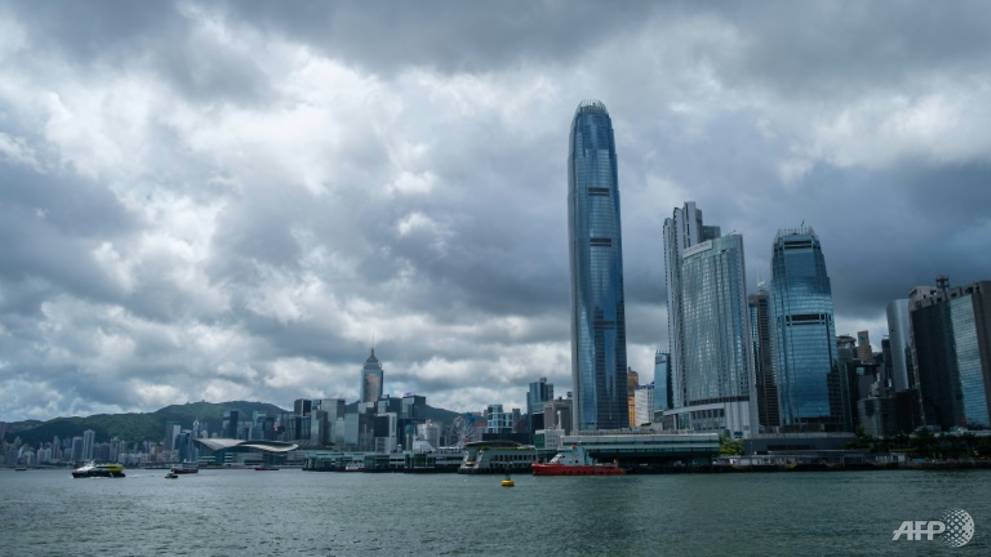
SINGAPORE - From next Monday (July 20), travellers entering Singapore after visits to - including transits in - Japan, Hong Kong and the Australian state of Victoria within the last 14 days will be required to serve their stay-home notice (SHN) at dedicated facilities instead of at their own place of residence.
Specifically, travellers who left Singapore from March 27, despite the prevailing travel advisory against leaving the country, are required to pay for their stay at dedicated SHN facilities. Travellers who are not Singapore citizens or permanent residents are also required to pay for their stay at dedicated SHN facilities.
The Straits Times understands that the cost of each 14-day stay is about $1,500. The Covid-19 test for each person costs an additional $200.
At a virtual press conference on Friday evening, National Development Minister Lawrence Wong said that the multi-ministry task force tackling Covid-19, which he co-chairs, constantly reviews and updates border measures based on their assessment of the viral situation around the world.
He said: "In some countries, you are seeing a resurgence... it has not been controlled at all and the cases are still accelerating. So we really need to remain vigilant - both at our borders, in terms of the measures we have in place... as well as within our community, to continue to ensure that we control the infection and control the spread of the virus within our community."
A Ministry of Health press release said: "As the global situation evolves, we will continue to update our border measures. Travellers planning to enter Singapore should be prepared to be subjected to the prevailing border measures upon entry, including payment for their stay at dedicated SHN facilities where applicable."
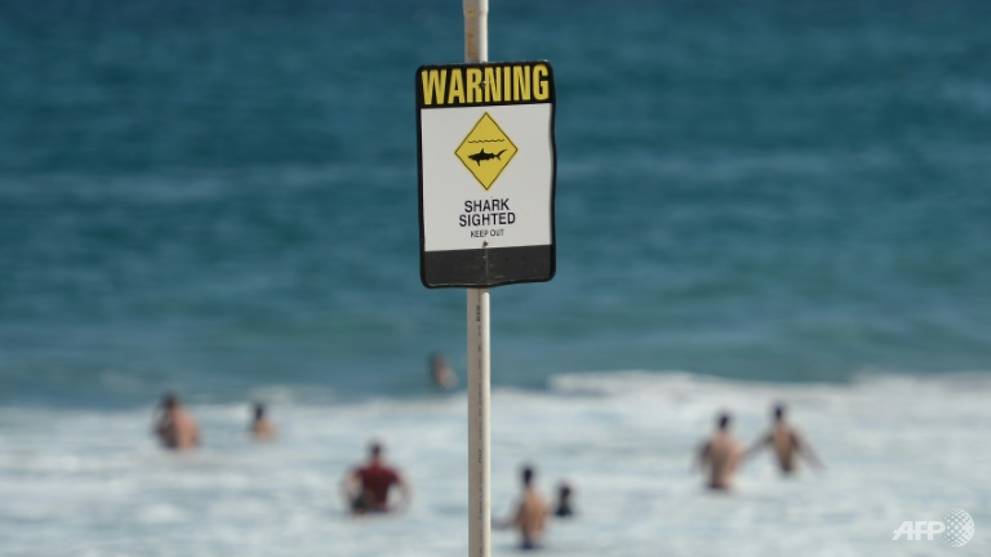
SYDNEY: A shark "grabbed" a 10-year-old boy from a fishing boat off Australia on Friday (Jul 17) but swam off after his father jumped in to save him, officials said.
The boy was taken to hospital in stable condition with cuts to his arm, chest and head after the attack off the coast of the island state of Tasmania, the local government reported.
The child was wearing a life vest as he accompanied his father and two other men fishing 5km from shore when the shark "grabbed him from the boat", it said in a statement.
SYDNEY: A shark "grabbed" a 10-year-old boy from a fishing boat off Australia on Friday (Jul 17) but swam off after his father jumped in to save him, officials said.
The boy was taken to hospital in stable condition with cuts to his arm, chest and head after the attack off the coast of the island state of Tasmania, the local government reported.
The child was wearing a life vest as he accompanied his father and two other men fishing 5km from shore when the shark "grabbed him from the boat", it said in a statement.
TAIPEI: Taiwan on Friday (Jul 17) said its top representative to Hong Kong has returned home due to "unnecessary political obstacles", with local media reporting he refused to sign a pro-Beijing statement.
China has been angered by Taiwan's support for the city's protests and the government's decision to open an office to help Hong Kongers who want to relocate to the island.
Beijing's new national security law, imposed on Hong Kong late last month, has further strained ties, ordering Taiwanese political organisations to declare staff and assets.
Kao Ming-tsun, acting director of Taipei Economic and Cultural Office, "was forced to return to Taiwan because the Hong Kong side violated the consensus and set up unnecessary political obstacles", said Chiu Chui-cheng, spokesman of the Mainland Affairs Council (MAC), Taiwan's top China policy body.
Chiu declined to elaborate on what the obstacles were.
Taiwan's Up Media news said Kao refused to sign a statement supporting Beijing's view that Taiwan is part of "one China" when he was renewing his work visa.
A source in Taipei with knowledge of Kao's decision told AFP he did refuse to sign the statement presented by the Hong Kong authorities.
Taiwan's President Tsai Ing-wen rejects the idea of "one China" and views the democratic, self-ruled island as de facto independent nation.
That stance infuriates Beijing, which regards Taiwan as its territory and has vowed to one day seize it, by force if necessary.
It has ramped up economic, diplomatic and military pressure since Tsai's 2016 election.
Relations between Taiwan and semi-autonomous Hong Kong have also rapidly deteriorated.
The office handling unofficial ties has already been devoid of a chief since mid-2018 with Hong Kong yet to issue a visa. Taipei officials routinely avoid travelling there.
Under the new national security law, Beijing says it can prosecute national security crimes committed overseas, including by foreigners.
That has sparked concerns Taiwanese nationals and other foreigners who are critical of Beijing could be arrested travelling to or transiting through Hong Kong.
On Thursday, Taiwan warned China could use the new security law for "hostage diplomacy" and urged democratic countries to unite against Beijing's "autocratic" expansion.
SYDNEY: Australia's second-most populous state of Victoria on Friday (Jul 17) reported a record increase in daily coronavirus cases for a second consecutive day.
Victoria reported 428 new daily infections, a day after logging its previous high of 317 new cases, said Premier Daniel Andrews. It also reported three new deaths.
The three who died were a man and a woman in their 80s as well as another man in his 70s, The Sydney Morning Herald cited Andrews as saying.
"I can offer no further information about those three tragedies, but we send our best wishes and our thoughts," he said.
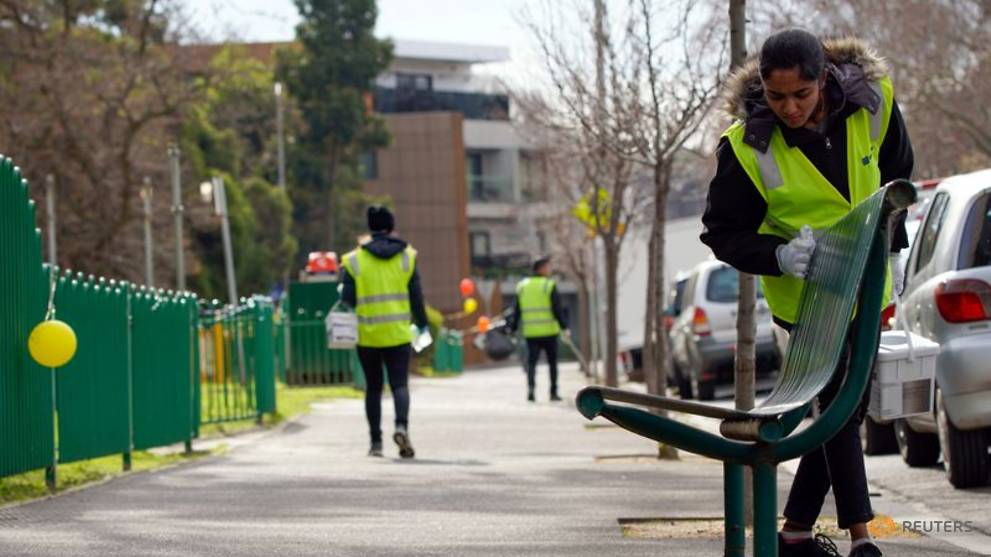
The state has been isolated from the rest of the country for more than a week following a fresh outbreak of the disease. The 4.9 million residents in state capital Melbourne have been ordered to stay home except for essential business.
On Wednesday, Andrews singled out a minority of people for defying lockdown orders, which require people to stay home except for a small number of permissible activities, and warned that restrictions could be extended.
"If, however, people do not do the right thing then we will have to move to additional restrictions being put in place and potentially prolong ... these restrictions," Andrews told reporters in Melbourne.
The surge in COVID-19 cases in Victoria has stirred concerns of a national second wave, prompting internal border closures and renewed social distancing restrictions in neighbouring states.
"We are in the fight of our lives," Victoria's Minister for Health Jenny Mikakos told reporters in Melbourne.
Australia has recorded just over 11,000 cases of COVID-19, with 116 fatalities.
New South Wales (NSW), Australia's most populous state, said it found eight cases of COVID-19 in the last 24 hours, mostly from community transmissions believed to have emanated from Victoria.
Less than a month ago, Australia was widely heralded as a global leader in combating COVID-19.
But security lapses in Victoria led to people returning from overseas spreading the virus, prompting an inquiry into how the state went from the brink of eradicating the virus to soaring infection numbers.
The surge in COVID-19 cases dents any hope of a quick economic rebound in Australia.
Damaged by national social distancing restrictions imposed in March, Australia is on course for its first recession in nearly three decades, while unemployment has hit a 22-year high, data showed on Thursday.
Australia's hopes to begin a "travel bubble" with neighbouring New Zealand also appear to be delayed. Australia and New Zealand had hoped to open their borders to each other in September.