Selasa, 14 Juli 2020

Record floods raise questions about China's Three Gorges Dam - CNA

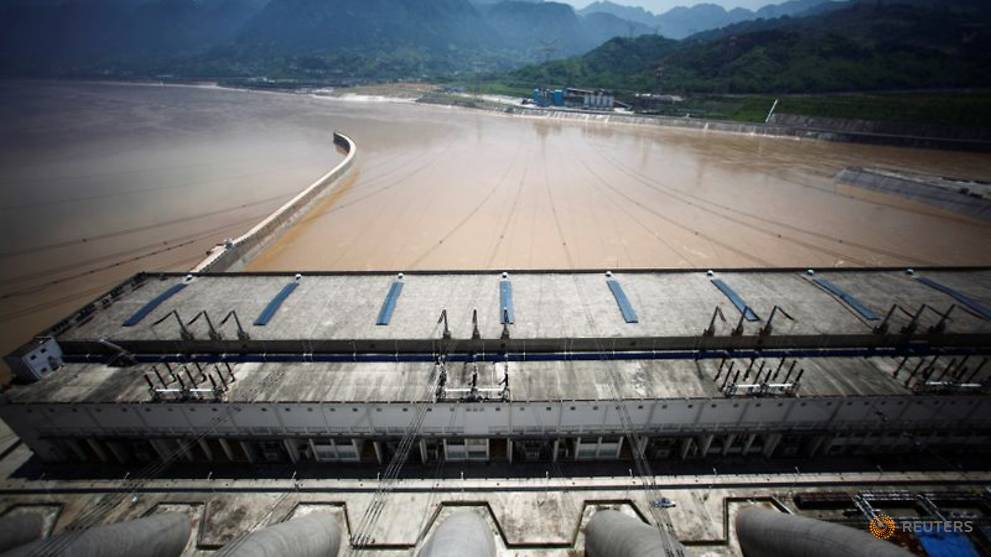
SHANGHAI: As China counts the costs of its most punishing flood season in more than three decades, the role played by the massive and controversial Three Gorges Dam - designed to help tame the Yangtze river - has come under fresh scrutiny.

Amid some of the heaviest rainfall on record, the Chinese government says the world's biggest hydroelectric plant has reduced flood peaks, minimised economic losses and slashed the number of deaths and emergency evacuations.

But critics say the historically high water levels on the Yangtze and its major lakes prove the Three Gorges Dam isn't doing what it was designed for.

"One of the major justifications for the Three Gorges Dam was flood control, but less than 20 years after its completion we have the highest floodwater in recorded history," said David Shankman, a geographer with the University of Alabama who studies Chinese floods. "The fact is that it cannot prevent these severe events."

READ: China rushes to contain floods after record rainfall

Ye Jianchun, China's vice-minister of water resources, said at a Monday briefing the "detailed scheduling" of water discharges from reservoirs, particularly the Three Gorges, had been effective in controlling floods this year.

He said 64.7 billion cubic metres of floodwater has been stored in 2,297 reservoirs, including 2.9 billion cubic metres at Three Gorges.

The company running the Three Gorges Project also said on Saturday that downstream water discharges had been halved since Jul 6, "effectively reducing the speed and extent of water level rises on the middle and lower reaches of the Yangtze". The total amount of stored floodwater had now reached 88 per cent of the reservoir's total capacity, it added.

But parts of the Yangtze, its tributaries and major lakes like the Dongting and Poyang have hit record levels anyway.

Fan Xiao, a Chinese geologist and long-standing critic of giant dam projects, said the storage capacity at Three Gorges amounts to less than 9 per cent of average floodwater.

"It can only partially and temporarily intercept the upstream floods, and is powerless to help with floods caused by heavy rainfall in the middle and lower reaches of the Yangtze River," he said.

Fan said Three Gorges and other major dam projects could even make flooding worse by altering the flow of sedimentation down the Yangtze. The project's need to generate electricity has also undermined flood control, he said.

"When people only consider using reservoirs to solve flood-control problems, they often overlook or even weaken the natural ability of rivers and their lakes to regulate floods," he said.

Shankman said that the Three Gorges Dam helps alleviate flooding during normal years, but that it was always likely to be vulnerable to more extreme weather, a problem that is exacerbated by shrinking flood plains downstream.

"The Three Gorges Dam reservoir does not have the capacity to significantly affect the most severe floods," he said.

"Floodwater storage along the middle Yangtze is less because of stronger levees that are less likely to fail," he added. "Both of those things are at play here. This was predictable."

Let's block ads! (Why?)


https://news.google.com/__i/rss/rd/articles/CBMib2h0dHBzOi8vd3d3LmNoYW5uZWxuZXdzYXNpYS5jb20vbmV3cy9hc2lhL3JlY29yZC1mbG9vZHMtcmFpc2UtcXVlc3Rpb25zLWFib3V0LWNoaW5hLXMtdGhyZWUtZ29yZ2VzLWRhbS0xMjkzMDgyNtIBAA?oc=5

2020-07-14 08:18:56Z
52780913304706

Senin, 13 Juli 2020

China warns some Hong Kong primary campaigning may have broken security law - CNA

HONG KONG: China has described a primary by Hong Kong's pro-democracy parties as a "serious provocation", warning that some campaigning may have breached a tough new security law it imposed on the city.

The comments by the Liaison Office, which represents China's government in the semi-autonomous city, dramatically heightens the risk of prosecution for opposition parties and leading figures.

More than 600,000 Hong Kongers turned out over the weekend to choose candidates for upcoming legislative elections despite warnings from government officials that the exercise could breach Beijing's sweeping new law.

Polls for the city's partially elected legislature are due to take place in September.

Pro-democracy parties are keen to use seething public anger towards Beijing's increasingly authoritarian rule to win a majority within a chamber that has always been weighted in favour of pro-establishment parties.

Control could give them a greater ability to stall budgets and legislation, one of the few tactics left open to the opposition camp.

READ: Hong Kong opposition kicks off primary elections under shadow of security law

But in a statement released late Monday, the Liaison Office said the primaries were "a serious provocation against the current election system".

It said campaigning that pushed to take control of and paralyse the chamber is a breach of Article 22 of the security law.

Article 22 targets "subverting state power". It outlaws "serious interference and obstruction" of the central and Hong Kong governments, or any act that causes them to be "unable to perform their functions normally".

"BENNY TAI GANG"

The Liaison Office's statement also singled out Benny Tai, a prominent democracy activist who played a leading role in organising the primary.

"The goal of the Benny Tai gang and the opposition camp is to seize power to govern Hong Kong, with a vain attempt to launch a Hong Kong version of a colour revolution," the office said.

Tai, a law professor, has previously been jailed for his involvement in protests in 2014.

On Tuesday, the Apple Daily newspaper published a column by Tai in which he hailed the primaries.

"Threats from the powerful did not deter tens of thousands of citizens from coming out and casting a ballot," he wrote.

"They have not given up on their determination to pursue democracy and universal suffrage."

Apple Daily is owned by Jimmy Lai, one of the few tycoons in Hong Kong to openly support democracy. He is also being prosecuted for taking part in protests.

NEW LAW

Hong Kong has seen waves of demonstrations over the last decade.

But last year the city was convulsed by seven straight months of huge and often violent protests.

In response, Beijing imposed its security law in a bid to end the unrest once and for all.

The legislation bypassed Hong Kong's legislature and its contents were kept secret until the law was enacted at the end of last month.

It targets subversion, sedition, terrorism and foreign collusion with penalties of up to life in prison.

But its broad phrasing - such as a ban on encouraging hatred of China's government - has sent fear rippling through a city used to being able to speak its mind.

Beijing claims jurisdiction over some serious cases and has allowed its intelligence apparatus to set up shop openly in the city for the first time.

READ: China opens Hong Kong security agency headquarters; city's leader hails 'historic moment'

Those provisions have ended the legal firewall that existed between the Chinese mainland's Communist Party-controlled courts and Hong Kong's independent judiciary.

National security laws are routinely used on the mainland to crush dissent.

China says the Hong Kong legislation is needed to return stability after last year's protests, which it has portrayed as a foreign plot to destabilise the motherland.

Opponents, including many Western nations, say the law has started to demolish the "One Country, Two Systems" model where China agreed to let Hong Kong retain key civil liberties, as well as legislative and judicial autonomy, until 2047.

Let's block ads! (Why?)


https://news.google.com/__i/rss/rd/articles/CBMicWh0dHBzOi8vd3d3LmNoYW5uZWxuZXdzYXNpYS5jb20vbmV3cy9hc2lhL2NoaW5hLXdhcm5zLXNvbWUtaG9uZy1rb25nLXByaW1hcnktY2FtcGFpZ25pbmctbWF5LWhhdmUtYnJva2VuLTEyOTI5OTAy0gEA?oc=5

2020-07-14 04:15:13Z
52780920993652

Japan accuses China of pushing territorial claims during COVID-19 pandemic - CNA

TOKYO: Japan's annual defence review accuses China of pushing its territorial claims amid the COVID-19 pandemic and suspects Beijing of spreading propaganda and disinformation as it provides medical aid to nations fighting COVID-19.

China "is continuing to attempt to alter the status quo in the East China Sea and the South China Sea", Japan said in the defence white paper approved by Prime Minister Shinzo Abe's government on Tuesday (Jul 14).

The white paper described "relentless" intrusions in waters around a group of islets claimed by both nations in the East China Sea, known as the Senkaku in Japan and the Diaoyu in China.

In the South China Sea, it said Beijing was asserting territorial claims by establishing administrative districts around disputed islands, that forced countries distracted by the coronavirus outbreak to respond.

Japan's criticism of China echoes similar comments made by the United States, and comes as tension in the region increases as Beijing and Washington conduct separate military drills in the resource-rich South China Sea and as relations between the world's two largest economies deteriorated.

US Secretary of State Mike Pompeo on Monday rejected China's disputed claims to offshore resources in most of the South China Sea, saying they were "completely unlawful".

READ: US State Department okays possible US$23b sale of F-35s to Japan

Beijing insists its intentions in the waterway, through which around US$3 trillion of global trade passes each year, are peaceful.

Japan sees China as a longer-term and more serious threat than nuclear-armed North Korea. Beijing now spends four times as much as Tokyo on defence as it builds a large modern military.

Japan's defence review also claimed China appeared to be responsible for "propaganda" and "disinformation" amid "social uncertainties and confusion" caused by the coronavirus outbreak.

Such disinformation included online claims that the coronavirus was brought to China by a US military member, or that Chinese herbal remedies could treat COVID-19, a defence ministry official said at a briefing.

Other threats faced by Japan include North Korea's ongoing development of nuclear weapons and ballistic missiles as well as a resurgence of military activity by Russia in the skies and waters in Japan, at times in joint drills with China, the defence review said.

Let's block ads! (Why?)


https://news.google.com/__i/rss/rd/articles/CBMicWh0dHBzOi8vd3d3LmNoYW5uZWxuZXdzYXNpYS5jb20vbmV3cy9hc2lhL2phcGFuLWFjY3VzZXMtY2hpbmEtb2YtcHVzaGluZy10ZXJyaXRvcmlhbC1jbGFpbXMtZHVyaW5nLWNvdmlkLTEyOTI5NDg20gEA?oc=5

2020-07-14 01:35:08Z
52780916429622

Commentary: China really wants Hong Kong to succeed - CNA

MAASTRICHT, Netherlands: In the late hours of Jun 30, China’s new national security law for Hong Kong came into force. Seen by many as a response to the protests that erupted in the city last year, the law criminalises four types of national security offenses: Sedition, subversion, terrorism and collusion with foreign forces.

As several arrests made in the days since have demonstrated, the new law threatens to become a tool of suppression used to curtail progress of the movement.

READ: Hong Kong national security law: 5 key facts you need to know

READ: Commentary: What next for Hong Kong and its people?

Somewhat overshadowed was the announcement one day earlier of the Wealth Management Connect (WMC) pilot scheme, which will enable residents of Hong Kong, Macau and Guangdong, known as the Greater Bay Area, to conduct cross-border investment in wealth management products.

The close timing of the WMC and the national security law holds symbolic value, for it represents the growing significance of national security as a policy area no longer exclusive to the realm of military defence, but of increasing importance to China’s economic development.

This overlapping of financial markets and national security is not exclusive to China.

READ: Commentary: The intractable tug of war between China and Hong Kong

POLITICAL STABILITY ESSENTIAL FOR ECONOMIC SUCCESS

Political stability in Hong Kong is economically essential to Beijing, because it is an international financial centre that operates as a gateway between mainland and global markets.

The principle of “One Country Two Systems” has enabled Chinese investors, including those of the state, to maintain ultimate corporate control in China under mainland commercial law, while accessing international capital in Hong Kong under Hong Kong law.

The Hong Kong Stock Exchange ranks as the world’s top-performing stock exchange in terms of initial public offering (IPO) proceeds, amounting to US$40.4 billion in 2019. In the first quarter of 2020, 96 per cent of total IPO funds raised were for mainland companies.

A man walks out of the Stock Exchange of Hong Kong offices on Sep 11, 2019
A man walks out of the Stock Exchange of Hong Kong offices in the Central district of Hong Kong on Sep 11, 2019. (Photo: AFP/Nicolas Asfouri)

Endowed with a more liberalised and mature financial regulation system, Hong Kong is recognised among global investors for its strong investor protection and financial reporting transparency. Any threat to political stability is seen as a risk to its reputation for market discipline and its status as an international financial centre.

Hong Kong is geo-economically important as a Yuan clearing house. It is the largest offshore Yuan market outside mainland China, accounting for roughly half of world Yuan-denominated stock at year-end 2018.

Given trade-war tensions, the internationalisation is a priority policy for Beijing to mitigate foreign-exchange risk and to reduce reliance on the dollar.

READ: Commentary: The US dollar remains crucial to Hong Kong’s prosperity

Beijing also desires economic integration for the region. The WMC scheme joins the Bond, Shanghai- and Shenzhen-Hong Kong Stock Connects in further linking the mainland and Hong Kong capital markets, and it is a part of the Greater Bay Area development plan launched in 2016 to consolidate the region into a single economic entity.

“One Country Two Systems”, intended to preserve Hong Kong’s autonomy in domestic governance, has allowed Beijing to leverage Hong Kong’s advantages as a liberal financial market.

It is somewhat ironic, then, that the national security law is motivated by Beijing’s need to maintain economic sovereignty.

READ: Commentary: Autonomy cannot be Hong Kong’s future. Hong Kongers know this

THE NEW NORM OF STATE INTERVENTION

The new national security law should not just be understood in the context of China’s economic policy. It also heralds a broader and more fundamental shift in the nature of state intervention in global markets.

In the past ten years, national security has been taken up as a rationale for limiting cross-border investment in sectors deemed sensitive, such as critical infrastructure and technology. 

Several liberal-market economies have introduced tougher national security provisions to screen for foreign investment, including Australia, the United States, the European Union and Canada.

As the most well-known example of this push for enhanced recipient-state discretion in liberal market forums at the international level, the Committee on Foreign Investment in the United States (CFIUS) is delegated to screen for foreign investment on the grounds of national security.

John Bolton, then national security advisor, listens to US President Donald Trump at an Oval Office
John Bolton, then national security advisor, listens to US President Donald Trump at an Oval Office meeting in May 2019 AFP/Brendan Smialowski

In Australia, the Foreign Investment Review Board operates in a similar capacity, and set to come into force in October this year is the European Union’s foreign investment screening regulation, which provides a framework to review investment on the grounds of national security and public order for member states.

National security is one of the few justifications for outright prohibition of cross-border investment. As with the national security law for Hong Kong, the application of national security towards foreign investment is expansive and discretionary.

READ: Commentary: Is national security a good reason to ban TikTok?

In 2018, CFIUS was further empowered with the introduction of new legislation. The bipartisan Foreign Investment Risk Review Modernisation Act broadens CFIUS authority to address any national security concerns arising from certain non-controlling investments – in effect enabling CFIUS to review, forestall, make recommendations and prohibit any acquisition deemed a national security risk.

Governments have responded to COVID-19 with increased state intervention in the form of various fiscal stimulus, bailout packages and the tapping of reserve funds as the economic shocks of the virus reverberate through the global financial system. Strong state intervention has to some extent become normalised.

READ: Commentary: New Singapore Government measures must be more targeted than previous three Budgets

Thus, it is not so far-fetched that considerations of national security could become commonplace in the economic policy arsenal not only in more explicitly state-capitalist countries such as China, but also in the liberal heartland.

Imogen T Liu is a political economist whose research interests cover state capital, Chinese political economy, financial markets and investment regulation. This commentary first appeared on the Lowy Institute’s blog, The Interpreter.

Let's block ads! (Why?)


https://news.google.com/__i/rss/rd/articles/CBMid2h0dHBzOi8vd3d3LmNoYW5uZWxuZXdzYXNpYS5jb20vbmV3cy9jb21tZW50YXJ5L2NoaW5hLWhvbmcta29uZy1uYXRpb25hbC1zZWN1cml0eS1sYXctZWNvbm9teS1oa2V4LWdyZWF0ZXItYmF5LTEyOTI3MzEw0gEA?oc=5

2020-07-13 22:08:41Z
52780920993652

Singapore's PM Lee says time to return to tackling COVID-19, other challenges after general election - CNA

[unable to retrieve full-text content]

Singapore's PM Lee says time to return to tackling COVID-19, other challenges after general election  CNAView Full coverage on Google News
https://news.google.com/__i/rss/rd/articles/CBMiK2h0dHBzOi8vd3d3LnlvdXR1YmUuY29tL3dhdGNoP3Y9clpJZTllN0JLenfSAQA?oc=5

2020-07-13 15:19:05Z
CCAiC3JaSWU5ZTdCS3p3mAEB

Hong Kong activist Nathan Law says arrived in London - CNA

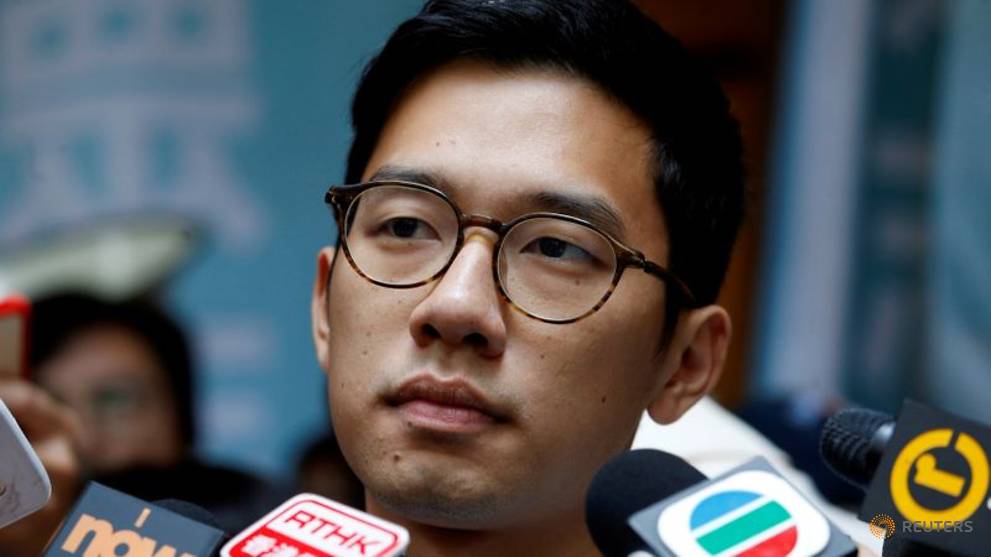
LONDON: Hong Kong activist Nathan Law said he had arrived in London after fleeing the former British colony where China has imposed a security law.

"With my backpack and small luggage in hand, I boarded my night flight. I had no idea what future awaited me. Only one thing seemed certain. My destination: London," Law said on Twitter.

"There's always one message I have: Hong Kongers will never give up. We aren't fractured. On the contrary, we're well-equipped to face the next difficult battle."

READ: China passes national security law in turning point for Hong Kong

READ: Five ways Hong Kong has changed under China's security law

Law told Reuters earlier this month that the rest of the world should stand up to President Xi Jinping and start to put human rights above financial gain.

One of Hong Kong's most prominent young activists, Law announced on Thursday he had fled overseas. 

He was founding member of Demosisto, a party that disbanded earlier last week in response to the security law.

The party campaigned for democracy and for Hong Kongers to have a greater say in how the city is run but they did not advocate independence.

Nevertheless, Law and other prominent party members like former student leader Joshua Wong were vilified by Beijing, often described as "black hands" and separatists who conspired with foreigners to undermine China.

He and Wong both became household names as student leaders during protests in 2014.

READ: UK says China's security law is serious violation of Hong Kong treaty

READ: 'Hidden language': Hong Kongers get creative against security law

Law had shouted a slogan in a video message to a US Congress committee on Wednesday - "Liberate Hong Kong, Revolution of our Times" - a clarion call for protesters over the last year, chanted by huge crowds and plastered on banners.

For some it represents genuine aspirations to split Hong Kong from China. But for many others it is more a cry for democracy and expression of rising frustration with Beijing's rule.

In a statement, Hong Kong's government said the phrase was now illegal because it "contains the indications of Hong Kong independence, or alienating Hong Kong from China, or changing its legal status, or subverting the state".​​​​​​​

On Wednesday, the first arrests were made under the legislation, mainly for protesters found in possession of pro-independence flags or stickers.​​​​​​​

Let's block ads! (Why?)


https://news.google.com/__i/rss/rd/articles/CBMibWh0dHBzOi8vd3d3LmNoYW5uZWxuZXdzYXNpYS5jb20vbmV3cy9hc2lhL2hvbmcta29uZy1wcm90ZXN0cy1zZWN1cml0eS1sYXctYWN0aXZpc3QtbmF0aGFuLWxhdy1sb25kb24tMTI5MjgyNTLSAQA?oc=5

2020-07-13 13:05:02Z
52780920993652

China warns citizens of 'arbitrary' searches in Australia - CNA

BEIJING: China stepped up a travel warning to Australia on Monday (Jul 13), telling its citizens of a risk of being searched "arbitrarily" by law enforcement authorities, as tensions between both countries grow.

The foreign ministry's latest notice comes a month after Beijing warned of "discrimination" against Chinese people in Australia, telling its citizens not to travel there.

It also came days after Australia offered some 10,000 people from Hong Kong pathways to permanent residency in response to China's crackdown on dissent in the city, encouraging entrepreneurs or skilled workers to relocate as well.

The moves drew ire from Beijing.

"Australia's relevant law enforcement authorities arbitrarily search Chinese citizens and seize their items, and these circumstances could cause harm to Chinese citizens in Australia, as well as the safety of their assets," said the Chinese foreign ministry.

The notice posted on the WeChat social media app also reminded Chinese citizens to "pay close attention" to local safety risks and "travel with caution to Australia in the near-term".

Tensions between Australia and China have been escalating on various fronts after Beijing reacted with fury to calls for an independent investigation into the origins and spread of the coronavirus pandemic - which first surfaced in central China last year.

Apart from warning of discrimination recently, China's culture and tourism ministry advised against travelling to Australia last month due to increasing racism linked to the coronavirus.

On Monday, the foreign ministry said that "racial discrimination and acts of violence in Australia have significantly increased", accusing Australian media of fanning the flames of anti-Chinese sentiment.

READ: Australia warns citizens of 'arbitrary detention' risk in China

Responding to questions on Australia's latest announcements about Hong Kong, foreign ministry spokeswoman Hua Chunying warned at a regular briefing that Australia's moves could bring negative consequences.

"We urge Australia to change its course and stop interfering in Hong Kong's affairs and China's internal affairs in any way, or risk further damage to China-Australia relations," she said.

Let's block ads! (Why?)


https://news.google.com/__i/rss/rd/articles/CBMibGh0dHBzOi8vd3d3LmNoYW5uZWxuZXdzYXNpYS5jb20vbmV3cy9hc2lhL2NoaW5hLXdhcm5pbmctY2l0aXplbnMtb2YtYXJiaXRyYXJ5LXNlYXJjaGVzLWluLWF1c3RyYWxpYS0xMjkyODI0MtIBAA?oc=5

2020-07-13 12:19:21Z
52780920448808