BOSTON: As many as 59 US universities on Sunday (Jul 12) filed a brief supporting a lawsuit by two others, seeking to block a Trump administration rule barring foreign students from remaining in the country if educational institutions don't hold in-person classes this fall.
The lawsuit was filed by Harvard University and Massachusetts Institute of Technology (MIT) on Wednesday in a federal court in Boston.
The so-called amicus brief - a supporting document submitted by interested parties - was filed on Sunday by a list of US universities, which include seven other Ivy League schools.
The universities said they relied on federal guidance, which was to remain "in effect for the duration of the emergency", allowing international students to attend all-online courses during the pandemic, according to the amicus brief.
"The emergency persists, yet the government's policy has suddenly and drastically changed, throwing amici's preparations into disarray and causing significant harm and turmoil," they added.
About 1.1 million foreign students attended US higher education institutions in the 2018-2019 school year, according to a report by the State Department and the Institute of International Education (IIE), and they made up 5.5 per cent of the entire US higher education enrollment.
The Trump administration announcement blindsided academic institutions grappling with the challenges of safely resuming classes as the coronavirus pandemic continues unabated around the world and surges in the United States.
The US government has been trying to get schools and universities to reopen by autumn. Harvard has already announced it would hold all classes online that term.
KUALA LUMPUR - Malaysia's Prime Minister Muhyiddin Yassin finally ended months of uncertainty over his parliamentary majority on Monday (July 13) by successfully removing Speaker Ariff Yusof after a heated debate in which the government won by a slim majority of two.
It was a rare event where nearly the entire 222-strong House was present to vote on the motion.
Parti Pribumi Bersatu Malaysia president Muhyiddin has faced doubts over his majority since being sworn in on March 1, when his predecessor Tun Dr Mahathir Mohamad claimed to still lead a 115-strong bloc following a week-long political imbroglio.
Tan Sri Muhyiddin's Perikatan Nasional (PN) pact managed to unseat Tan Sri Ariff by a vote of 111 to 109, with minister Maximus Ongkili absent while Deputy Speaker Rashid Hasnon, who is a government MP, did not cast a ballot as he was presiding over the vote.
PN is now set to install former Election Commission chairman Azhar Harun after the lunch break as the new Speaker despite fierce resistance from the Pakatan Harapan-led (PH) opposition.
The premier has avoided testing his command of Parliament for over four months, but the need to get his legislative agenda - including RM45 billion (S$14.7 billion) in stimulus spending due to the coronavirus pandemic - on the road has necessitated the ongoing 25-day parliamentary session.
"Do not commit this mistake that will sully the sanctity of Parliament. The excuse that there is a new candidate is unreasonable. We can consider it, if there is a solid rationale why a Speaker who has conducted his duties well must be dropped," said Opposition Leader Anwar Ibrahim when debating the motion earlier on Monday.
Dr Mahathir also said he opposed "the motion if it is a (legal) motion, as I have not read in the Constitution or Standing Orders of Parliament that the Prime Minister can change the Speaker simply because there is another candidate".
"I, too, have another candidate for prime minister," he said to laughter. "What wrong has the Speaker done? The only wrong is that there is another candidate. The government wants a Speaker that is under their thumb, but that is not the role of the Speaker."
But PN's Baling MP Azeez Rahim shot back and accused the former premier of also swapping the heads of judiciary, police and anti-graft body when he was in power "despite no wrong being done (by the incumbent)".
De facto law minister Takiyuddin Hassan explained that the move was according to legal provisions that "the Speaker can be elected... if at any time the House resolves" and that there was no need to notify MPs that the chair was vacant.
Other government MPs also repeatedly pointed out how Dr Mahathir picked private lawyers as attorney-general and anti-corruption chief instead of from the ranks of the government's legal and civil services while leading the PH administration that was in power from May 2018 to February this year.
"Changing the Speaker is to ensure proceedings are in line with the government's direction," said Kinabatangan MP Bung Moktar.
This was the first parliamentary vote held since PH was toppled in February when Mr Muhyiddin defected along with about 40 other MPs to form government with then opposition parties such as Umno, Parti Islam SeMalaysia and Gabungan Parti Sarawak, which rules the eastern state.
SINGAPORE: Twelve foreigners have been deported and barred from entering Singapore again after they were caught for not complying with safe distancing measures during the circuit breaker period.
Among them are nine men and three women, aged between 20 and 37, the Singapore Police Force (SPF) and Immigration and Checkpoints Authority (ICA) said in a joint news release on Monday (Jul 13).
MAN CAUGHT BREAKING CIRCUIT BREAKER RULES, DRINK-DRIVING
Arvinish N Ramakrishnan, 23, had invited his friend to his place of residence for drinks on Apr 18 – 11 days after the circuit breaker started.
After drinking, the Malaysian national who was in Singapore on a work permit, sent his friend home on a motorcycle and they were stopped at a roadblock along Yishun Avenue 6.
Arvinish was charged with drink-driving and violating restrictions on leaving his place of residence and the prohibition on social gatherings.
He pleaded guilty and was fined S$4,000, with his work pass revoked after conviction. He was deported to Malaysia on Jun 5 and barred from re-entering Singapore.
Arvinish’s friend, also a Malaysian, was issued with a notice of composition for violating restrictions on leaving his place of residence and given a “stern warning” for violating the prohibition on social gatherings.
On May 5, Cheng Fengzhao a 37-year-old Chinese national who was in Singapore on a work permit, was arrested in an anti-vice operation at a condominium unit along 30 Jalan Kemaman.
She was found to have allowed a man, who did not live with her, into the unit on that day for a massage and sexual services in exchange for S$100. Cheng admitted to allowing the same man into the unit on Apr 19 as well.
For both offences, she was charged with two counts of permitting another person into her residence without a valid reason under COVID-19 regulations. She pleaded guilty and was fined S$7,000.
Cheng’s work pass was revoked after her conviction. She was deported to China on Jun 10 and barred from entering Singapore again.
The man was issued with a notice of composition for violating the prohibition on social gatherings, the authorities said.
A group of Indian nationals, holding student or work passes, were also caught having a social gathering while circuit breaker rules were in place on May 5.
Two men and a woman who were staying at a residential unit along Kim Keat Road invited seven other people over.
The three tenants, 20-year-old Navdeep Singh, 21-year-old Sajandeep Singh and 27-year-old Avinash Kaur, were charged for permitting other individuals unto their residence without a valid reason.
The seven visitors, 33-year-old Waseem Akram, 26-year-old Mohammed Imran Pasha, 20-year-old Arpit Kumar, 20-year-old Vijay Kumar, 30-year-old Karmjit Singh, 21-year-old Sharma Lukesh and 23-year-old Bhullar Jasteena, were charged with violating the prohibition on social gatherings.
All ten individuals pleaded guilty and were fined between S$2,000 and S$4,500.
Their passes were cancelled after their convictions. They were deported to India between June and July 2020 and barred from entering Singapore in future.
“The authorities will not hesitate to take strong action against anyone who does not comply with (safe distancing measures) or shows blatant disregard for our laws, and this may include the termination of visas or work passes, where applicable,” the authorities said.
Earlier in June, six people who were caught flouting COVID-19 safety measures measures at Robertson Quay. Their work passes were revoked and are permanently banned from working in Singapore.
Singapore is presently in Phase 2 of its reopening - starting from Jun 19 - with the gradual resumption of operations by more businesses.
MUMBAI (AFP) - Bollywood superstar Aishwarya Rai has tested positive for the coronavirus, a Mumbai city authority official said on Sunday (July 12), just a day after her actor father-in-law Amitabh Bachchan said he was in hospital with the infectious disease.
Her eight-year-old daughter, Aaradhya, was also Covid-19 positive, the Brihanmumbai Municipal Corporation official, who asked to remain anonymous, said.
Bachchan's actor son Abhishek, Rai's husband, said he too was positive but that both their cases were mild.
Aishwarya Rai Bachchan took the Miss World crown in 1994 and made her acting debut in the late 1990s.
She went on to become one of the most famous Bollywood faces abroad as well as in India and has been a regular on the red carpet at the Cannes Film Festival. She married Abhishek Bachchan in 2007.
The elder Bachchan, 77 - idolised in India and affectionately known as "Big B" - has a more than four-decade-long career in the film industry.
He was voted "actor of the millennium" in a BBC online poll in 1999 and became the first Indian actor to gain a lookalike at London's Madame Tussauds waxworks museum.
India on Sunday reported its highest single-day virus tally of more than 28,600 cases, for a nationwide total of just under 850,000 infections.
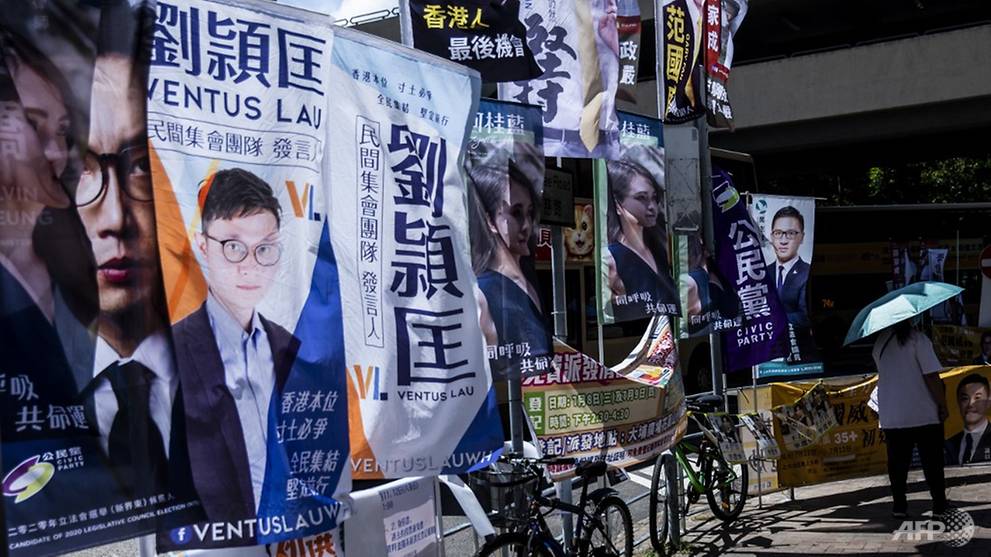
HONG KONG: Hundreds of thousands of Hong Kong citizens queued to cast ballots over the weekend in what the Chinese-ruled city's opposition camp says is a symbolic protest vote against tough national security laws directly imposed by Beijing.
The unofficial poll will decide the strongest pro-democracy candidates to contest Legislative Council elections in September, when they aim to ride a wave of anti-China sentiment stirred by the law to seize control for the first time from pro-Beijing rivals.
While the primaries are only for the opposition camp, observers are watching closely as they say the turnout will serve as a test of broader opposition to the law, which critics say will gravely undermine the city's freedoms.
"A high turnout will send a very strong signal to the international community, that we Hong Kongers never give up," said Sunny Cheung, 24, one of a batch of aspiring young democrats out lobbying and giving stump speeches.
"And that we still stand with the democratic camp, we still support democracy and freedom."
Defying warnings from a senior Hong Kong official that the vote might fall foul of the national security law, residents young and old flocked to over 250 polling stations across the city, manned by thousands of volunteers.
Long queues formed down streets, in residential estates and at businesses-turned-polling stations, with people casting an online ballot on their mobile phones after having their identities verified.
Organisers said 500,000 people had voted by late afternoon on Sunday, in the city of 7.5 million. The full turnout is expected to be announced on Monday morning after two full days of voting this weekend.
The law punishes what China describes broadly as secession, subversion, terrorism and collusion with foreign forces with up to life in prison and allows mainland security agents to operate officially in Hong Kong for the first time.
Despite this tactical vote to maximise their chances, some pro-democracy activists fear authorities will try to stop some candidates from running in September's election.
"They can arrest or disqualify any candidate they don't like under the national security law without a proper reason," said Owen Chow, a young democratic "localist" candidate.
At a time when Hong Kong authorities have barred public marches and rallies for months on end amid coronavirus social restrictions, and arrested individuals for shouting slogans and holding up blank sheets of paper, the vote is being seen as a crucial and rare window for populist expression.
"It's a proxy referendum against the national security law," said Democratic lawmaker Eddie Chu outside a metro station.
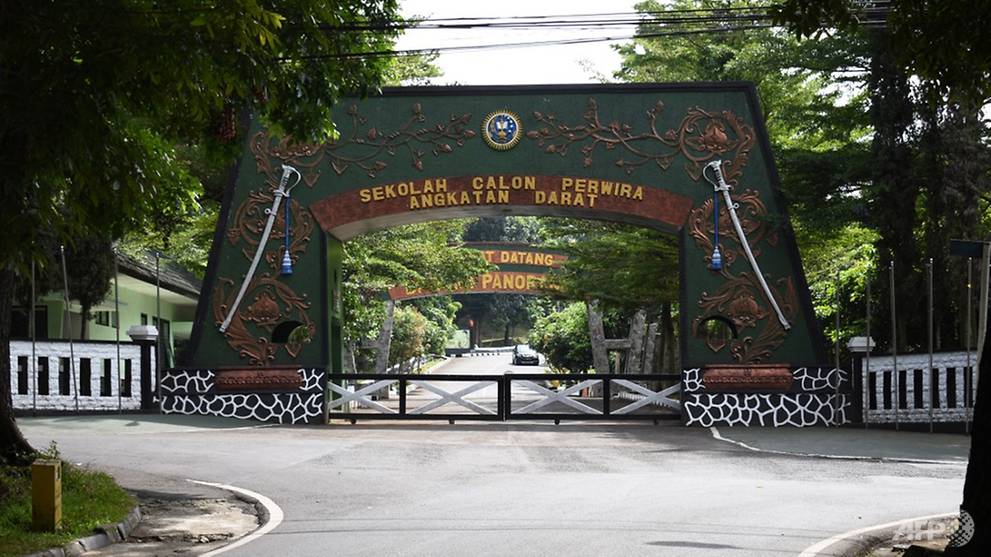
BANDUNG, Indonesia: Nearly 1,300 people at a military academy in Indonesia have tested positive for the coronavirus, an official said, as the country struggles to contain the epidemic.
The Indonesian Army Officer Candidate School in the country's most populated province of West Java has been quarantined and 30 people were initially hospitalised with mild symptoms, the army's chief of staff, General Andika Perkasa, said late Saturday (Jul 11).
Of the 1,280 confirmed infections, 991 were cadets and the rest were staff and their family members, he said. Most had no symptoms.
Seventeen were still in hospital on Saturday.
The outbreak was first detected when two cadets went to a medical facility after complaining of fever and back pain.
Both tested positive for COVID-19, sparking mass swab testing at the academy, which has 2,000 staff and cadets.
It is not clear how the cadets were infected, Perkasa said, but some staff live outside the military complex.
The governor of West Java apologised for the outbreak and urged residents to restrict their movements in and out of the neighbourhood where the academy is located until it is brought under control.
Indonesia is the hardest hit country in Southeast Asia with more than 74,000 known cases of COVID-19 and over 3,500 deaths.
The real toll is widely believed to be much higher, however, with experts saying limited testing was understating the true scale of the crisis.
The World Health Organization recently urged Indonesia to do more testing.
LONDON: Hong Kong expatriates living in Britain have welcomed London's pledge of "a pathway to future citizenship" for millions of the territory's residents after China imposed a controversial security law there.
But they warned this "message of hope" would not help many, including those born after Hong Kong's 1997 return to Chinese rule and now aged over 18 – people at the forefront of protests against Beijing.
"It is helpful – it sends a strong message of hope to Hong Kongers, many of whom are waiting to be rescued from their city," a 35-year-old financial analyst living in London since 2005, who asked to remain anonymous, told AFP.
With relatives still in Hong Kong, he is very worried about their fate, especially those of university age.
"These guys won't be helped directly by this but they are the ones who are more vulnerable – they stopped their university degrees to join the movement," he added, referring to protests that erupted last year.
Beijing enacted the sweeping security law for the restless city of around 7.5 million people on Jun 30, banning acts of subversion, secession, terrorism and collusion with foreign forces.
The move has sparked international condemnation.
The UK has said in response it will allow anyone with British National (Overseas) (BNO) status and their dependants – husbands, wives, civil partners and children under 18 years old – to come to Britain.
They will be able to remain and work for five years, compared to the current limit of six months, before being able to apply for citizenship.
More than 350,000 people currently have BNO passports, and the government estimates there are around 2.9 million eligible for the status in total in Hong Kong.
"MAIN TARGET"
"This proposal will definitely help some of the people who fear for their life – at least they have somewhere safe to go," said Abby Yau, 40, a naturalised British citizen after 19 years in the UK.
"But at the same time I wonder how much it will benefit the majority of the people who are oppressed by the (Chinese) government."
Britain created the BNO status ahead of Hong Kong's 1997 handover, allowing its residents to apply for a form of British nationality and a BNO passport.
But it conferred no automatic right to citizenship, could only be applied for before the end of 1997 and cannot be passed on to future generations.
Critics of Britain's proposed changes note they still fail to help swathes of people who missed out on that opportunity.
"The British government forgets the fact that most of the protesters are from my generation, in particular citizens born between 1997 and 2002," said another 22-year-old former Hong Kong resident studying in the UK since 2015.
Secondary school students march near a school campus to protest against a teacher's release over 'her political beliefs' as they said, in Hong Kong, Jun 12, 2020. (Photo: REUTERS/Tyrone Siu)
"These generations have suffered the most throughout the years and now they are the main target of the (Hong Kong) government.
"The British government needs to consider this generation or otherwise, this proposal won't be meaningful."
However, he expected "a wave of people fleeing" to Britain once the new immigration measures are formalised.
"Social media such as Facebook has been flooded with questions regarding working in the UK," he added, noting it reflected "how anxious and hopeless Hong Kongers are at the moment".
"VALUABLE WORKFORCE"
Yau said she too had been contacted by friends asking about life in Britain, and argued the new arrivals "could be an unbelievably valuable workforce for the UK post-Brexit".
But she does not expect large numbers to leave Hong Kong, noting not everyone can afford to relocate and navigate Britain's costly immigration system while others may not want such a different lifestyle.
The 22-year-old Hong Kong emigre echoed the sentiment.
"It will be a big challenge and sacrifice for the sandwich-class in Hong Kong as they work hard throughout their entire life to promote their social status," he said, referring to the city's middle class.
"Immigrating to (Britain) would mean restarting a new life as second-class citizens, and their social status might be dropped if they are not professional or wealthy."
Meanwhile the financial analyst who left Hong Kong 15 years ago agreed there will be "reluctance" to start over in Britain, but noted two of his relatives who had long been mulling relocating have finally been convinced by recent events.
"Can you call a place home when someone has taken away its core values, freedom and spirit?" he said.
"To me, that place ceased to be home – and the real home for Hong Kongers is where we can carry on contributing as a world citizen."