SINGAPORE: The COVID-19 pandemic has delayed the delivery of Singapore’s first of four new submarines, although the plan to get an initial four F-35 fighter jets in 2026 remains on track, Defence Minister Ng Eng Hen said.
Speaking to reporters on Thursday (Jun 25) in conjunction with Singapore Armed Forces (SAF) Day, Dr Ng said the first German-made Invincible-class submarine will now be delivered in 2022 instead of 2021.
Dr Ng said the pandemic has affected manpower and supply chains globally and in Germany, but that the delay will not affect SAF operationally as it still operates an existing fleet of submarines.
The Invincible-class submarines, custom-made to operate in Singapore’s shallow and busy waters, will replace the ageing Archer-class and Challenger-class submarines. These second-hand vessels were made in Sweden.
Dr Ng said the Republic of Singapore Air Force’s (RSAF) new helicopters will also be delayed. The CH-47F heavy lift and H225M medium lift helicopters will now be delivered from 2021 instead of 2020, he said.
Boeing's CH-47F and Airbus' H225M helicopters can carry more, fly farther and require less manpower. They will replace the current Chinook and Super Puma helicopters, respectively.
The Ministry of Defence (MINDEF) said the construction of SAFTI City was suspended during the “circuit breaker” and will be delayed by six to nine months, with expected completion pushed from 2023 to 2024.
SAFTI City, the size of 100 football fields, will use technology and have realistic buildings for homeland security and urban operations training.
F-35B
However, the RSAF’s premier acquisition of four F-35B fighter jets, with the option of buying eight more, remains on schedule, Dr Ng said. These fifth-generation stealth fighters can take off from shorter runways and land vertically, making them suitable for land-scarce Singapore.
Dr Ng said the package includes the “whole gamut” of training, maintenance and sustainability, adding that RSAF’s pilots will first train on the jets in continental US.
“So far the acquisition seems to be moving along, and the US agencies have been quite responsive, so we want to thank them for that,” he added.
The Republic of Singapore Navy's multi-role combat vessel. (Graphic: MINDEF)
Also on track is the Republic of Singapore Navy’s (RSN) new multi-role combat vessel (MRCV), which will replace its missile corvettes, which will hit the end of operational life in 2025. Dr Ng revealed that six MRCVs will be delivered by 2030.
The MRCV has been touted as a mothership that will work in tandem with unmanned drones and vessels to see further and respond quicker, although Dr Ng said he did not have more details to share for now.
“But when it’s due, there are exciting concepts,” he said, adding that the RSN has learnt from its missile corvette and frigate programmes. “It has given us the confidence to actually try even very new ideas and those are coming to shape as we discuss them with our defence vendors.”
While Dr Ng acknowledged that MINDEF and SAF will cut costs where possible amid COVID-19 strains on the economy, he said this will be done without compromising critical operations as well as medium- and long-term capabilities.
The F-35B showing its hovering capability. (Photo: Aqil Haziq Mahmud)
When asked if economic pressures will affect the plan to buy up to 12 F-35Bs, Dr Ng said the Government and the people have been strong supporters who ensure “consistent resourcing” for Singapore’s defence needs.
Dr Ng said it is also more cost-effective to be consistent in spending on medium- and long-term acquisitions. “I hope we will continue to have that strong support,” he added. “But on strategic capabilities, I believe that we will not compromise on those acquisitions.”
MARITIME SECURITY TASK FORCE
Dr Ng also gave updates on the restructuring of RSN’s Maritime Security Task Force (MSTF), first announced during MINDEF’s Committee of Supply debate speech in March.
The MSTF, which works with other SAF task forces, national agencies and international partners, will be restructured to better respond to the increasing maritime security threat in the Singapore Strait, Dr Ng had said then. This includes adding new purpose-built ships and refurbishing existing patrol vessels.
RSS Independence (left) watching over a Malaysian government vessel in Singapore waters off Tuas. (Photo: MINDEF)
“Recently there was an uptick in piracy and sea robberies, now more on the eastern side and an expanded spectrum of threats that the RSN had to deal with,” he said.
Crew in RSN's littoral mission vessel. (Photo: MINDEF)
Data from a maritime information sharing centre showed that sea robbers boarded ships sailing through the Singapore Strait in 12 incidents from January to April. This is a three-fold increase from the four incidents in the same period last year.
MINDEF said the RSN will add new purpose-built vessels, auxiliary vessels and boarding teams, and in the interim, operate four refurbished patrol vessels equipped less-lethal capabilities to provide more calibrated options against a range of threats. The latter will be operational in the next few months.
Naval divers conducting a maritime counter-terrorism drill. (Photo: MINDEF)
Dr Ng gave some idea of what the new ships will be like, stating that the RSN’s current ships are configured in a way that sometimes trades off between speed, weight and firepower.
“But if you have to chase a faster boat, you have to find some means and so on and so forth,” he said. “You may even have (an) unmanned system.”
An Accompanying Sea Security Team member training for ship boarding operations. (Photo: MINDEF)
MINDEF said the restructured MSTF will have two operational groups to oversee the control and execution of maritime security operations: the Sea Security Group and the Force Protection Group.
The Sea Security Group is responsible for maritime security operations in waters around Singapore. This includes daily patrols, boarding and escort operations in the Singapore Strait and surveillance over waters. In the event of a maritime incident, it will coordinate operations with other national agencies.
The Force Protection Group defends against seaward threats and is responsible for defending and enforcing security at naval bases and installations. In the event of a sea intrusion, it will deploy a “quick reaction force” to protect Singapore’s waters against intrusion and other maritime threats.
MARITIME SECURITY COMMAND
MINDEF also announced that it will restructure the RSN’s Maritime Security (MARSEC) Command, which builds up, trains and maintains the capabilities of RSN platforms deployed primarily for maritime security operations.
The RSN's unmanned service vessel. (Photo: MINDEF)
The MARSEC Command will be reorganised into three flotillas.
The 2nd Flotilla maintains the operational readiness of Littoral Mission Vessels and its crew. The 6th Flotilla leads the development of unmanned surface and underwater vessels to counter mines and defend the coast. The 9th Flotilla trains and deploys security troopers, sea soldiers and system operators.
6th Flotilla commander Senior Lieutenant-Colonel Chng Tong Wong said it is developing guidelines for the operations of unmanned vessels in Singapore waters.
“Unmanned vessels will increase operational capabilities, improve manpower capabilities and more importantly, enhance our operational safety,” he said.
BEIJING: China warned on Monday (Jun 29) that it would impose visa restrictions on US citizens who had "behaved egregiously" over Hong Kong, ahead of expected approval from Beijing lawmakers for a controversial national security law in the city.
China is moving forward on a security law that would enforce punishment for subversion and other offences in Hong Kong, which was rocked by massive and sometimes-violent protests last year.
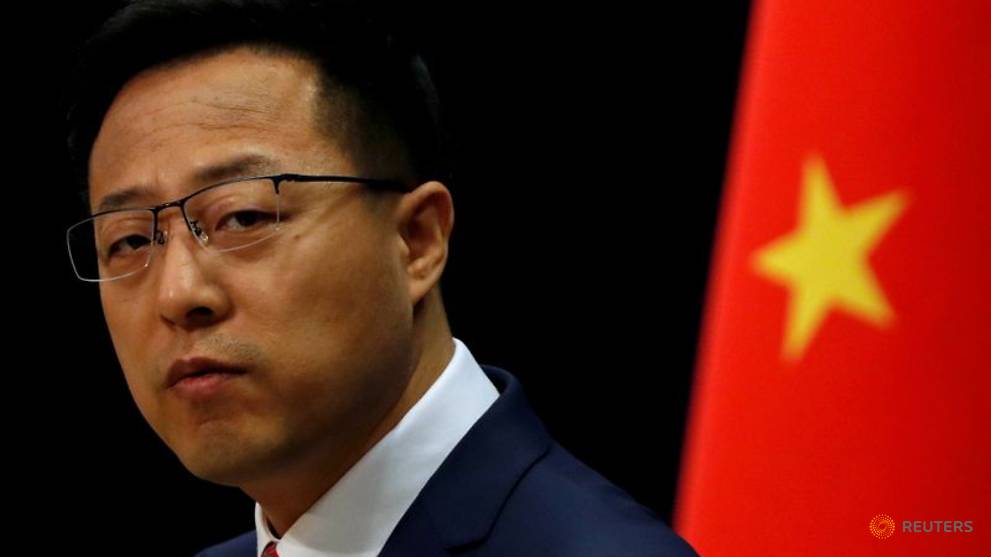
Foreign ministry spokesman Zhao Lijian said on Monday that the US "scheme ... to obstruct the passage of the Hong Kong national security law will never prevail".
"To target the US's above wrongful actions, China has decided to impose visa restrictions against American individuals who have behaved egregiously on matters concerning Hong Kong," Zhao said.
APPROVAL IMMINENT
China's top lawmaking committee is expected to adopt the law during sessions that end on Tuesday.
The legislation was approved by Beijing's parliament little more than six weeks after it was unveiled, sending shockwaves through semi-autonomous Hong Kong and beyond.
While outlawing acts of subversion, secession, terrorism and colluding with foreign forces, the legislation will allow China's security agencies to set up shop publicly in the city for the first time.
The United States, Britain, the European Union and the United Nations rights watchdog all voiced fears the law could be used to stifle criticism of Beijing, which uses similar laws on the mainland to crush dissent.
US Secretary of State Mike Pompeo said Washington would curb visas for unspecified current and former officials of the Chinese Communist Party "who were responsible for eviscerating Hong Kong's freedoms".
The officials targeted were "responsible for, or complicit in, undermining Hong Kong's high degree of autonomy", which Beijing promised before regaining control of the territory in 1997 from Britain, Pompeo said.
Last week, the US Senate unanimously approved a Bill that would impose mandatory economic sanctions in the United States against Chinese officials and Hong Kong police identified as hurting the city's autonomous status.
Zhao warned on Monday that the US "should not review, advance or implement relevant negative Bills concerning Hong Kong, even less impose so-called sanctions on China, otherwise China will firmly take strong countermeasures".
BEIJING: China's military has received the green light to use a COVID-19 vaccine candidate developed by its research unit and CanSino Biologics after clinical trials proved it was safe and somewhat efficient, the company said on Monday (Jun 29).
The Ad5-nCoV is one of the eight vaccine candidates being developed by Chinese companies and researchers approved to be moved into human trials for the respiratory disease caused by the new coronavirus. The shot also won approval for human testing in Canada.
China's Central Military Commission approved the use of the vaccine by the military on Jun 25 for a period of one year, CanSino said in a filing. The vaccine candidate was developed jointly by CanSino and the Beijing Institute of Biotechnology in the Academy of Military Medical Sciences.
"The Ad5-nCoV is currently limited to military use only and its use cannot be expanded to a broader vaccination range without the approval of the Logistics Support Department," CanSino said, referring to the Central Military Commission department where the military use of the vaccine was approved.
The Phase 1 and Phase 2 clinical trials showed the vaccine candidate has potential to prevent diseases caused by the coronavirus, which has killed half a million people globally, but its commercial success cannot be guaranteed, the company said.
No vaccine has yet been approved for commercial use against the illness caused by the new coronavirus, but over a dozen vaccines from more than 100 candidates globally are being tested in humans.
SYDNEY: The death toll from COVID-19 reached half a million people on Sunday (Jun 28), according to a Reuters tally, a grim milestone for the global pandemic that seems to be resurgent in some countries even as other regions are still grappling with the first wave.
The respiratory illness caused by the new coronavirus has been particularly dangerous for the elderly, although other adults and children are also among the 500,000 fatalities and more than 10 million reported cases.
While the overall rate of death has flattened in recent weeks, health experts have expressed concerns about record numbers of new cases in countries like the United States, India and Brazil, as well as new outbreaks in parts of Asia.
More than 4,700 people are dying every 24 hours from coronavirus-linked illness, according to Reuters calculations based on an average from Jun 1 to 27.
That equates to 196 people an hour, or one person every 18 seconds.
About one-quarter of all the deaths so far have been in the United States, the Reuters data shows. The recent surge in cases have been most pronounced in a handful of southern and western states that reopened earlier and more aggressively.
The first recorded death from the new virus was on Jan 9, a 61-year-old man from the Chinese city of Wuhan who was a regular shopper at a wet market that has been identified as the source of the outbreak.
In just five months, the COVID-19 death toll is now equal to the number of people who die annually from malaria, one of the most deadly infectious diseases.
The death rate averages out to 78,000 a month, compared with 64,000 AIDS-related deaths and 36,000 malaria deaths, according to 2018 figures from the World Health Organization.
CHANGING BURIAL RITES
The high number of deaths has led to changes to traditional and religious burial rites around the world, with morgues and funeral businesses overwhelmed and loved ones often barred from bidding farewell in person.
In Israel, the custom of washing the bodies of Muslim deceased is not permitted, and instead of being shrouded in cloth, they must be wrapped in a plastic body bag. The Jewish tradition of Shiva where people go to the home of mourning relatives for seven days has also been disrupted.
In Italy, Catholics have been buried without funerals or a blessing from a priest. In New York, city crematories were working overtime, burning bodies into the night as officials scouted for temporary interment sites.
In Iraq, former militiamen have dropped their guns to instead dig graves for coronavirus victims at a specially created cemetery. They have learned how to conduct Christian, as well as Muslim, burials.
ELDERLY AT RISK
Public health experts are looking at how demographics affect the death rates in different regions. Some European countries with older populations have reported higher fatality rates, for instance.
An April report by the European Centre for Disease Prevention and Control looked at over 300,000 cases in 20 countries and found that about 46 per cent of all fatalities were over the age of 80.
In Indonesia, hundreds of children are believed to have died, a development health officials have attributed to malnutrition, anaemia and inadequate child health facilities.
Health experts caution that the official data likely does not tell the full story, with many believing that both cases and deaths have likely been under-reported in some countries.
JAKARTA - Indonesian President Joko Widodo has threatened to reshuffle the Cabinet as he expressed frustration over the “lack of a sense of crisis” in dealing with the Covid-19 pandemic.
He said the government ministers were working in a business as usual mode in tackling the crisis.
In a video of a Cabinet meeting released by the presidential palace on Sunday (June 28), Mr Joko said he was very disappointed with the slow disbursement of urgently needed funds such as aid for the poor, stimulus for businesses to preempt layoffs, money to buy medical equipment and special allowances for medical doctors and nurses.
Mr Joko, popularly known as Jokowi at home, was especially angered by a report which said that the health ministry has spent only 1.5 per cent of the 75 trillion rupiah (S$7.3 billion) allocated to it as emergency funds to deal with the pandemic.
The presidential palace did not explain why the June 18 video was released only on Sunday. Its public relations office regularly publishes highlights of Mr Joko’s meetings with his ministers and normally releases his opening remarks ahead of the meetings.
“I am keeping open measures, politically as well as government policy-wise. I would take extraordinary measures for the sake of the 267 million Indonesians. I may disband government agencies (that have been shown to be ineffective), do a Cabinet reshuffle. I have considered various measures,” Mr Joko said.
He was addressing the ministers from a podium.
More than 15 of the 34 Cabinet ministers appointed by Mr Joko come from various political parties in a coalition supporting him. The rest of the Cabinet is made up of technocrats as well as successful entrepreneurs and businessmen.
Mr Joko, who won re-election in 2019, is constitutionally barred from a third term in office.
“Immediately spend your budget as soon as possible as it would fuel consumer spending. If you face any obstacle, make new policies to expedite the process,” Mr Joko told his Cabinet.
He said that funds from the economic stimulus package should quickly go to businesses, stressing that it would be useless if the government helped only after they had gone bust.
“It is very dangerous if we have no sense of crisis.
“Micro, small, medium, large enterprises, banking and everything that is related to the economy need to be assisted. Manufacturing, labour intensive industries especially need to be prioritised so there won’t be lay-offs. Don’t wait until there are big lay-offs,” said Mr Joko.
Finance Ministry figures in May show the government has committed to spending 641.15 trillion rupiah (S$61.77 billion) to mitigate the fallout from the Covid-19 pandemic, including on businesses.
Indonesia, the world’s fourth most populous country, has reported a total of 54,010 infections, the highest in South-east Asia, as of Sunday. The total number of fatalities was 2,754.