WASHINGTON: The police department in the US city of Minneapolis will be dismantled and rebuilt, city councilors said late Sunday (Jun 7) after the death in custody of George Floyd sparked nationwide protests about racism in law enforcement.
"We committed to dismantling policing as we know it in the city of Minneapolis and to rebuild with our community a new model of public safety that actually keeps our community safe," Council President Lisa Bender told CNN.
Council Member Alondra Cano tweeted that the decision came through "a veto-proof majority of the MPLS City Council", which agreed that the police department "is not reformable and that we're going to end the current policing system".
A veto-proof majority of the MPLS City Council just publicly agreed that the Minneapolis Police Department is not reformable and that we're going to end the current policing system.
— Council Member Alondra Cano, City of Minneapolis (@MplsWard9) June 7, 2020
A white Minneapolis police officer has been charged with murder in the May 25 death of George Floyd, after bystander video showed the officer's knee pinned on Floyd's neck for nearly nine minutes while he pleaded for his life and called for his mother.
It was the latest case of white law enforcement authorities being blamed for the death of an unarmed black person.
Floyd's death has sparked two weeks of mostly peaceful demonstrations across the country against racism in US law enforcement. Some marchers have called for the police to be defunded.
People hold placards inside a car in Manhattan during a protest against racial inequality in the aftermath of the death in Minneapolis police custody of George Floyd, in New York, U.S. June 7, 2020. REUTERS/Jeenah Moon
Last year, a black former Minneapolis police officer was sentenced to 12 years and six months in prison for the fatal shooting of an unarmed white Australian woman trying to report a crime.
Bender told CNN she was looking to shift police funding toward community-based strategies, and that the city council would discuss how to replace the current police department.
"The idea of having no police department is certainly not in the short term," she added.
The demonstrations in the US - which have included outbreaks of looting and violence - have seen new police abuses, some captured on camera.
Two policemen in Buffalo, New York were charged with felony assault on Saturday after they were filmed shoving a 75-year-old protester who fell, hit his head and began bleeding, in one of the most widely shared videos fuelling outrage.
In Seattle, authorities announced a temporary ban on tear gas.
In Denver, a federal judge forbade the use of chemical agents and projectiles like rubber bullets against peaceful protesters. And in Dallas, police marched in solidarity with protesters.
SINGAPORE: After graduating with distinctions from the Singapore Management University (SMU) in April, a quantitative finance major who wished to be known only as Ben was eager to make his mark in the financial technology (fintech) industry.
Normally, the 24-year-old who is fluent in both English and Thai and has internship experience at six firms, would be highly sought after.
But these are not normal circumstances.
After sending out more than 20 job applications in the last two months, his job search pretty much drew a blank amid the COVID-19 pandemic which has pummelled economies around the world.
The only offer he received was from a firm where he interned at last year, which offered him a salary that was “way below average” - S$2,800 to be exact.
“When they offered me the amount, I was speechless for a second. That was definitely a big difference in the pay I was expecting,” said Ben, who had expected to get a salary of at least S$3,800.
“I was talking to my former colleagues (at the same firm) who said that a future employer could ask what my last drawn salary was. If they learn that it’s that low, they might not want to offer me more,” he said, citing that as the reason why he put the offer on hold.
COVID-19 is wreaking havoc on the global economy, forcing countries to restrict movements across borders and bringing domestic economies to a standstill as they deal with the different stages of the pandemic.
Like in other countries, job prospects across all sectors have been hit in Singapore, which is expected to experience its worst recession since independence.
Apart from degree holders, graduates from polytechnics and the Institute of Technical Education (ITE) are being similarly frustrated in their job hunt.
An ITE graduate, who wanted to be known only as Ismail, was given a “lowball” offer of a starting monthly salary of S$1,800 by a construction company.
And this was after he had asked for S$2,100 a month. He did not take up the offer.
“Imagine how much I’ll be bringing home after CPF (Central Provident Fund) deductions,” said the 22-year-old, who is currently working full-time as a GrabFood delivery rider.
“At least I can earn twice the amount when I work as a rider … I just have to work harder and take fewer days off,” said Ismail, who graduated in January.
In total, some 48,500 fresh jobseekers are leaving school and hoping to join the Singapore workforce this year - 26,000 from the five polytechnics, 16,000 from the six autonomous universities and 6,500 from ITE.
For many of these students, their final weeks of school life were anything but plain sailing: They had to grapple with remote learning and online examinations, and the disappointment of cancelled graduation shows and ceremonies.
Lasalle College of the Arts graduate Hakim Wijaya has yet to receive replies from companies he sent job applications to and is taking up small projects to support himself in the meantime. (Photo: Hakim Wijaya)
This left a sting on some graduates, like Mr Hakim Wijaya, who was affected by the disruptions and is wrestling with what he calls a “triple whammy”.
Graduating with a degree in Fashion Media and Industries from Lasalle College of the Arts, the 27-year-old said: “To put in blood, sweat and tears on my final-year project (a fashion show) only to not have it fully realised … felt like a loss. On top of that, my graduation ceremony is postponed till next January.”
Now, a bigger challenge lies ahead and important choices have to be made for Mr Hakim and other fresh graduates, as they prepare to join an economy that has been battered by COVID-19, which has forced businesses to pull the plug, lay off staff and freeze hiring.
NOT A PRETTY PICTURE
At a virtual media interview on May 29, Manpower Minister Josephine Teo said that in March, there were 71 vacancies for every 100 jobseekers. The ratio was 84 to 100 at the end of last year.
She also noted that there have already been instances of job offers rescinded and companies scaling back hiring. In fact, some 150,000 workers have faced pay cuts of more than 25 per cent since Mar 12.
The dismal job prospects for first-time jobseekers is not unique to Singapore.
Job openings for each new graduate applicant in China fell from 1.54 to 1.41 this year compared to the previous year, according to a survey by online job recruitment platform Zhaopin. A total of 88,150 graduates were surveyed from February to May.
Some of the United Kingdom’s biggest companies, including HSBC and PwC, had also cancelled or delayed their recruitment schemes and internships, The Guardian reported in April.
A survey in March by non-profit UK research organisation Institute of Student Employers also found that more than one quarter of companies expected to hire fewer graduates because of the COVID-19 pandemic.
Nevertheless, the plight of this cohort of new workers has not escaped official attention in Singapore, with the Government, businesses and educational institutions themselves coming up with various initiatives to help fresh graduates find jobs or undergo training to acquire relevant skills.
On May 26, Deputy Prime Minister Heng Swee Keat unveiled plans - as part of the Fortitude Budget - to have 21,000 traineeships for first-time jobseekers and another 4,000 for unemployed mid-career workers.
Under the SGUnited Traineeships Programme, S$100 million has been set aside to help fresh graduates acquire valuable industry-relevant experience which, in turn, can give them a firmer foothold in the job market.
Mr Heng also announced that Senior Minister Tharman Shanmugaratnam will chair the newly formed National Jobs Council, which will work towards growing jobs and training opportunities.
Apart from the Government, universities and polytechnics have also rolled out programmes and resources to help their fresh graduates find jobs.
The National University of Singapore (NUS) had a virtual career festival in March and April where students were able to speak to potential employers through one-on-one live chat sessions. It also organised a series of career webinars on understanding the job market, writing effective resumes, better interviewing techniques and career networking.
On its part, the Nanyang Technological University (NTU) held two virtual career fairs with 4,900 and 2,500 job vacancies respectively and will organise a third one in July. Among other things, the university has also offered workshops and career resources for graduating students to hone their online interview skills.
Similarly, SMU organised an inaugural virtual career fair on March 27, which featured about 3,200 internships and full time positions from 85 companies. Over 1,000 students attended online.
The university has launched a microsite which contains online resources, webinars, virtual workshops and podcasts for its graduates and alumni.
Polytechnics are also coming up with initiatives to help their graduates. They include job placement opportunities and apprenticeships - including some on campus - virtual career fairs and career counselling sessions.
But such events have not borne fruit for all jobseekers, such as those interviewed.
Some of those who have been unsuccessful in their job hunt are taking up internships, doing odd jobs or considering further studies to stay positive and stop disillusion from creeping in so early in their post-school life.
SHORT-TERM FIXES: INTERNSHIPS, ODD JOBS
While some fresh graduates have the luxury to chase lofty career aspirations or wait out for replies from companies, there are those who cannot afford to do so.
One of them is Ismail, the ITE graduate who turned to working as a food delivery rider to help his parents support five younger siblings.
“I know that there is no future for me as a food delivery rider but right now, I’m just taking up any jobs that can help pay the bills. I cannot sit around and wait for offers,” said Ismail.
Others have also lowered their job expectations or taken up internships to beef up their resumes.
Ms Teo Yi Ning, 23, a sociology final-year undergraduate at the National University of Singapore (NUS), took up a six-month internship position after searching for a full-time job for about a month. (Photo: Teo Yi Ning)
Ms Teo Yi Ning, 23, had applied to private firms and government organisations for marketing and programme planning positions but received no replies or rejection by most.
Graduating with a degree in Sociology from the NUS, Ms Teo managed to secure a six-month internship at telecommunications start-up Toku instead, which she started in mid-May.
“I wanted something in the marketing field and with the possibility of conversion to a full-time job,” she said.
Similarly, communication student Jared Silitonga, 25, also managed to clinch a marketing internship at social media monitoring company Digimind in June after his four month-long job hunt.
Mr Silitonga, who is graduating from the Singapore Institute of Management (SIM)-University at Buffalo in June or July, had applied for full-time and internship positions in marketing and other communications roles.
“A consideration I had when I tried applying (to internships) was that I was hoping to land a conversion - that’s sort of my idea in terms of (job) security,” he said.
Mr Jared Silitonga, 25, a graduating student at the SIM-University of Buffalo, secured a marketing internship at a social media monitoring company after searching for a job for about four months. (Photo: Jared Silitonga)
Such a conversion occurred for final-year NTU accountancy undergraduate Tung Lin Hui, 23, who found a full-time job as an assurance associate through her internship.
Ms Tung was offered her job at accountancy firm Ernst and Young in October last year after a three-month internship there in June.
“I think it’s common for accounting students to find jobs through their internships if they intern at big companies,” she said. “But for other smaller or mid-tier firms, I’m not sure about that.”
Unfortunately, given the bleak job markets in Singapore and elsewhere, some graduates saw their job or internship offers rescinded.
Ms Tung Lin Hui, 23, found a job as an assurance associate through her internship last year at Ernst & Young. (Photo: Tung Lin Hui)
Final-year culinary undergraduate Joel Tan, 24, had to forgo a one-year internship in the United States that was supposed to begin in May at three-starred Michelin restaurant Atelier Crenn.
The internship at the restaurant, founded by celebrity French chef Dominique Crenn, was part of Mr Tan’s curriculum at the Singapore Institute of Technology’s The Culinary Institute of America but it was cancelled in February due to the mounting COVID-19 cases in the US.
After the offer was withdrawn, Mr Tan and his classmates had to start sourcing for an internship in Singapore instead, with the school helping to match the undergraduates to restaurants.
But some of them had found it difficult to find one, as most restaurants were badly affected during the circuit breaker period - from Apr 7 to Jun 1 - since patrons could not dine in and thus the owners could not afford to offer paid internships.
Fortunately, a chef at Restaurant Zen - a two Michelin-starred Nordic restaurant in Singapore where Mr Tan used to work part-time in the past year - was willing to take him in.
Mr Joel Tan, 24, a final-year undergraduate at the Singapore Institute of Technology’s The Culinary Institute of America, had his year-long internship under celebrity chef Dominique Crenn in San Francisco cancelled. (Photo: Joel Tan)
Ms Trixie Poh, 23, who was training to become a Singapore Airlines (SIA) crew member had to stop her three-month training programme in March.
The marketing graduate said: “I do feel a sense of dejection, having to put this dream of embarking on this new milestone with SIA to a pause.”
Ms Poh, who graduated from SIM last year, has been on unpaid leave since her training halted and is uncertain as to when it will resume.
She is currently working as a temporary contract staff under a COVID-19 relief scheme - part of the Government’s supplementary Resilience Budget unveiled in March - after she was referred to it by SIA.
During the virtual media interview last month, Mrs Teo said that the Government’s plan to nudge more people to take up traineeships and attachments is part of a new approach to expand employment opportunities in the face of a weak job market.
Noting that jobseekers will continue to outnumber vacancies available, she stressed that the Government must seize “every possible channel of opportunity” and open as many pathways as possible for people to secure jobs.
With COVID-19 putting a damper on what could have been an exciting start to their next phase in life, many of the fresh graduates interviewed welcomed the initiatives rolled out by the Government, especially the SGUnited Traineeships Programme.
Applications opened on Jun 1. Asked for the number of traineeship applications over the first week, Workforce Singapore (WSG) said it was not able to provide figures as the applications would need more time to be processed.
The programme, which will last up to 12 months, will provide a monthly training allowance, based on the scope and skills required for the traineeship. The allowance is pegged to 50 to 70 per cent of median starting salaries, according to WSG and the Ministry of Manpower.
The Government will fund 80 per cent of the allowance and the trainee’s host company will pay for the remainder.
Ms Charlene Tan, 23, who is graduating this year with a degree in accountancy from the Nanyang Technological University (NTU) has applied for traineeships in analyst and operational risk roles at the DBS Bank through the SGUnited traineeship programme. (Photo: Charlene Tan)
NTU final-year accountancy undergraduate Charlene Tan, 23, has already applied for traineeships in analyst and operational risk roles at DBS Bank through the programme.
“It's an alternative to finding permanent jobs and for jobs involving risk advisory or management, they usually require a minimum of three to five years of experience. So in the meantime, I can acquire skill sets relating to this field and also broaden my exposure,” she said.
Ms Tan is also currently waiting for a response to her applications to about 10 full-time positions in risk management or valuation roles, mostly at banks and large accountancy firms.
A check on the traineeship portal found roles for fresh graduates in private organisations such as Singtel, DBS and Surbana Jurong, and public agencies such as WSG, the Housing and Development Board (HDB) and several ministries, as well as institutes of higher learning such as NUS and NTU.
These roles include research assistants, journalists, automation specialists, assistant teachers and graphic designers.
Each job posting also includes the location, industry, number of applications and salary range.
In a Facebook post on May 31, Manpower Minister Teo likened the traineeship to a sturdy umbrella amid a downpour.
“It is not the same as landing a permanent job, but this traineeship ... will help sustain you till you reach the next step in your career,” she wrote.
BE OPEN TO TRAINEESHIPS OR INTERNSHIPS, TAP ON ALUMNI NETWORKS: EXPERTS
As prospects for a full-time job dim for many fresh graduates, several career experts said they should look for other opportunities - be it an internship or traineeship - in the relevant fields which they wish to pursue, as this will enhance their employability when the storm passes.
Veteran human resource (HR) practitioner Adrian Tan said: “When the market returns to normal eventually, these individuals will be ahead of the pack.”
Agreeing, Mr Adrian Choo, founder of career consulting company Career Agility International, also advised against taking up temporary jobs such as private-hire car drivers as the graduates can “get trapped in it and lose out on (having a) bigger career strategy”.
He said they are not improving their employability and will not have the relevant skills to switch out of the job after the economy picks up.
However, Mr Tan noted that individual circumstances would vary.
“For graduates who are cash strapped, where money is paramount, making S$2 is better than zero dollars,” added Mr Tan, who is the Asia Pacific regional leader of HR solutions and technology firm PeopleStrong.
He also warned graduates to not be too hopeful when taking up internships that they would lead to full-time employment.
“Conversion under normal circumstances is very subjective, more so during a pandemic. The chance is definitely lower,” said Mr Tan.
Both Mr Tan and Mr Choo suggested that graduates turn to school alumni networks for job opportunities.
“Graduates can tap (these) networks to look for jobs, such as their alumni directory or some seniors in university or secondary school who have gone on to work and ask if they have opportunities,” said Mr Choo.
While the experts felt that the SGUnited Traineeships Programme is a good initiative from the Government, some pointed to several issues, such as the pay gap between graduates from different institutions and extra costs incurred by companies.
Mr Paul Heng, founder of corporate coaching firm NeXT Career Consulting Group, Asia, said that the allowance given for similar positions should be the same for both diploma and degree holders.
“If a diploma holder is doing the same job as a university graduate – shouldn’t the allowance be similar? To say that university students invested more in their academic pursuit, and therefore deserve a higher figure compared to an ITE or diploma graduate does not hold water,” he added.
Some companies, which are struggling to stay afloat, could also see the programmes as incurring more costs, Mr Tan noted.
“Internships or traineeships are a low-cost way of bringing labour in, but this labour requires a lot of training and guidance … and although they are highly subsidised, companies will still need to pay,” he said.
HOLDING OUT HOPE
Despite the obstacles, some graduates said they remain hopeful of getting the job that they want in the coming months.
Ben, the SMU graduate, is waiting to be interviewed by a technology firm.
He said he expects salary offers to be lower given the pandemic but is confident that his qualifications and experience can fetch him a good starting pay.
Hakim, the graduate from Lasalle College of the Arts, said he is open to taking up job offers even if the salary offered is lower than usual. He will also be casting his net wider and applying for jobs beyond his field of study.
“At this point, I can’t be choosy. I can’t sit around and wait for replies from companies. If I get an offer, I might not think twice,” he added.
In a Facebook post on Wednesday, Mr Tharman stressed that Singapore “cannot wait for the employment market to recover and to solve these problems on its own”.
“The longer that those in mid-career are left out of work, the more their skills fade, and the less likely it is that they get a good job again,” he said. “And when young people graduate from their education and find themselves waiting for years to get a serious job - like in many European countries – their hopes and ambitions fall apart.”
Mr Tharman stressed the need to “absolutely avoid” what is happening in many other countries. “Unemployment keeps rising — first to 10 per cent, then higher, and governments and people begin treating that as normal after a while,” he said.
For some graduates, there is also the option of furthering their studies, thus delaying their entry into the workforce. They are hoping that by then, things will start looking rosy again.
Ms Muslihah Mujtaba, 26, graduated with a degree in theatre practice from University of London’s Royal Central School of Speech and Drama in December 2019. The 26-year-old is working as a Foodpanda delivery rider while she hunts for a job. (Photo: Muslihah Mujtaba)
One of them is Ms Muslihah Mujtaba, who graduated with a degree in theatre practice from the University of London’s Royal Central School of Speech and Drama.
The 26-year-old, who has yet to find a job and is currently working as a Foodpanda delivery rider, said: “The job search definitely has discouraged me a lot and shaken my confidence. It makes me feel like I’m not good enough for anything and I know I’m not the only one.”
While she is contemplating going to graduate school, she said that the cost would be a concern.
In response to queries, several universities said they are still accepting applications for postgraduate studies and they will assess whether there is a need to increase capacity.
An SMU spokesperson acknowledged that the current economic uncertainty could be seen by some - not just fresh graduates but mid-career employees - “as an opportune time to upgrade knowledge and skills when their work is less demanding, or when they can take a break and study full-time so as to be ready for the improvement in economic conditions.”
However, pursuing a graduate degree should be a “carefully considered decision”, added the spokesperson.
“Prospective students should carefully consider their career needs and aspirations, what the degree programme and institution offer, the amount of financing available and the need to balance existing career and family commitments.”
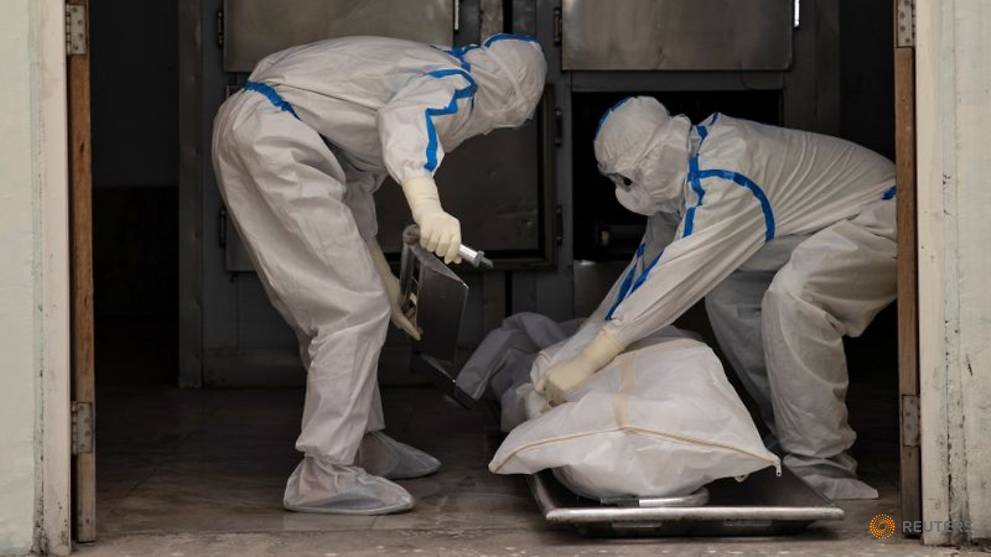
NEW DELHI: The city of New Delhi on Sunday (Jun 7) ordered many of its hospital beds to be reserved solely for residents of the Indian capital, as the number of COVID-19 infections continued to surge.
India on Sunday registered 9,971 new coronavirus cases, taking its tally to 246,628 cases, with 6,929 deaths. The country's case numbers now lag only behind the United States, Brazil, Russia, the United Kingdom and Spain.
New Delhi city alone has registered more than 10 per cent of total cases, making it the third worst-affected part of the country after the western state of Maharashtra, home to financial capital Mumbai, and southern Tamil Nadu state.
"Delhi is in big trouble ... (coronavirus) cases are rising rapidly," state Chief Minister Arvind Kejriwal said in a video message on Twitter, where he announced that private and city government-run hospitals will be reserved for Delhi residents.
"If we open Delhi hospitals for patients from all over, where will Delhi residents go when they get infected with coronavirus?"
Typically about 60 to 70 per cent of patients admitted to hospitals in Delhi are people travelling from other states to get treatment at the city's hospitals, which are among the best in the country.
A Delhi government COVID-19 mobile app showed the city of more than 20 million people had 8,049 COVID-19 beds, but more than half were already occupied. Of the 60 hospitals, 11 had no beds available, the app showed on Sunday.
The Delhi city government has issued an order saying hospitals must admit every patient from the city with COVID-19 symptoms, following complaints from some people on social media that people were being refused treatment.
Although cases are still rising, India is easing its lockdown rules. From Monday, Delhi and several other Indian cities will open malls, restaurants and religious places with strict social distancing rules.
The nationwide lockdown has hit businesses, but the government says it helped slow the spread of the virus.
SINGAPORE - World Environment Day is celebrated on June 5 every year, and Singapore marked the occasion last Friday (June 5) with a rare sighting: a colony of large flying foxes soaring over the Central Catchment Nature Reserve.
The last time these bats were seen in Singapore was more than four years ago, with six sighted in the MacRitchie area in May 2016.
Dr Benjamin Lee, director of wildlife management research at the National Parks Board (NParks), said: "This sighting of more than 100 individuals is unprecedented in Singapore in recent times."
Primate researcher Sabrina Jabbar came across the sight while exercising in the nature reserve at about 7.30am last Friday, and captured the encounter in photographs and videos.
Ms Jabbar said the sighting on World Environment Day was a great surprise. She added: "It was such a magnificent sight against the backdrop of the cloudy sky."
Dr Lee said the large flying fox is native to Singapore.
They are migratory animals, which means they have a large home range and move frequently across international borders.
They have been known to travel several hundreds of kilometres between roosting sites, and their home range includes southern Peninsula Malaysia, Singapore and Sumatra in Indonesia, said Dr Lee.
He added: "It is not unusual for flying foxes to travel in large groups when they are in search of food or due to disturbances to their camps such as habitat destruction or sustained hunting."
The large flying fox is one of 28 species of bats in Singapore. PHOTO: SABRINA JABBAR
Ms Jabbar said that while it was nice to see the flying fox in such large numbers, the animals may have been forced to move due to threats faced elsewhere, such as habitat loss.
"I hope they have found a safe place to settle," she said.
The large flying fox is one of 28 species of bats in Singapore.
These creatures of the night have been linked to the emergence of zoonotic diseases such as Covid-19, but their bad reputation is often unwarranted.
Indeed, fruit and insectivorous bats play important ecological roles in the natural environment.
Fruit bats are pollinators and seed dispersers, and play an important role in regenerating forests and ensuring their survival.
The agricultural trade is also supported by bats that aid in the pollination of plants such as durian and petai, said NParks' Dr Lee.
Insectivorous bats, on the other hand, are the pest controllers of the natural world.
Dr Lee said: "They feed on mosquitoes, beetles and crickets, helping to keep the insect population in check.
"By feeding on insects, they also help to support agriculture, as they reduce the damage the insects cause to crops, as well as decrease the need for pesticides."
Bats are generally shy and do not attack or show aggression unless a person attempts to handle them, he said.
People should not attempt to feed or get close to them.
Dr Lee said NParks has been studying Singapore's bat populations since 2011 and that the coronavirus that causes Covid-19 in humans has not been detected in bats and other animals in Singapore.
He added: "NParks will continue to closely monitor the local wildlife populations."
BEIJING: China will strengthen international cooperation in future COVID-19 clinical vaccine trials, building on earlier collaboration in vaccine development, the science and technology minister said on Sunday (Jun 7).
China is expending great efforts in the global scramble to develop a vaccine for the new coronavirus epidemic that began in its central city of Wuhan, with Chinese researchers conducting five separate clinical trials on humans, or half of all such trials globally, according to the data compiled by the World Health Organization.
President Xi Jinping vowed last month at the World Heath Assembly, the WHO's governing body, that vaccines China's develops will become a "global public good" once they are ready for use, and it will be China's contribution to ensuring vaccine accessibility and affordability in developing countries.
Developing "a vaccine is still the fundamental strategy in our effort to overcome the new coronavirus," Science and Technology Minister Wang Zhigang told a news conference in Beijing.
But vaccine development is very difficult and takes time, he said, when asked how China would initially prioritise shots by country when a vaccine is found.
"The rigour of vaccine development has been compared by some scientists to a dance involving precise steps and rehearsals," Wang said.
In a white paper unveiled by the State Council Information Office at the news conference, the government urges global cooperation, saying the international community should resist finger-pointing and politicising the virus. It did not name any country.
U.S. President Donald Trump's administration has accused China of cover-ups and lack of transparency regarding the pandemic. Beijing has repeatedly denied the allegations, saying it has been keeping the world informed from the start.
The head of the Chinese Center for Disease Control and Prevention briefed his U.S. counterpart by phone on the then-unknown virus as early as Jan. 4, according to the white paper.
In the white paper, the Chinese government said the medical cost of all the coronavirus patients in China totalled 1.35 billion yuan (US$191 million) as of the end of May.
President Xi last month pledged US$2 billion in financial support over the next two years to help deal with COVID-19, especially to help developing countries.
KUALA LUMPUR - Malaysia will further ease its coronavirus restrictions from Wednesday (June 10), with nearly all social, economic and religious activities set to restart while adhering to strict social distancing protocols and safety measures.
Prime Minister Muhyiddin Yassin announced on Sunday that the government would allow domestic travel and small-scale social activities, and reopen schools in stages under the "recovery movement control order" (RMCO) phase, which runs from Wednesday until Aug 31.
"Health Ministry statistics show that the rate of infection has been dropping and is under control," he said in an address broadcast nationally across social media and television channels.
The movement control order (MCO) was first relaxed on May 4, six weeks after strict restrictions that closed most of the economy and the country's borders were first imposed.
The government has sought to restart commercial activity in stages, amid rising unemployment that has reached its highest in a decade.
Most businesses were allowed to reopen in May, with strict social distancing protocols in place. However, schools remain shut, while large social gatherings and inter-state travel are banned.
But beginning June 10, inter-state travel will be allowed except for areas under full lockdown - also known as enhanced MCO - Tan Sri Muhyiddin said. Schools will also be reopened in stages but international borders will remain shut.
Non-contact sports aside from water sports will also be allowed, but entertainment outlets will remain shut. Large gatherings are still prohibited.
This follows the government's announcement on Saturday that hair salons and beauty parlours would be allowed to open from Wednesday, while open-air markets and bazaars can resume operations from June 15.
Many Malaysians had already begun booking appointments at salons, and are now making plans to return to badminton courts, bowling alleys and hotels across the country.
“I was considering a staycation in the Klang Valley for my birthday next week, but now I am going to scour for promotions in the east coast, or even Sabah,” said Kuala Lumpur-based banker Sharon Lee, 40.
The number of new coronavirus cases have largely been in the double digits across the past eight weeks, with spikes mostly due to clusters among undocumented migrants held in detention centres.
Sunday saw 19 new coronavirus cases, taking the cumulative total to 8,322, with more than 80 per cent of patients discharged. The death toll remained at 117.
Mr Muhyiddin said that the RMCO would require the public to take up the responsibilities of the “new normal” with regards to hygiene and social distancing.
He added that if the recovery phase is successful, it would be replaced with a normalisation period after Aug 31 until a vaccine is found.
“But I want to remind everyone that if there is a surge in positive Covid-19 cases during this period, the government will not hesitate to impose the enhanced MCO in affected areas,” he warned.
The government says these plans - which have cost the Treasury RM35 billion in direct fiscal injections - have saved 2.4 million jobs, ensured cash flow to 11 million people and propped up over 300,000 companies.
On Friday, it announced an additional stimulus package - the "national economic recovery plan" - worth RM35 billion that will cost public coffers another RM10 billion.
Malaysia expects the economy to go into recession this year, with unemployment set to reach as high as 5.5 per cent out of the 16 million-strong labour force.