Speaking hours after Trump said the city no longer warranted economic privileges and some officials could face sanctions, security minister John Lee told reporters that Hong Kong's government could not be threatened and would push ahead with the new laws.
"I don't think they will succeed in using any means to threaten the (Hong Kong) government, because we believe what we are doing is right," Lee said.
Justice minister Teresa Cheng said the basis for Trump's actions was "completely false and wrong", saying the need for national security laws were legal and necessary.
In some of his toughest rhetoric yet, Trump said Beijing had broken its word over Hong Kong's high degree of autonomy from Beijing, by proposing the national security legislation and that the territory no longer warranted US economic privileges.
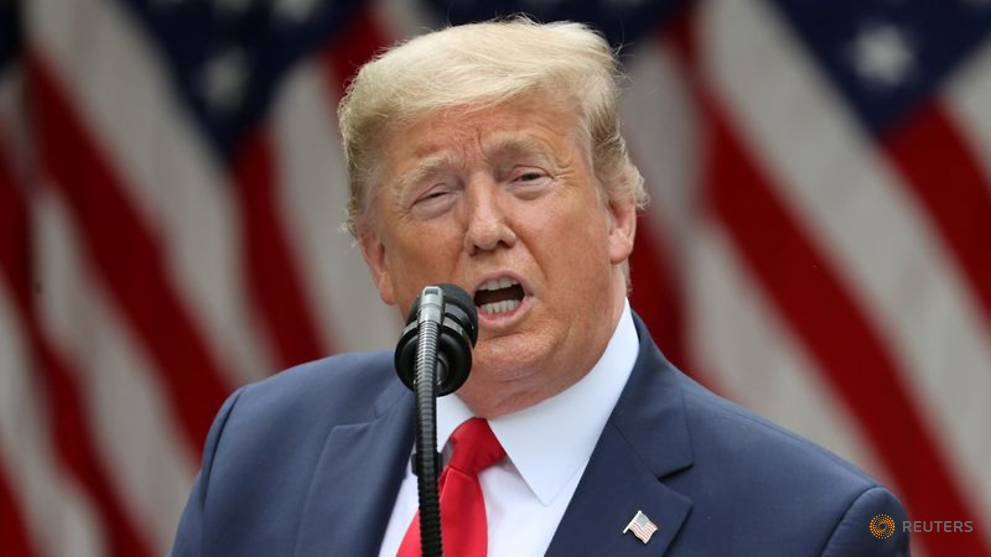
U.S. President Donald Trump makes an announcement about US trade relations with China and Hong Kong in the Rose Garden of the White House in Washington on May 29, 2020. (Photo: Reuters/Jonathan Ernst)
"We will take action to revoke Hong Kong's preferential treatment as a separate customs and travel territory from the rest of China," Trump said, adding that Washington would also impose sanctions on individuals seen as responsible for "smothering - absolutely smothering - Hong Kong's freedom".
Trump told reporters at the White House that China's move on Hong Kong was a tragedy for the world, but he gave no timetable for the moves, leaving Hong Kong residents, businesses and officials to ponder just how far his administration will go.
The American Chamber of Commerce in Hong Kong said Saturday marked "a sad day" for China's freest city.
"This is an emotional moment for Americans in Hong Kong and it will take companies and families a while to digest the ramifications," AmCham President Tara Joseph said in a statement.
Riot police officers stand guard outside Central Government Complex as a second reading of a controversial national anthem law takes place in Hong Kong on May 27, 2020. (Photo: Reuters/Tyrone Siu)
"Many of us ... have deep ties to this city and with Hong Kong people. We love Hong Kong and it's a sad day," she said, adding the chamber would continue to work with its members to maintain Hong Kong's status as a vital business centre.
China's parliament this week approved a decision to create laws for Hong Kong to curb sedition, secession, terrorism and foreign interference. Mainland security and intelligence agents may be stationed in the city for the first time - moves critics say put the city's extensive freedoms at risk.
Authorities in Beijing and Hong Kong insist the legislation will target only a small number of "troublemakers" who threaten China’s national security. They say such action is urgently needed after months of sometimes violent anti-government protests rocked the city last year.
Anti-government demonstrators scuffle with riot police during a protest as a second reading of a controversial national anthem law takes place in Hong Kong on May 27, 2020. (Photo: Reuters/Tyrone Siu/File Photo)
Protests are simmering again as Hong Kong emerges from its coronavirus shutdown. Demonstrators are expected to take to the streets on Sunday.
Trump did not name any sanctions targets but said the announcement would "affect the full range of agreements we have with Hong Kong", including the US-Hong Kong extradition treaty to export controls on dual-use technologies and more "with few exceptions".
China's Global Times, published by the People's Daily, the official newspaper of China's ruling Communist Party, said Trump's decision was a "recklessly arbitrary" step.
The Hong Kong government has had a long history of working ties with US counterparts, distinct from Beijing, with cooperation on counter-terrorism, trade and money laundering.
More than 1,300 US firms have offices in Hong Kong and provide about 100,000 jobs. In the past decade, the US trade surplus with Hong Kong has been the biggest among all its trading partners, totalling US$297 billion from 2009 to 2018.
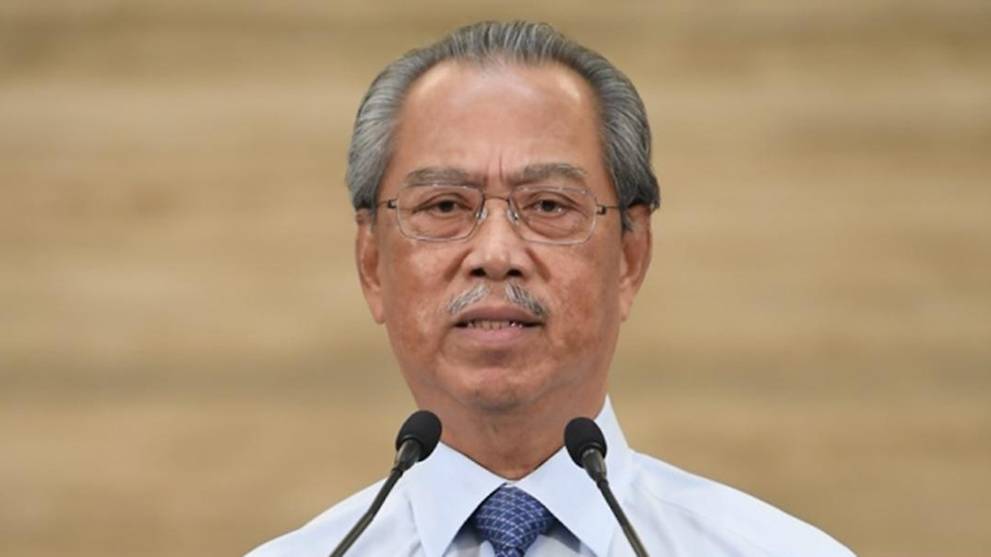
KUALA LUMPUR: The Parti Pribumi Bersatu Malaysia (Bersatu) memberships for five federal lawmakers, including veteran politician Mahathir Mohamad, were ceased after they acted against the party's constitution, said Malaysian Prime Minister Muhyiddin Yassin on Saturday (May 30).
In a media statement, Mr Muhyiddin, who is also the party's president, called for calm as he confirmed that Members of Parliament (MP) Dr Mahathir, Mr Mukhriz Mahathir, My Syed Saddiq Abdul Rahman, Dr Maszlee Malik and Mr Amiruddin Hamzah were no longer party members.
"They were not sacked from the party. Instead, their actions went against the party's constitution and this resulted in the cessation of their memberships with immediate effect," said Mr Muhyiddin.
Last Thursday, letters were issued to the five MPs by Bersatu's executive secretary Muhammad Suhaimi Yahya, informing them that their party memberships were terminated according to clauses 10.2.2 and 10.2.3 of the party's constitution.
Mr Muhammad Suhaimi said this was because they had sat with the opposition bloc during the parliamentary sitting on May 18, and not with the Perikatan Nasional coalition led by Mr Muhyiddin.
In his statement, Mr Muhyiddin added that he did not make the decision hastily even though there were calls for him to act much earlier.
"I wanted to be fair to all parties and wanted to make sure that whatever decision was made would be based on the party's constitution. No individual is above the party's constitution," said Muhyiddin.
He maintained that Dr Mahathir's decision to act against the party's direction and objectives, as decided by Bersatu's supreme council, was disappointing.
"Tun (Mahathir) and his supporters have chosen to continue working with Pakatan Harapan even though the party has decided not to. If that's Tun's (Mahathir) choice, I wish him well," added Mr Muhyiddin.
At a press conference on Friday, Dr Mahathir insisted that where he sat during the one-day parliament sitting should not be the cause of his dismissal from Bersatu, the political party that he founded in 2016.
"There is no provision in the (party) constitution regarding where I sit. I can sit anywhere, I have done nothing against the constitution.
"(Sitting with the opposition bloc) doesn't mean I have left the party. I can sit anywhere in parliament," he told reporters.
Dr Mahathir had in May 2018 led the Pakatan Harapan (PH) coalition to an electoral victory and the formation of the federal government.
However, Mr Muhyiddin led Bersatu out of PH in February this year. Dr Mahathir resigned as prime minister, triggering the collapse of the PH government.
Mr Muhyiddin then teamed up with Barisan Nasional (BN) and Parti Islam Se-Malaysia (PAS) to form the new ruling government. He was sworn in as the country's eighth prime minister.
"They were not sacked from the party. Their actions had breached the party Constitution, causing their membership to end immediately," said Mr Muhyiddin, who is Bersatu president and had co-founded the party with Tun Dr Mahathir in 2016.
"Tun and his supporters have chosen to continue to work with Pakatan Harapan even though the party has decided against it. If that is Tun's choice, I wish him good luck."
He also said many had urged him to take action against the five earlier.
"I am confident and believe that Bersatu will remain strong. We have faced many challenges from when I first founded this party."
Termination letters from party executive secretary Suhaimi Yahya on Friday (May 29) to the five MPs, including Dr Mahathir's son Mukhriz, informed them that their membership in Bersatu had ended after they sat in the opposition bloc during the last Parliament sitting on May 18.
The Bersatu Constitution states that members who join other parties would be automatically ejected, without the need to be sacked via a disciplinary process.
Dr Mahathir, who was chairman of the party, had refused to support Mr Muhyiddin's move to lead Bersatu out of the Pakatan Harapan (PH) government in February to join forces with then-opposition Umno and Parti Islam SeMalaysia.
Dr Mahathir lost the majority needed to remain as premier, leading to the collapse of the PH government, just 21 months after its historic defeat of Umno in the 2018 general election.
"There is no provision in the Constitution regarding where I sit (in Parliament). I have done nothing against the Constitution so that does not mean I have left the party. I can sit anywhere in Parliament."
"Where you sit is not a cause for sacking," he said.
Coronavirus latest: four new cases in China; doubts cast over drug trials South China Morning Post
https://news.google.com/__i/rss/rd/articles/CBMidGh0dHBzOi8vd3d3LnNjbXAuY29tL25ld3Mvd29ybGQvdW5pdGVkLXN0YXRlcy1jYW5hZGEvYXJ0aWNsZS8zMDg2Nzg0L2Nvcm9uYXZpcnVzLWxhdGVzdC1kb3VidHMtY2FzdC1vdmVyLWRydWctdHJpYWxz0gF0aHR0cHM6Ly9hbXAuc2NtcC5jb20vbmV3cy93b3JsZC91bml0ZWQtc3RhdGVzLWNhbmFkYS9hcnRpY2xlLzMwODY3ODQvY29yb25hdmlydXMtbGF0ZXN0LWRvdWJ0cy1jYXN0LW92ZXItZHJ1Zy10cmlhbHM?oc=5