Senin, 25 Mei 2020

Brazil stands by hydroxychloroquine despite WHO - CNA

BRASILIA: Brazil's health ministry said Monday (May 25) it would not change its recommendation to treat coronavirus with hydroxychloroquine, despite the World Health Organization deciding to suspend trials of the drug over safety concerns. 

Like his US counterpart Donald Trump, Brazilian President Jair Bolsonaro has touted the supposed benefits of hydroxychloroquine and a related drug, chloroquine, against the new coronavirus.

Studies, however, have questioned their safety and efficacy against the disease, including one published Friday in respected medical journal The Lancet that found the drugs actually increased the risk of death.

That led the WHO to suspend a worldwide clinical trial of hydroxychloroquine as a COVID-19 treatment Monday.

READ: COVID-19: WHO suspends trial of hydroxychloroquine due to safety concerns

"We're remaining calm and there will be no change" to the Brazilian guideline issued last week, health ministry official Mayra Pinheiro told a news conference.

The guideline recommended doctors in the public health system prescribe either chloroquine or hydroxychloroquine from the onset of COVID-19 symptoms.

It was issued shortly after the resignation of former health minister Nelson Teich, who reportedly quit over Bolsonaro's insistence on pushing the drugs despite a lack of solid evidence.

He was Brazil's second health minister in less than a month.

Brazil, the Latin American country hit hardest by the pandemic, has emerged as the latest flashpoint, with nearly 375,000 cases - the second-highest in the world, after the United States - and more than 23,000 deaths.

Experts say under-testing means the real figures are probably far higher.

Hydroxychloroquine is typically used to treat autoimmune diseases, while chloroquine is generally used against malaria.

Preliminary studies in China and France had generated hope the drugs might be effective against the new coronavirus.

That led governments to buy them in bulk. Trump even said last week he was taking hydroxychloroquine as a preventive measure, though he said Sunday he had finished his course of treatment.

Pinheiro questioned the Lancet study, which analysed the medical records of 96,000 patients across hundreds of hospitals.

"It wasn't a clinical trial, it was just a data set collected from different countries, and that doesn't meet the criteria of a methodologically acceptable study to serve as a reference for any country in the world, including Brazil," she said.

BOOKMARK THIS: Our comprehensive coverage of the coronavirus outbreak and its developments

Download our app or subscribe to our Telegram channel for the latest updates on the coronavirus outbreak: https://cna.asia/telegram

Let's block ads! (Why?)


https://news.google.com/__i/rss/rd/articles/CBMiY2h0dHBzOi8vd3d3LmNoYW5uZWxuZXdzYXNpYS5jb20vbmV3cy93b3JsZC9icmF6aWwtc3RhbmRzLWJ5LWh5ZHJveHljaGxvcm9xdWluZS1kZXNwaXRlLXdoby0xMjc2OTE5MNIBAA?oc=5

2020-05-26 03:23:52Z
CBMiY2h0dHBzOi8vd3d3LmNoYW5uZWxuZXdzYXNpYS5jb20vbmV3cy93b3JsZC9icmF6aWwtc3RhbmRzLWJ5LWh5ZHJveHljaGxvcm9xdWluZS1kZXNwaXRlLXdoby0xMjc2OTE5MNIBAA

Security laws will not affect Hong Kong's rights and freedoms, says leader Carrie Lam - CNA

HONG KONG: Hong Kong leader Carrie Lam on Tuesday (May 26) added to a raft of attempts by local and Beijing officials to provide reassurance that proposed national security laws would not trample on the city's rights and freedoms, amid widespread concerns.

"Hong Kong's freedoms will be preserved and Hong Kong's vibrancy and core values in terms of the rule of law, the independence of the judiciary, the various rights and freedoms enjoyed by people will continue to be there," she said.

Lam said those concerned need to wait for the details of the proposed legislation.

READ: China military's Hong Kong garrison has ability to safeguard China, city's security: Commander

"The assurances are very clearly laid out in the draft position, as well as the explanation given by the National People's Congress leader. There is no need for us to worry," Lam said.

The laws target a "very small minority of people" who breach the law to organise and participate in "terrorist activities to subvert the state power", she said.

"Hong Kong needs this piece of legislation for the bigger benefit of the great majority of Hong Kong people."

Lam's comments came after Beijing unveiled plans last week for national security legislation for Hong Kong that aim to tackle secession, subversion and terrorist activities and could see Chinese intelligence agencies set up bases in the city.

READ: Hong Kong demand for VPNs surges on heels of China's plan for national security laws

Hong Kong's security and police chiefs said on Sunday that "terrorism" and activities that "harm national security" are growing in the city, after thousands took to the streets to protest against the security laws.

Police said they arrested more than 180 people on Sunday, when authorities fired tear gas and water cannon to disperse anti-government protesters as unrest returned to the city after months of relative calm.

Police Commissioner Chris Tang said there have been 14 cases involving explosives "commonly used in terrorist attacks overseas" and five seizures of firearms and ammunition since protests began in June last year.

MORE: Our coverage of the Hong Kong protests

Follow us on Telegram for the latest on Hong Kong: https://cna.asia/telegram

Let's block ads! (Why?)


https://news.google.com/__i/rss/rd/articles/CBMia2h0dHBzOi8vd3d3LmNoYW5uZWxuZXdzYXNpYS5jb20vbmV3cy9hc2lhL2hvbmcta29uZy1jYXJyaWUtbGFtLXNlY3VyaXR5LWxhd3MtY2hpbmEtcmlnaHRzLWZyZWVkb21zLTEyNzY5MzAy0gEA?oc=5

2020-05-26 02:54:39Z
52780800526630

China military's Hong Kong garrison has ability to safeguard China, city's security: Commander - CNA

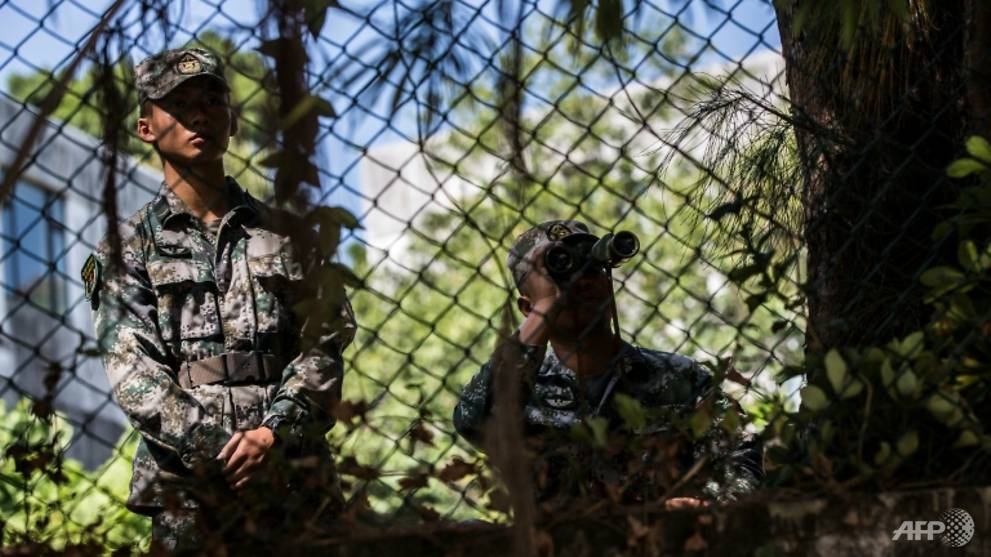
BEIJING: Chinese military officers and soldiers stationed in the garrison in Hong Kong have the determination and ability to safeguard China's national sovereignty and the long-term prosperity and security for the city, the garrison's commander said.

Chen Daoxiang, in an interview with Chinese state television, said the garrison firmly supports the Chinese parliament's new Hong Kong security legislation. 

READ: Hong Kong security, police chiefs warn of growing 'terrorism' as China security laws loom

The security legislation, which aims to tackle secession, subversion and terrorist activities, has sent shockwaves through the business and diplomatic communities.

READ: Thousands protest in Hong Kong over China security law proposal

Over the weekend, police fired tear gas and water cannon at thousands of Hong Kong protesters who gathered on Sunday against the proposed law. 

Police said on Monday they arrested more than 180 people for unlawful assembly, misconduct and violence.

MORE: Our coverage of the Hong Kong protests

Follow us on Telegram for the latest on Hong Kong: https://cna.asia/telegram

Let's block ads! (Why?)


https://news.google.com/__i/rss/rd/articles/CBMicmh0dHBzOi8vd3d3LmNoYW5uZWxuZXdzYXNpYS5jb20vbmV3cy9hc2lhL2NoaW5hLW1pbGl0YXJ5LWhvbmcta29uZy1nYXJyaXNvbi1hYmlsaXR5LXRvLXNhZmVndWFyZC1zZWN1cml0eS0xMjc2OTE2ONIBAA?oc=5

2020-05-26 02:14:04Z
52780800526630

Rich Chinese investors snapping up luxury homes from Singapore to Sydney - The Straits Times

SYDNEY (BLOOMBERG) - Rich Chinese investors are finding luxury real estate is a good hiding place from the economic fallout of the coronavirus.

Across China and in some of their familiar hunting grounds in Asia, wealthy buyers are snapping up top-end housing, in many cases to guard their wealth against anticipated inflation and a weakening yuan. The rush to add real estate has led to a jump in upmarket housing prices in China, while offering some support for Asian property markets hit hard by the pandemic.

"It's been flat-out," said Monika Tu, founder of Black Diamondz, an Australian company that caters to Chinese buyers of luxury real estate.

Since March, Tu has sold A$85 million (S$79.3 million) of prime property, with about half the sales to Chinese clients who were in Australia when the pandemic hit. That's a 25 per cent jump from earlier in the year. The homes, priced between A$7.25 million and A$19.5 million, are all in Sydney's well-heeled, ocean-front suburbs such as Point Piper.

A gradual easing of virus restrictions is making it easier for wealthy Chinese to view properties and complete purchases in nearby Asian hot spots like Shanghai, Seoul and Sydney.

In another favorite Singapore, virtual tours and photos have been enough to seal multi-million dollar deals, pointing to how transactions are evolving. That's in contrast to London and New York where real estate remains sluggish amid lockdowns.

Chinese buyer inquiries for South Korean property increased 180 per cent in the first quarter compared with the fourth quarter of 2019, while inquiries on New Zealand homes jumped 75 per cent, according to data from Juwai Iqi, a real estate firm. Searches dropped 32 per cent in the UK and 18 per cent in the US.

The high-end demand is bolstering prices in China and tempering declines in other markets. Prices for top-end homes in the four biggest Chinese cities rose 1 per cent in April, led by the biggest jump in two years in the tech hub of Shenzhen.

Even in Singapore, where a partial lockdown remains in place, activity is picking up via online platforms. Three Chinese clients bought six apartments worth a combined $20 million at Marina One Residences this month without any virtual tours, said Clarence Foo, a property agent with APAC Realty Ltd.'s unit ERA. One investor spent about $12 million on three separate three-bedroom units in the same development, a five-minute walk to the iconic Marina Bay Sands hotel and casino.

"Some buyers may want to divert their funds to other countries as the yuan may be devalued further to combat the weakening of their economy," said Christine Sun, the head of research and consultancy at OrangeTee & Tie in Singapore.

HONG KONG SLUMP

Hong Kong used to be a favored destination due to its proximity to mainland China and fewer market restrictions. But the pro-democracy protests have prompted many rich Chinese to turn to Singapore as an alternative, undeterred by the higher taxes. Hong Kong luxury home prices dropped 4.5 per cent in the first quarter, double the decline in Singapore.

"They view Singapore's property market as a safe haven because of its stability. It's a more regulated market compared to say Hong Kong," ERA's Foo said.

Outside Asia's major financial centers, inquiries are also rising. Malaysian real estate agent Zulkhairi Anwar, who specializes in luxury properties at Azmi & Co, conducted viewings this month with two Chinese nationals looking at apartments and bungalows in the US$2 million to US$5 million (S$2.8 million to S$7.1 million) range in the capital Kuala Lumpur.

The potential Chinese buyers, who stayed in Malaysia when countries started to close their borders, began viewing properties after Malaysia eased restrictions, said Zulkhairi. He's confident the spark of interest will last.

CHEAPER THAN SINGAPORE

"I don't think the pandemic would deter the Chinese from coming back," Zulkhairi said. "Malaysia appeals to them because there's a substantial local Chinese population here, making it easier for them to integrate, and our luxury properties are still cheaper than the likes of Singapore."

Affluent Chinese buyers are also starting to shop at home, where lockdowns began gradually lifting two months ago.

Homes priced at about 20 million yuan (S$4 million) in the country's biggest cities have emerged as among the most popular since April, when authorities started to ease credit to help revive the economy, according to China Real Estate Information Corp.

In Shenzhen, developers sold a record number of luxury residences last month, according to Landz Realtor, which tracks high-end sales. BayHouse, a project in the free-trade zone of Qianhai, sold its 135 units for at least US$3 million each. Demand flared up so quickly that an initial promotion with a free opt-out clause was dropped.

SHANGHAI DEALS

In Shanghai, demand exceeded supply by fivefold for US$2.4 million apartments at the Oriental Garden project south of the Bund waterfront promenade. Green Residence, in an upscale ex-pat community, sold out within a day even though buyers were only allowed to view mock-up houses online.

"These buyers are adding haven assets through real estate as the economy slows and inflation rises," said Yang Kewei, a research director at the China real estate agency. "They either think that property is the best hedge against inflation in China, or assume that authorities will eventually loosen property curbs to prop up the economy."

Related Stories: 

Let's block ads! (Why?)


https://news.google.com/__i/rss/rd/articles/CBMid2h0dHBzOi8vd3d3LnN0cmFpdHN0aW1lcy5jb20vYnVzaW5lc3MvcHJvcGVydHkvcmljaC1jaGluZXNlLWludmVzdG9ycy1zbmFwcGluZy11cC1sdXh1cnktaG9tZXMtZnJvbS1zaW5nYXBvcmUtdG8tc3lkbmV50gEA?oc=5

2020-05-25 23:29:06Z
CAIiEAa2EPXCQYYhIUE-KV4mu54qGQgEKhAIACoHCAow_7X3CjCh49YCMJDMpwU

Hong Kong is ‘easy target for hostile foreign opportunists’: Tung Chee-hwa - South China Morning Post

[unable to retrieve full-text content]

  1. Hong Kong is ‘easy target for hostile foreign opportunists’: Tung Chee-hwa  South China Morning Post
  2. Protesters and tear gas returned to Hong Kong's streets on Sunday (May 24)  The Straits Times
  3. Hong Kong ramps up security ahead of rally against national anthem bill  South China Morning Post
  4. Police fire tear gas in Hong Kong protests condemning proposed security legislation  The Star
  5. 'Saddest day in Hong Kong's history': China pushes controversial security laws  Guardian News
  6. View Full coverage on Google News

https://news.google.com/__i/rss/rd/articles/CBMicmh0dHBzOi8vd3d3LnNjbXAuY29tL25ld3MvaG9uZy1rb25nL3BvbGl0aWNzL2FydGljbGUvMzA4NjAxNS9ob25nLWtvbmctbmVlZHMtbmF0aW9uYWwtc2VjdXJpdHktbGF3LWJlY2F1c2UtaXQtZWFzedIBcmh0dHBzOi8vYW1wLnNjbXAuY29tL25ld3MvaG9uZy1rb25nL3BvbGl0aWNzL2FydGljbGUvMzA4NjAxNS9ob25nLWtvbmctbmVlZHMtbmF0aW9uYWwtc2VjdXJpdHktbGF3LWJlY2F1c2UtaXQtZWFzeQ?oc=5

2020-05-25 15:48:39Z
52780810416305

China threatens US counter measures if punished for Hong Kong law - CNA

HONG KONG: China on Monday (May 25) threatened counter measures against the United States if it was punished for plans to impose a sedition law on Hong Kong, that the business hub's security chief hailed as a new tool that would defeat "terrorism".

Beijing plans to pass a new security law for Hong Kong that bans treason, subversion and sedition after months of massive, often-violent protests last year.

But many Hong Kongers, business groups and western nations fear the proposal could be a death blow to the city's treasured freedoms and thousands took to the streets on Sunday despite a ban on mass gatherings introduced to combat coronavirus.

As police dispersed the crowds with tear gas and water cannon, Washington's national security advisor Robert O'Brien warned the new law could cost the city its preferential US trading status.

Pro-democracy protesters gather in the Causeway Bay district of Hong Kong to rally against
Protesters gather in the Causeway Bay district of Hong Kong to rally against Beijing's plan to introduce new security legislation in the city AFP/ISAAC LAWRENCE

But China's foreign ministry said Beijing would react to any sanctions from Washington.

"If the US insists on hurting China's interests, China will have to take every necessary measure to counter and oppose this," foreign ministry spokesman Zhao Lijian told reporters on Monday.

Hong Kong has become the latest flashpoint in soaring tensions between the world's two super powers which China has likened to "the brink of a new Cold War".

The refusal to grant Hong Kongers democracy has sparked rare bipartisan support in an otherwise bitterly divided Washington during the Trump administration.

READ: US aide renews warning on China's proposed law for Hong Kong

Beijing portrays the city's protests as a foreign-backed plot to destabilise the motherland and says other nations have no right to interfere in how the international business hub is run.

MAINLAND AGENTS?

Protesters, who have hit the streets in their millions, say they are motivated by years of Beijing chipping away at the city's freedoms since it was handed back to China by Britain in 1997.

Hong Kong enjoys liberties unseen on the mainland, as well as its own legal system and trade status.

Campaigners view the security law proposal as the most brazen move yet by Beijing to end free speech and the city's ability to make its own laws.

Of particular concern is a provision allowing Chinese security agents to operate in Hong Kong, with fears it could spark a crackdown on those voicing dissent against China's communist rulers.

On the mainland, subversion laws are routinely wielded against critics.

The proposed law, which China's rubber-stamp legislature is expected to act on quickly, will also bypass Hong Kong's own legislature.

The city's influential Bar Association on Monday described the proposed motion as "worrying and problematic" - and warned it may even breach the territory's mini-constitution.

The proposal has spooked investors with Hong Kong's stock exchange suffering its largest drop in five years on Friday. On Monday it had yet to recover, closing just 0.10 percent up.

"RESTORE SOCIAL ORDER"

Hong Kong's unpopular pro-Beijing government has welcomed the law.

"Terrorism is growing in the city and activities which harm national security, such as 'Hong Kong independence', become more rampant," security minister John Lee said in a statement welcoming the planned legislation.

READ: Hong Kong security, police chiefs warn of growing 'terrorism' as China security laws loom

Police chief Chris Tang cited 14 recent cases where explosives had been seized and said the new law would "help combat the force of 'Hong Kong independence' and restore social order".

Last year's protests were initially sparked by plans to allow extraditions to the mainland but soon snowballed into a popular revolt against Beijing and the city's police force.

Beijing has dismissed protester demands for an inquiry into the police, amnesty for the 8,500 people arrested and universal suffrage.

The demonstrations fizzled at the start of the year as mass arrests and the coronavirus took their toll.

But they have rekindled in recent weeks with Sunday's rally producing the most intense clashes for months and police making at least 120 arrests.

During last year's huge rallies, mob attacks were common on both sides of the political divide and a video of protesters beating a lawyer at Sunday's rally was seized on by China's state media.

Hu Xijin, editor-in-chief of the nationalist tabloid Global Times, posted the video on Twitter - a platform banned in mainland China.

"Let's see what the Washington-backed Hong Kong democracy really looks like," he wrote.

READ: Hong Kong - nearly a year of unrest

MORE: Our coverage of the Hong Kong protests

Follow us on Telegram for the latest on Hong Kong: https://cna.asia/telegram

Let's block ads! (Why?)


https://news.google.com/__i/rss/rd/articles/CBMidGh0dHBzOi8vd3d3LmNoYW5uZWxuZXdzYXNpYS5jb20vbmV3cy9hc2lhL2NoaW5hLXRocmVhdGVucy11cy1jb3VudGVyLW1lYXN1cmVzLWlmLXB1bmlzaGVkLWZvci1ob25nLWtvbmctbGF3LTEyNzY3ODMw0gEA?oc=5

2020-05-25 13:07:28Z
52780800526630

Hong Kong law society condemns attack on lawyer during China security law protest - CNA

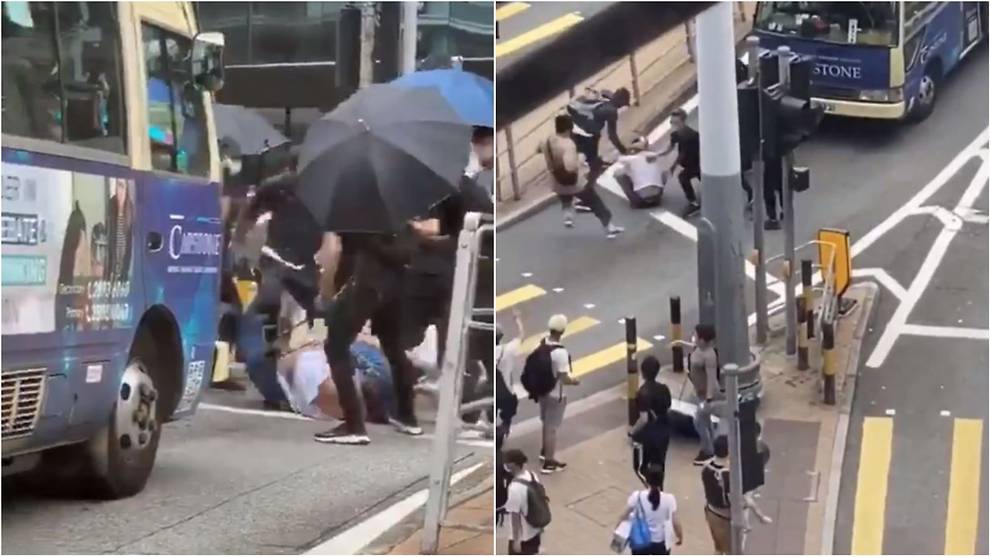
HONG KONG: The Law Society of Hong Kong has strongly condemned an assault on a lawyer during Sunday's (May 24) protest against a controversial security law proposed by Beijing.

Videos online show a man with blood on his face scrambling to escape about half a dozen protesters who were kicking and hitting him with umbrellas.

The Law Society said the victim was a member, and that he had been taken to hospital.

"All forms of violence, which are to be deplored as an affront to the rule of law, must stop immediately," the society said.

Local media said the man had argued with protesters as they set up road blocks.

During last year's huge protests, beatings were common on both sides of the political divide.

READ: Hong Kong security chief warns of growing 'terrorism' as government backs Beijing's planned security laws

Videos of protesters attacking opponents have been seized on by Chinese state media to portray them as violent radicals.

Hu Xijin, editor-in-chief of the nationalist tabloid Global Times, posted the video of Sunday's assault on Twitter - a platform banned in mainland China.

"Let's see what the Washington-backed Hong Kong democracy really looks like," he wrote.

State newspaper People's Daily also uploaded the video to its Twitter account.

China has portrayed Hong Kong's protests as a foreign-backed plot to destabilise the motherland.

Protesters, who have hit the streets in their millions, say they are motivated by years of Beijing chipping away at the city's freedoms since it was handed back to China by Britain in 1997.

Hong Kong enjoys liberties unseen on the Chinese mainland, as well as its own legal system and trade status.

Campaigners view the security law proposal as the most brazen move yet by Beijing to end free speech.

Of particular concern is a provision allowing Chinese security agents to operate in Hong Kong, fearing it could spark a crackdown against those voicing dissent against the mainland's communist rulers.

On the mainland, subversion laws are routinely wielded against critics to impose lengthy jail sentences via party-controlled courts.

MORE: Our coverage of the Hong Kong protests

Follow us on Telegram for the latest on Hong Kong: https://cna.asia/telegram

Let's block ads! (Why?)


https://news.google.com/__i/rss/rd/articles/CBMiY2h0dHBzOi8vd3d3LmNoYW5uZWxuZXdzYXNpYS5jb20vbmV3cy9hc2lhL2hvbmcta29uZy1wcm90ZXN0cy1hdHRhY2stb24tbGF3eWVyLXNlY3VyaXR5LWxhdy0xMjc2NzI3MNIBAA?oc=5

2020-05-25 09:12:25Z
52780800526630