One big question that’s bound to come up in the 2020 presidential election is where do the candidates stand on Israel? It’s an issue that some say is already threatening to split apart the Democratic Party.
Meanwhile, the Israeli-Palestinian peace process — which the US attempted to broker for decades — has basically disappeared from view.
Though President Donald Trump’s son-in-law and White House senior adviser Jared Kushner is working on a peace plan, there’s been almost zero Palestinian input. And Israel’s recent election, which will almost certainly allow right-wing Prime Minister Benjamin Netanyahu to maintain his grip on power after he promised to extend sovereignty over large portions of the West Bank, does not bode well for any future vision of peace that includes an independent Palestinian state.
For these reasons and others, there’s a good chance that Kushner’s plan will be dead on arrival.
America’s consistent attempts and failures to broker peace are striking — and a new book by Middle East scholar Khaled Elgindy argues that it’s due to a particular “blind spot” the US has toward the Palestinians.
Elgindy served as an adviser to the Palestinian leadership in the West Bank on peace negotiations in the 2000s and is currently a fellow in the Middle East center at the Brookings Institution think tank in Washington, DC.
I reached out to him to talk about why the US has failed to broker peace, what role Trump has played in all of this, and how the issue of Israel and the Palestinians will continue to reverberate in the runup to the 2020 election.
A transcript of our conversation, edited for clarity and length, is below.
Alexia Underwood
So let’s start by talking about the US’s “blind spot,” which is the title of your book. Explain what that means.
Khaled Elgindy
The blind spot refers to two areas of diplomacy that American policymakers traditionally have tended to downplay or ignore altogether: Israeli power and Palestinian politics.
The United States has the tendency to treat the two parties as though they were somehow co-equal in power, when in reality, one party is occupying the other. Israel is an occupying power. So it’s not only a conflict, it’s also an occupation.
We’ve seen various moments in history where that plays out very dramatically. For example, when the Israeli army was besieging Palestinian leader Yasser Arafat’s compound during the second intifada [Palestinian uprising] in 2002, that’s not something that you would see in other contexts. In the negotiations between Egypt and Israel in the 1970s leading up to the 1979 Peace Treaty between the two countries, Israeli tanks didn’t surround Egyptian President Anwar Sadat’s headquarters, right?
However, the United States tends to treat the Israeli-Palestinian negotiations like it did with those negotiations between Egypt and Israel, or the Northern Ireland negotiations: If we can just get the two leaders in the room to sit around the negotiating table, they can decide on the difficult compromises.
The other side, the flip side of this blind spot, is Palestinian politics.
American politicians instinctively understand that when you’re negotiating [with a foreign power], you’re not only negotiating with the person in front of you; you’re negotiating with their political opposition, with their public opinion, and so on.
Americans understand that there are certain things you can push the Israelis to do and not do because of their own domestic political pressures. But when it comes to the Palestinians, the tendency is to treat them as if they don’t have politics, as if they don’t have a political opposition that they have to answer to, or a public opinion. It’s not only that they don’t understand the nuances of Palestinian politics. It’s that they treat them as though they don’t have politics at all.
So it’s this sort of twin blind spot — where the Americans downplay Israeli power, especially its ability to dictate realities on the ground, and also neglect of Palestinian politics — that has hampered the US ability to act as an effective broker.
But to add to this, America’s role in the peace process wasn’t only ineffective, it actually made things worse because it exaggerated that already significant power imbalance. And where are we today?
We’ve got a triumphant Israeli government saying, essentially, we won. The settler project is a huge success. And on the other side is this broken, dysfunctional, divided Palestinian leadership that is barely capable of governing the few cantons under its jurisdiction: the West Bank and Gaza. It’s a very dysfunctional reality.
Alexia Underwood
So what’s happened, then, under the Trump administration? Have they made things worse?
Khaled Elgindy
You know, in some ways they’ve made things worse, but in some ways I would argue they’ve actually helped clarify certain things.
There are a couple of different ways to look at the Trump administration. You could say, “Well they’ve adopted a radically different approach.” It’s not at all clear that they actually support a real two-state solution. They’ve essentially thrown out the old peace process. That’s one way to look at it.
Another way to look at it is, “Well, this administration is basically doing, in a very extreme form, what its predecessors had already started doing.” They just took it to its most extreme conclusion.
So take, for example, UN Resolution 242, which has been the basic guidepost for the peace process for more than 50 years. It’s based on the principle of land for peace: that Israel would withdraw from land that it occupied in the 1967 war, in exchange for peace and recognition and normalization with the Arabs.
That was the formula that was used in 1979 with Egypt. And Egypt got the Sinai Peninsula back [which Israel had captured in the 1967 war]. That was the formula in the negotiations in 2000 between Israel and Syria. And that was also the basis for the Oslo Accords [the set of agreements between Israel and the Palestine Liberation Organization (PLO) in 1993 and 1995 that kicked off the “Oslo process” — negotiations aimed at getting a peace treaty between the two sides].
US policy was always to frown on Israeli settlements because Israeli settlements directly interfere in that land-for-peace formula. How can you give up land if you’re eating the pie as you negotiate, right? You’re negotiating over how to divvy up the pie, but one side is consuming it.
But though the official position was “settlements are bad,” every US president since the Oslo process began basically carving out loopholes for Israel. They would say, “Yeah, settlements are bad. Israel shouldn’t do it, but I know how important Jerusalem is to you, so go ahead and build in East Jerusalem even though that’s technically still occupied territory. We’re going to treat East Jerusalem different than the rest of the West Bank.”
And then other administrations came in and said, “Well, you know these settlement blocks [in the West Bank] are probably going to be part of Israel anyway, so go ahead and build there too.”
So what ends up happening, then, is that those exceptions become the rule. You’ve gone from something like 270,000 Israeli settlers [in the West Bank and East Jerusalem] in 1993 to now more than double that, around 630,000.
We didn’t get here by accident. We got here because of all those loopholes and allowances and exemptions that were carved out for Israel, because the US and Israel have that “special relationship,” and because the US wanted to accommodate Israeli politics, and imposing a settlement freeze is too hard for an Israeli prime minister to justify to their cabinet or to their political opponents.
So we’re always willing to compromise on these basic rules of the peace process. But in doing that, the consequences are that the settlement enterprise thrived. And they now feel that they are victorious. And land for peace is basically dead.
The word I use in the book for that contradictory position is “ambivalence.” It’s not a very sexy word, but it shows how the US has one position yet holds the opposite position at the same time.
When President Barack Obama came in, I think he recognized the dangers of that ambivalence — that if you’re going to take a position on something, you ought to mean it. Obama said, “I want to stop the settlements. Not some settlements, not just small settlements. All settlements.” He tried to go back to the original peace process. The basic ground rules.
But he didn’t put any teeth into it. He wasn’t prepared to impose any consequences on Israel for not being up to those standards.
So then here comes Trump, and he says, “You know what? I have a different way of resolving this basic contradiction, which is to simply normalize the new reality on the ground — the old rules don’t really apply anymore because there are these realities on the ground, and that’s the new basis for a peace process going forward.”
The problem with that view is that it’s totally arbitrary. It’s one that is dictated by power. That Israel essentially takes what it wants and we, the United States, will endorse that, and whatever is left over can go to the Palestinians.
If, say, Hillary Clinton had won and she was president and was inclined to start a peace process, it would have looked a lot like the Obama peace process. It may have also looked a lot like Bill Clinton’s peace process, where they sort of blur the lines, and fudge the issues, and go through the process for its own sake. You create the illusion of a process even though nobody thinks it’s going anywhere.
I think Trump is the blind spot in its most extreme manifestation. He’s almost a caricature of the blind spot. But by taking things to their absurd extreme, he’s created a clarifying moment for people, so a lot of Democrats are now like, “Oh, my god. This is not acceptable.” Maybe there are even some Republicans out there who are uncomfortable with these new dynamics.
Alexia Underwood
So you’re saying that Trump has done away with the illusion.
Khaled Elgindy
Yes, he’s done away with the pretense and the illusion and all of that. Now we’re facing this stark choice: Are we supporting a two-state solution or we supporting a binational, one-state solution? Or are we getting behind what is effectively an apartheid reality on the ground? By unblurring the lines, he’s kind of put those options in stark focus.
Courtesy of Khaled Elgindy
Alexia Underwood
Let’s talk for a moment about his administration’s Middle East peace proposal, the so-called “deal of the century” that Jared Kushner has been working on. Many people think it’s going to be dead upon arrival. But what would it need to actually have a chance of success?
Khaled Elgindy
Let me answer that question in a slightly different way. There’s basically a litmus test that you can apply to see whether this is a serious thing.
First is does it call for an end to Israeli occupation? Does it actually say “end to occupation,” the way every president before Trump has? Second, does it refer to UN Resolution 242? Again, this is the basic, big ground rule of the peace process. And third, does it call for the creation of a sovereign Palestinian state?
If it doesn’t meet all three of those standards, then we’re not even at the most minimal requirements of a pretend peace process.
Then we have to broaden the criteria. If we’re not talking about a two-state solution, what are we talking about? Does whatever you’re calling for allow for self-determination for both Israelis and Palestinians? Or does it simply repackage the subjugation of one group over another one?
If your solution does not include self-determination for everyone, and basic civil, human, and political rights for everyone, then it’s not a real process.Any plan that is based on or implies the continued subjugation of one group over the other is just repackaging the conflict and perpetuating it.
Alexia Underwood
Okay. I think we can say based on what we know that this plan doesn’t meet those requirements. So what comes next? What’s the next effective step that Palestinians and Israelis can take?
Khaled Elgindy
I don’t see a diplomatic process on the horizon. It’s possible that one could emerge at a later stage, but currently there’s no replacement to either an old Oslo process or to the United States as the chief mediator. And so we’ve got a bit of a vacuum there.
But we also have a dysfunctional reality on the ground.
I think if the Palestinians, especially as the weakened party, are going to change their circumstances, it’s not going to come from the United States. It’s not going to come from the Israelis. It’s probably not going to come from the United Nations. It’s going to have to start with themselves first.
Right now the only party that really wants to radically alter the status quo is the Palestinians, and I think the first step to doing that is going to have to be to fix their own house, to put their political house in order. Ending the division between the West Bank and Gaza and the political split between Hamas [the Palestinian organization that rules Gaza] and Fatah [the Palestinian organization that runs the government in the West Bank] is the first step, but it’s also kind of a necessary but insufficient condition. That’s only the beginning. Then the Palestinians have to decide what is the future of these institutions.
The Palestinians need a new kind of constitutional moment, a new consensus-building process that will redefine the Palestinian national movement, its priorities, its institutions, its strategy, because clearly all the old ones are either broken or failed or have disappeared.
I think it’s really important for them to start thinking about these issues — not just reconciliation, but also what happens after.
Alexia Underwood
Given all this, I’m curious to hear what you think about how the conversation around Israel and the Palestinians is shifting in the US. Some people on the progressive left seem more willing to talk about the Palestinians’ situation. Do you think this is something that’s going to come up in the 2020 election?
Khaled Elgindy
Yeah, I think it is going to be a factor, because if nothing else, the Republicans will make it a factor.
We’ve already seen how. We have this emerging division inside Democratic ranks, within the party, that the Republicans are very keen on exploiting. We saw that with the anti-BDS [Boycott, Divestment, Sanctions] legislation, which they immediately tabled as soon as the government shutdown ended.
I know a lot of folks in the Democratic establishment are nervous. They would rather not be divided on any particular issues, because they need a united front to be able to defeat Trump and all that. And I think the impulse of most of the campaigns will be to avoid this issue as much as they can.
But I think it will be very hard to avoid for two reasons: One, the Republicans will make it an issue, to put Democrats on the spot. And two, because there is now a very mobilized political constituency that cares about the issue and has a different view from either the Republican or the Democratic party establishment. And they are becoming increasingly restive. They want to be vocal on this issue.
I think the progressive grassroots want to make it kind of a litmus test for Democratic candidates, because they see this is part of intersectional relationships with other issues, like #MeToo and Black Lives Matter, and non-intervention in general in places like Venezuela.
They see this as part and parcel of this kind of ideological approach. And they’re going to make it an issue. So it’s going to come from both sides. It’s going to come from the progressive grassroots, and it’s going to come from the Republican establishment.
One thing I’ve heard from more than one Democratic campaign is that, for the most part, they don’t expect foreign policy to be an issue in 2020, except on this issue of Israel and the Palestinians. They’re anticipating that it will come up.
Alexia Underwood
Which 2020 candidate who has announced so far do you think seems to have the best handle on this issue — meaning, who’s the least likely to have the “blind spot” that you mention?
Khaled Elgindy
So far, the person who has the most clearly articulated view on this issue has to be Bernie Sanders. Since 2016, he’s been articulating a series of positions on Israel-Palestine. He’s not just responding. You know, a lot of times campaigns or candidates will have to stake out a position because they’re asked, “Well, where do you stand on this?” — on the US decision to move their embassy to Jerusalem, or the Iran deal, or whatever.
I think most of the other candidates are probably still a little bit gun-shy; none of them have, to my knowledge, anything like Sanders’s fleshed-out set of positions on this issue. I think what we’ve mostly heard is falling back on “We want a two-state solution to the conflict,” etc. But I don’t think they’ve really been pressed on it.
But Sanders has staked out, proactively, a fairly coherent set of policies, and what was pretty remarkable was that he did it in 2016, in Brooklyn, when he went into the debate with Hillary Clinton. I think he recognized that this is no longer a political liability — and that there’s actually a political benefit that can be gained from taking on this issue.
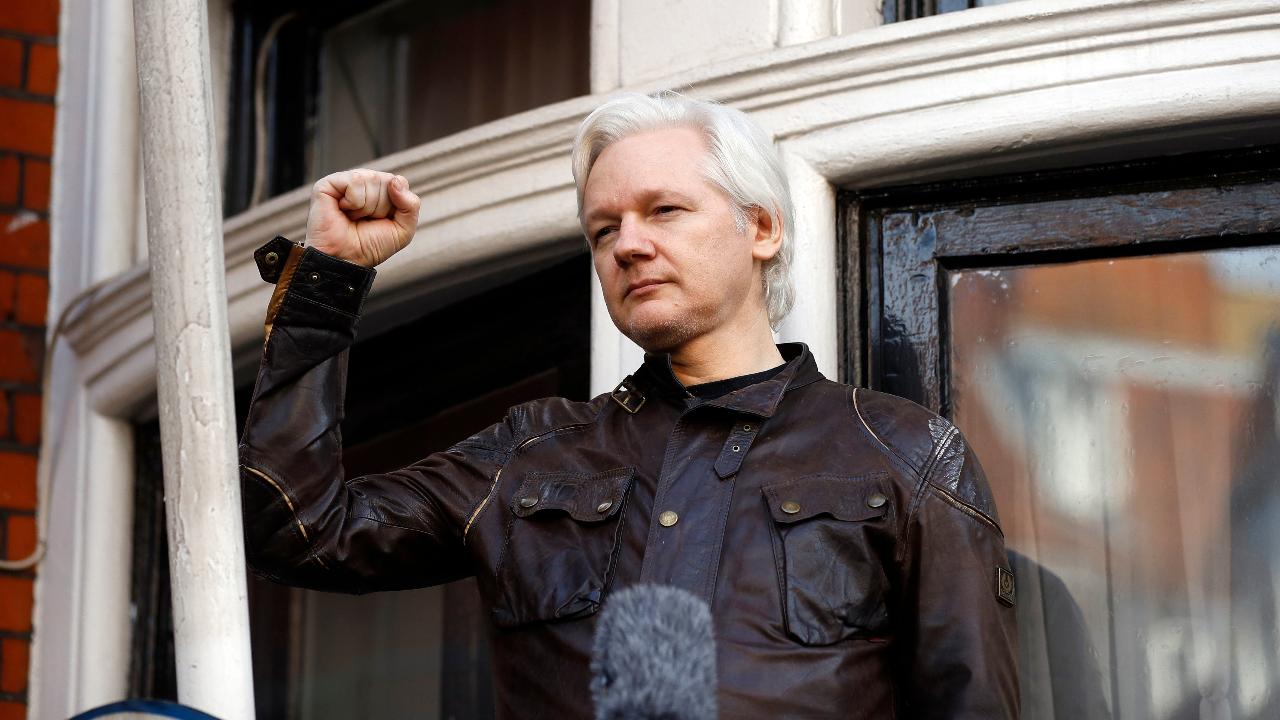
WikiLeaks co-founder Julian Assange reportedly violated his asylum conditions when he used the Ecuadorian embassy in London as a “center for spying,” the country’s president said in a new interview.
Lenin Moreno told the Guardian newspaper that Ecuador’s government had provided facilities within the embassy that allowed Assange to “interfere” with other states.
“Any attempt to destabilize is a reprehensible act for Ecuador because we are a sovereign nation and respectful of the politics of each country,” he said in his first English-language interview since Assange’s arrest last week. “We cannot allow our house, the house that opened its doors, to become a center for spying.”
He added: “This activity violates asylum conditions. Our decision is not arbitrary but is based on international law.”
Assange was arrested by British authorities and dragged out of the embassy last Thursday after his seven-year asylum was revoked – paving the way for possible extradition to the United States, where he faces conspiracy to commit computer intrusion for aiding Chelsea Manning's leak of classified government documents.
His relationship with his hosts collapsed after Ecuador accusing him of leaking information about Moreno’s personal life. But Moreno denied to the Guardian that he acted as a reprisal.
“He was a guest who was offered a dignified treatment, but he did not have the basic principle of reciprocity for the country that knew how to welcome him, or the willingness to accept protocols [from] the country that welcomed him,” he added. “The withdrawal of his asylum occurred in strict adherence to international law. It is a sovereign decision. We do not make decisions based on external pressures from any country.”
Ecuador has claimed that Assange mistreated embassy staff, put excrement on walls, left soiled laundry in the bathroom and improperly looked after his cat, among other things.
A lawyer representing Assange accused Ecuador’s government on Sunday of spreading lies about his behavior inside in London.
Jennifer Robinson told Sky News the Ecuadorian government is spreading alleged falsehoods to divert attention from its decision to revoke his asylum and allow his arrest at its British embassy. Assange has had "a very difficult time" since Moreno took office in Ecuador in 2017, Robinson said.
"I think the first thing to say is Ecuador has been making some pretty outrageous allegations over the past few days to justify what was an unlawful and extraordinary act in allowing British police to come inside an embassy," Robinson said.
Assange, who appeared much older when he emerged from the embassy than when before he sought refuge there in August 2012 -- perhaps owing partly to the presence of a lengthy, white beard -- is in custody at Belmarsh Prison in southeast London awaiting sentencing in Britain for skipping bail to avoid being sent to Sweden as part of an investigation of a rape allegation. Sweden is considering reviving the investigation.
On Monday, two left-wing German lawmakers Heike Hansel and Sevim Dagdelen, and Spanish MEP, Ana Miranda, held a press conference outside Belmarsh calling on European states to offer him asylum and prevent his extradition to the U.S.
Dagdelen, who is a member of The Left party, said the EU should "take action" to protect the "persecuted political publisher and journalist", the BBC reported.
Assange's next court appearance is scheduled for May 2. In the meantime, he is expected to seek prison medical care for severe shoulder pain and dental problems, WikiLeaks has said.
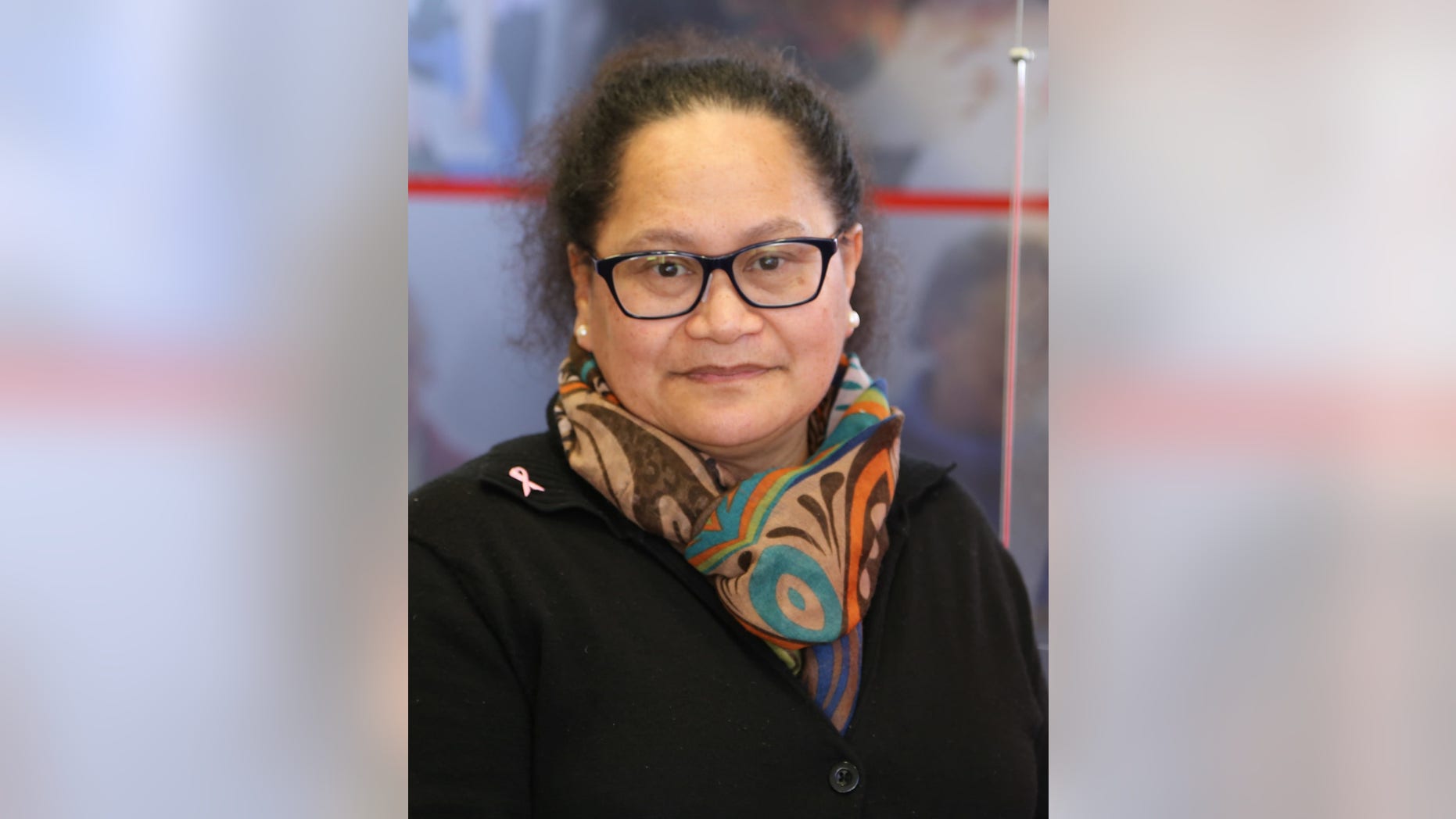
WELLINGTON, New Zealand — New Zealand’s foreign minister confirmed Monday that a New Zealand nurse has been held captive by the Islamic State group in Syria for almost six years, information long kept secret for fear her life might be at risk.
The status of nurse and midwife Louisa Akavi, now 62, is unknown, but her employer, the International Committee of the Red Cross, says it has received recent eyewitness reports suggesting she might be alive.
The New York Times on Sunday became the first media organization to name Akavi, ending a more than 5 ½-year news blackout imposed by New Zealand’s government and the Red Cross with the cooperation of international media.
The collapse of the Islamic State group has raised hopes that Akavi and the two Syrian drivers kidnapped with her might now be discovered.
In a statement, the ICRC said that as recently as December, Akavi may have been seen by at lest two people at a clinic in Sousa, one of the Islamic State group’s last outposts. There were also reported sightings in 2016 and 2017, Red Cross officials said.
“We continue to work together (with the Red Cross) to locate and recover her,” New Zealand Foreign Minister Winston Peters said. “This has been a uniquely complex and difficult case. “Louisa went to Syria with the ICRC to deliver humanitarian relief to people suffering as a result of a brutal civil war and ISIS occupation.”
“Where a New Zealander is held by a terrorist organization, the government takes all appropriate action to recover them. That is exactly what we have done here,” Peters said.
Peters said New Zealand had sent a small multi-agency team, including special forces, to Iraq to gather information on Akavi.
“This has involved members of the New Zealand Defense Force, drawn from the Special Operations Force, and personnel have visited Syria from time to time as required,” he said. “This noncombat team was specifically focused on locating Louisa and identifying opportunities to recover her.”
Akavi was taken captive in 2013 in the city of Idlib in northwest Syria. It is believed she was offered for ransom and may have been used as a human shield. New Zealand’s government believed at one point that she may have died. But there are hopes her medical skills might have caused her captors to spare her.
A photo of Louisa Akavi taken in 1996Getty Images
Akavi’s family said they miss her and are proud of the work to which she’s dedicated her life.
“We think about her every day and hope she feels that and finds strength in that,” said a video statement issued by family spokesman Tuaine Robati. “We know she is thinking of us and that she will be worried about us too.”
New Zealand’s government is reported to have opposed the ICRC’s decision to allow The New York Times to report Akavi’s name and nationality.
At a news conference Monday, Prime Minister Jacinda Ardern refused to answer questions about Akavi but indicated she was disappointed the ICRC had gone public before her fate had been learned.
“You’ll forgive me, I hope, for not commenting on that case,” Ardern said. “It remains the government’s view that it would be preferable if the case was not in the public domain.”
Dominik Stillhart, director of operations for the ICRC, said the organization had decided to permit publication in the hope it would elicit new information on her whereabouts.
“We have not spoken publicly before today because from the moment Louisa and the others were kidnapped, every decision we made was to maximize the chances of winning their freedom,” Stillhart said in a statement. “With Islamic State group having lost the last of its territory, we felt it was now time to speak out.”
He said the collapse of the Islamic State group in Syria may mean new opportunities to learn more about Akavi’s situation and the ICRC also feared it risked losing track of her in the aftermath of IS’s collapse.
Akavi is of Cook Islands descent and lives in Otaki, a small town north of Wellington. She is the longest-held captive in the history of the International Committee of the Red Cross, and Stillhart called her “a true and compassionate humanitarian.”
He said strenuous efforts had been made to secure her release. Negotiations in 2013 and 2014 were not successful. In 2014, she was among a group of hostages moved by IS only hours before a raid by U.S. special forces that aimed to free them.
“We call on anyone with information to please come forward,” Stillhart said. “If our colleagues are still being held, we call for their immediate and unconditional release.”
Stillhart later defended the ICRC’s decision to publicize Akavi’s case after years of silence.
“Every decision was to maximize the chance of Louisa’s freedom … and every decision was coordinated with the New Zealand government,” Stillhart said at a news conference in Geneva. “That included the difficult decision to go public. We think with new information from the public, we can redirect the investigation for Louisa.”
Organisers of mass protests in Sudan have told the BBC they want the full dismantling of the "deep state" left behind by ousted leader Omar al-Bashir.
A spokesman said leaders of the past regime should be put on trial.
Mr Bashir was toppled by the army last week after 30 years in power and a military council has pledged elections in two-years time.
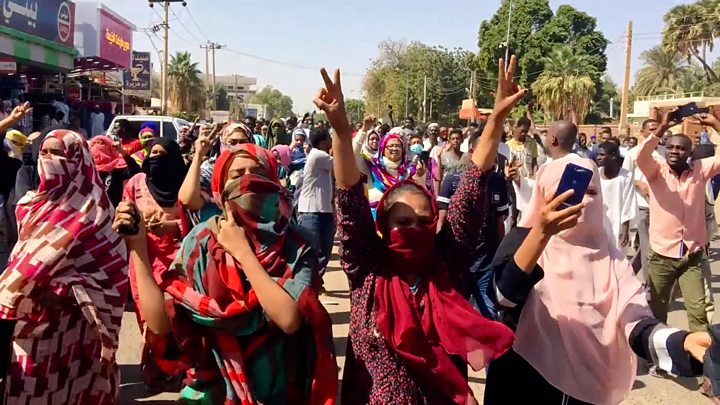
But protesters remain camped outside army HQ in the capital, Khartoum, demanding a civilian administration.
Reports on Monday said there had been efforts to break up the sit-in. Details are sketchy but witnesses said troops had stepped back from immediate confrontation.
On Sunday the transitional military council sought to appease protest leaders, telling them that key figures from the former government had been arrested. It is not clear who those officials are.
A military spokesman also promised not to disperse protesters and said the council was "ready to implement" whatever civilian government the opposition parties agreed.
In another development, 13 people were reportedly killed in an armed attack on protesters in the troubled region of South Darfur over the weekend.
The privately-owned Darfur 24 news website said "gunmen" had attacked the anti-government protest at a camp for displaced people about 17km (10 miles) east of the regional capital, Nyala.
Mr Bashir has been indicted on charges of war crimes and crimes against humanity in Darfur by the International Criminal Court. He denies any wrongdoing.
What are protest leaders demanding?
Amjad Farid, of the Sudanese Professionals' Association (SPA) which has spearheaded protests, told the BBC that they "completely rejected" the military council currently leading Sudan.
He said demands included the "full dissolution of the deep state" and the dismantling of state intelligence agencies.
Opposition politician Mubarak al Fadil told the BBC that the role of the military should decrease over time.
Media playback is unsupported on your device
"There could be two transitional periods," he said. "A first transitional period that would continue for six months where the military transitional council will continue to be the sovereign [power] and accomplish a number of important missions and tasks that is needed to clear the ground, and then the rest of the transitional period - which is a year and a half - could be presided over by a presidential council that would have a military representation within it."
Meanwhile, protesters in Khartoum remained in defiant mood.
"We are here to remove the entire system, a system that does not give service equally to the people," Mohammed Jakur told AFP news agency. "A system that leave[s] people under poverty. A system that does not allow Sudan, as a rich country with human and natural resources, to act as any other country in the world."
What has the military said?
In a news conference on Sunday, spokesman Maj Gen Shams Ad-din Shanto said the military council was "ready to implement" whatever civilian government the opposition parties agreed.
"We won't appoint a PM. They'll choose one," he said.
He also said the army would not remove protesters from their sit-in by force, but called on the crowds "to let normal life resume" and stop unauthorised roadblocks.
"Taking up arms will not be tolerated," he added.
The military council also announced a raft of decisions, including:
New heads of the army and the police
A new head of the powerful National Intelligence and Security Service (NISS)
Committees to fight corruption, and to investigate the former ruling party
The lifting of all media restrictions and censorship
The release of police and security officers detained for supporting protesters
A review of diplomatic missions, and the dismissal of Sudan's ambassadors to the US and to the UN in Geneva
What's the background?
Protests began in December over a steep rise in the cost of living but soon developed into a wider call for the removal of Mr Bashir and his government.
Coup leader Defence Minister Awad Ibn Auf announced the military would oversee a two-year transitional period followed by elections and imposed a three-month state of emergency.
But demonstrators vowed to stay on the streets unless there was an immediate switch to civilian government.
Mr Ibn Auf himself stood down the next day, as did the feared security chief Gen Salah Gosh.
Lt Gen Abdel Fattah Abdelrahman Burhan was then named as head of the transitional military council, to become Sudan's third leader in as many days.
In a televised address on Saturday, Gen Burhan vowed to "uproot the regime", pledging to respect human rights, end a night curfew, release political prisoners immediately, dissolve all provincial governments, try those who had killed demonstrators and tackle corruption.
Mr Bashir's whereabouts are unknown, but military leaders said he was in a secure place.
The military council has said it will not extradite him to face accusations in the International Criminal Court, although he could well be put on trial in Sudan.
The New York Times on Sunday became the first media organization to name Louisa Akavi.
New Zealand’s foreign minister confirmed Monday that a New Zealand nurse has been held captive by the Islamic State group in Syria for almost six years, information long kept secret for fear her life might be at risk.
The status of nurse and midwife Louisa Akavi, now 62, is unknown, but her employer, the International Committee of the Red Cross, says it has received recent eyewitness reports suggesting she might be alive.
The New York Times on Sunday became the first media organization to name Akavi, ending a more than 5 ½-year news blackout imposed by New Zealand’s government and the Red Cross with the cooperation of international media.
The collapse of the Islamic State group has raised hopes that Akavi and the two Syrian drivers kidnapped with her might now be discovered.
In a statement, the ICRC said that as recently as December, Akavi may have been seen by at least two people at a clinic in Sousa, one of the Islamic State group’s last outposts. There were also reported sightings in 2016 and 2017, Red Cross officials said.
“We continue to work together (with the Red Cross) to locate and recover her,” New Zealand Foreign Minister Winston Peters said. “This has been a uniquely complex and difficult case. “Louisa went to Syria with the ICRC to deliver humanitarian relief to people suffering as a result of a brutal civil war and ISIS occupation.”
“Where a New Zealander is held by a terrorist organization, the government takes all appropriate action to recover them. That is exactly what we have done here,” Peters said.
Peters said New Zealand had sent a small multi-agency team, including special forces, to Iraq to gather information on Akavi.
“This has involved members of the New Zealand Defense Force, drawn from the Special Operations Force, and personnel have visited Syria from time to time as required,” he said. “This noncombat team was specifically focused on locating Louisa and identifying opportunities to recover her.”
Akavi was taken captive in 2013 in the city of Idlib in northwest Syria. It is believed she was offered for ransom and may have been used as a human shield. New Zealand’s government believed at one point that she may have died. But there are hopes her medical skills might have caused her captors to spare her.
Akavi’s family said they miss her and are proud of the work to which she’s dedicated her life.
“We think about her every day and hope she feels that and finds strength in that,” said a video statement issued by family spokesman Tuaine Robati. “We know she is thinking of us and that she will be worried about us too.”
New Zealand’s government is reported to have opposed the ICRC’s decision to allow The New York Times to report Akavi’s name and nationality.
At a news conference Monday, Prime Minister Jacinda Ardern refused to answer questions about Akavi but indicated she was disappointed the ICRC had gone public before her fate had been learned.
“You’ll forgive me, I hope, for not commenting on that case,” Ardern said. “It remains the government’s view that it would be preferable if the case was not in the public domain.”
Dominik Stillhart, director of operations for the ICRC, said the organization had decided to permit publication in the hope it would elicit new information on her whereabouts.
“We have not spoken publicly before today because from the moment Louisa and the others were kidnapped, every decision we made was to maximize the chances of winning their freedom,” Stillhart said in a statement. “With Islamic State group having lost the last of its territory, we felt it was now time to speak out.”
He said the collapse of the Islamic State group in Syria may mean new opportunities to learn more about Akavi’s situation and the ICRC also feared it risked losing track of her in the aftermath of IS’s collapse.
Akavi is of Cook Islands descent and lives in Otaki, a small town north of Wellington. She is the longest-held captive in the history of the International Committee of the Red Cross, and Stillhart called her “a true and compassionate humanitarian.”
He said strenuous efforts had been made to secure her release. Negotiations in 2013 and 2014 were not successful. In 2014, she was among a group of hostages moved by IS only hours before a raid by U.S. special forces that aimed to free them.
“We call on anyone with information to please come forward,” Stillhart said. “If our colleagues are still being held, we call for their immediate and unconditional release.”
Stillhart later defended the ICRC’s decision to publicize Akavi’s case after years of silence.
“Every decision was to maximize the chance of Louisa’s freedom ... and every decision was coordinated with the New Zealand government,” Stillhart said at a news conference in Geneva. “That included the difficult decision to go public. We think with new information from the public, we can redirect the investigation for Louisa.”
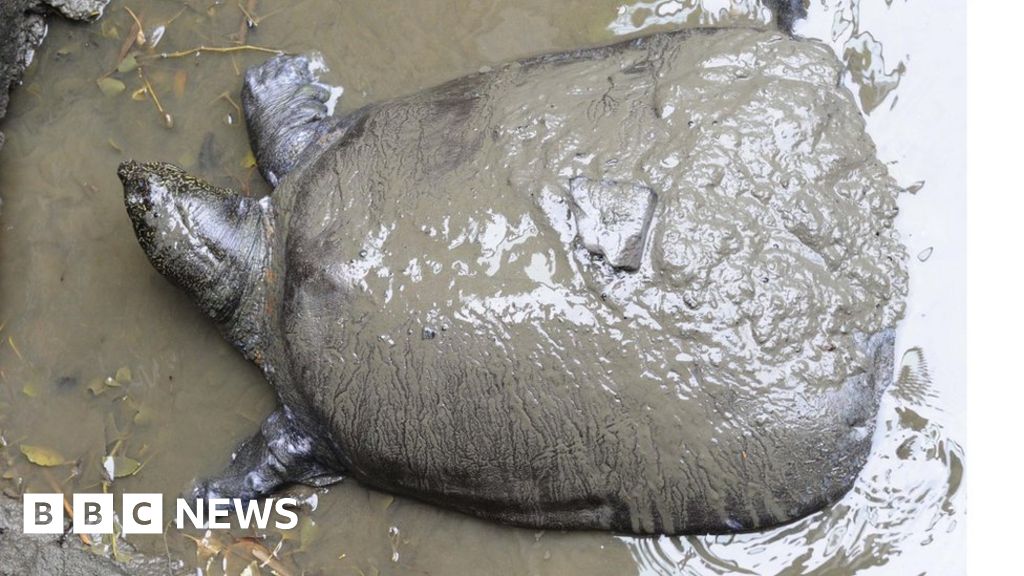
One of the world's rarest turtles, a Yangtze giant softshell, has died in China, leaving just three remaining.
Also known as Rafetus swinhoei, the female turtle died in the Suzhou zoo in southern China.
Experts had tried to artificially inseminate the creature, which was over 90 years old, for a fifth time shortly before she died.
The species is critically endangered due to hunting, overfishing and the destruction of its habitat.
One male is left in the Chinese zoo while two other turtles live in the wild in Vietnam. The elusive nature of the turtle means it has been difficult to identify the latter's gender.
Local staff and international experts had attempted to artificially inseminate the female 24 hours before she died.
They said there were no complications from the operation and she had been in fine health after the procedure, but deteriorated the next day.
The cause of her death is being investigated and the turtle's ovarian tissue was collected for future research.

:format(webp):no_upscale()/cdn.vox-cdn.com/uploads/chorus_asset/file/16031978/BlindSpot_cover.jpg)